Tree Service Removal Cost: What You'll Pay in 2026
You've got a tree that needs to come down, and before you call anyone, you want a real number. Not a vague "it depends," but an actual sense of what tree service removal cost looks like in 2026 so you can budget without getting blindsided by a quote.
Here's the short answer: most homeowners in Palm Beach County pay between $400 and $2,500 for a standard removal, with larger or hazardous trees pushing past $5,000. Where you land in that range depends on tree height and diameter , how close it stands to your house or power lines, and whether the crew needs a crane to get it out safely. A dying oak in your backyard costs far less to remove than a leaning pine tangled in overhead wires.
In this guide, we break down the real cost of dead tree removal, what drives prices up or down, and what a fair quote actually includes, from stump grinding to debris hauling. If you've searched tree removal near me cost and gotten wildly different numbers, this will show you why, and what to expect when you call a licensed crew in Jupiter or the surrounding coastal communities.
Why tree removal costs vary so much
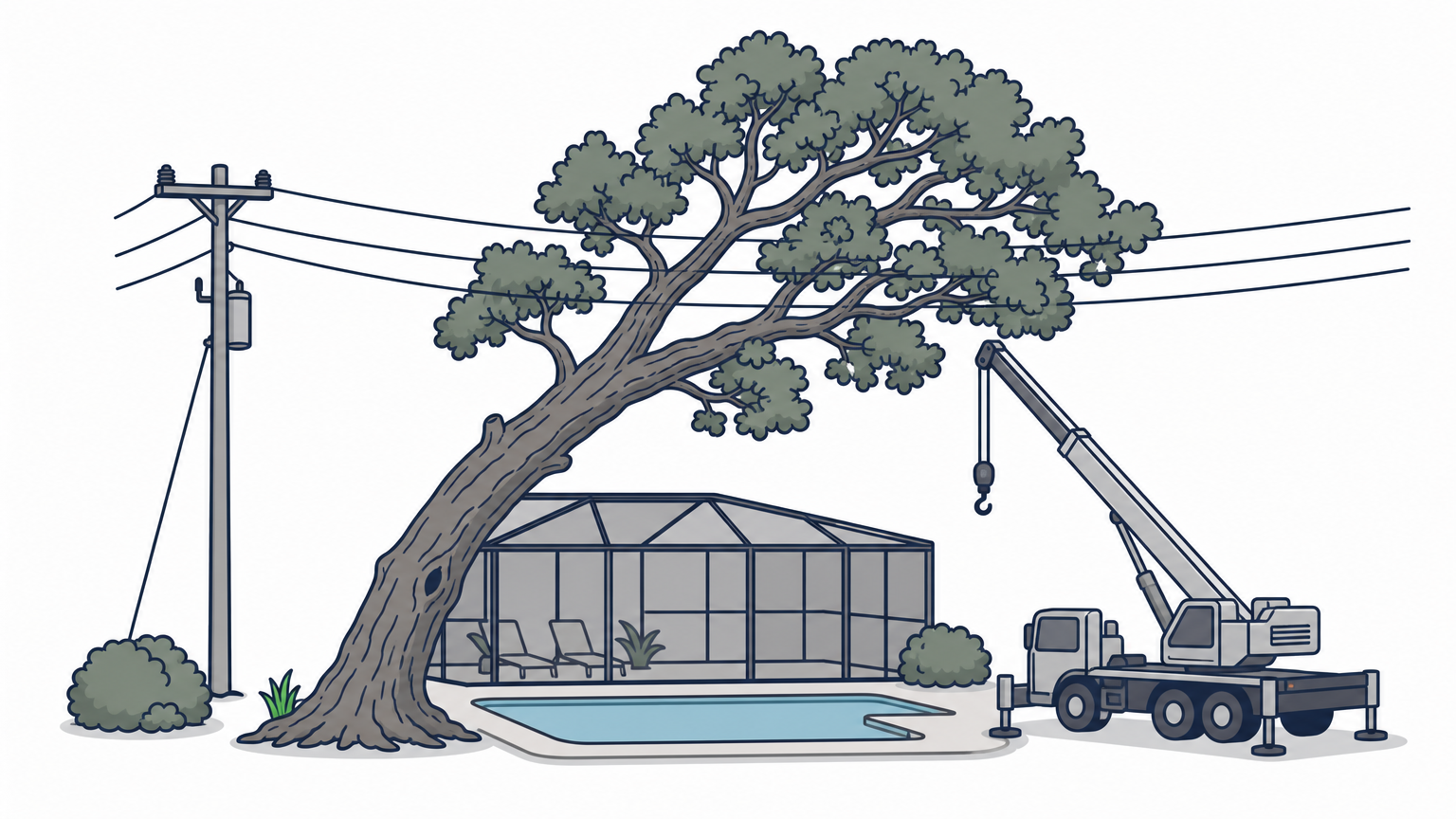
Every tree removal job is different, and that's why two neighbors can pay wildly different amounts for what taking a tree down actually costs, even when it looks like the same service. Tree service removal cost isn't a flat rate because the crew isn't just cutting wood, they're managing risk, access, equipment, and disposal all at once. A 30-foot palm in an open yard is a half-day job. A 70-foot oak leaning over a pool cage with power lines running through the canopy is a full crew, a crane, and a lot more insurance liability. Once you understand what actually drives the price, quotes stop feeling random.
Size, height, and trunk diameter
Bigger trees take more time, more equipment, and more manpower to bring down safely, and that shows up directly in the bid. A tree under 30 feet with a trunk under 12 inches might run $150 to $500. Push that to 60 feet or more with a thick trunk, and you're often looking at $1,500 to $3,000 or higher.
| Tree height | Typical cost range |
|---|---|
| Under 30 ft | $150 - $500 |
| 30-60 ft | $500 - $1,500 |
| 60-80 ft | $1,500 - $3,000 |
| Over 80 ft | $3,000 - $5,000+ |
Access and location on the property
Proximity matters as much as size. If a tree is tucked against your house, fence, pool enclosure, or septic system, the crew has to work slower and often needs specialized rigging to lower limbs piece by piece instead of felling the whole tree at once. Overhead power lines add another layer of coordination, sometimes requiring the utility company to de-energize a line before work starts. Trees in tight side yards with no truck access can also mean hauling debris out by hand, which adds labor hours a straightforward front-yard removal never sees.
A tree's price tag has less to do with its species and more to do with what's standing in the way of a clean fall.
Tree condition and species
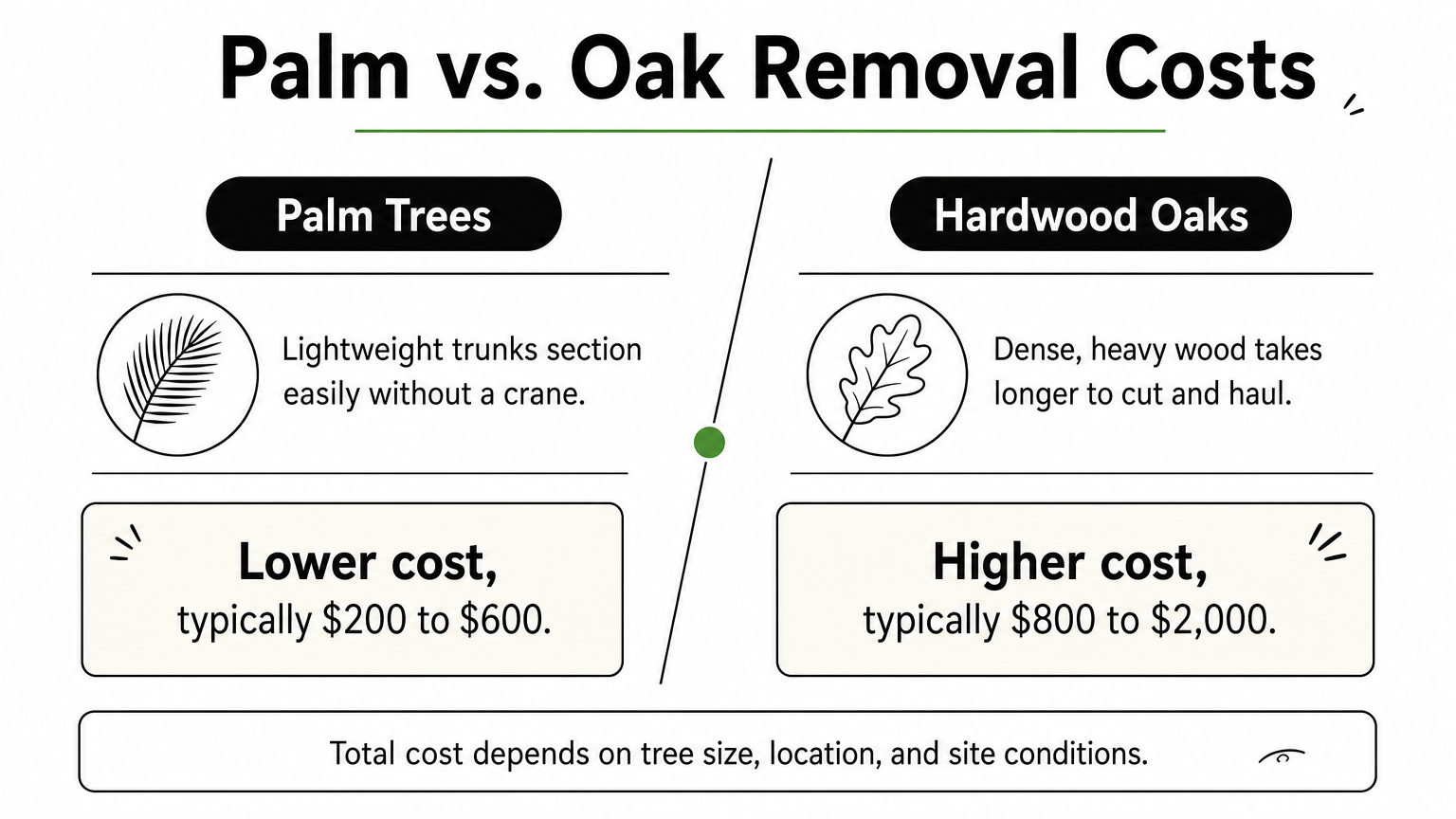
A healthy tree with strong wood is more predictable to remove than a decaying one, but that doesn't mean dead trees are always cheaper. The cost of dead tree removal often runs higher than a live tree of the same size because brittle limbs, weak root structure, and hidden rot make the job riskier and slower. Certain species also carry their own challenges: palms need specialized climbing gear, while dense hardwoods like oak take longer to cut and haul because of their weight.
Equipment needs
Some jobs call for more than a chainsaw and a truck. If a tree needs to be removed in sections because of tight clearance, or if it's too large or unstable to fell in one piece, a crane changes the math significantly. Crane-assisted removals commonly add $500 to $1,500 or more to the total bill, depending on how long the equipment is on site and how difficult the setup is. Bucket trucks, stump grinders, and chippers each carry their own rental or operating costs that a company factors into the final number, which is part of why an accurate quote requires an in-person look rather than a phone estimate.
How to get an accurate tree removal cost estimate
Getting a number you can actually trust starts with skipping phone estimates. Tree removal near me cost searches often turn up a tree removal cost calculator that spits out a range based on zip code alone, but those tools can't see the power line running through your canopy or the fence six feet from the trunk. A real estimate requires someone standing in your yard, looking up.
Request an in-person walkthrough
A licensed arborist or crew lead needs to assess trunk diameter, lean direction, root condition, and nearby structures before quoting a firm price. This is also when they'll flag whether a crane or bucket truck is necessary, which changes the bid substantially. At Integrity Landscape, our tree service estimates in Jupiter, FL start with exactly this kind of on-site look, so you're not guessing based on a generic price sheet.
The only estimate worth trusting is one written after someone has actually looked at your tree.
Ask what the quote actually includes
Two bids can look similar on paper and cover completely different scopes of work. Before comparing prices, confirm whether the quote includes stump grinding, debris hauling, and cleanup, or whether those are billed separately. Ask about permits too. Some Palm Beach County municipalities require permits for removing protected species or trees over a certain size, and a contractor who skips that step can leave you liable for fines later.
Compare licensed, insured providers
Lowball quotes almost always mean something is missing, whether that's insurance coverage, proper disposal, or the labor to finish the job cleanly. Verify that any company you're considering carries liability insurance and workers' compensation, since tree work ranks among the more dangerous trades and an uninsured crew puts your property at risk if something goes wrong. Same-day quotes and next-day scheduling are reasonable to expect from an established local company, but a fair price still depends on someone assessing the actual tree in front of them.
Tree removal cost by size and tree type
Not every tree of the same height costs the same to remove. Tree service removal cost shifts based on species because wood density, branch structure, and root systems all change how long a crew spends on site. A lightweight palm and a dense live oak of similar height can land in completely different price brackets, even with identical access and no power lines in play.
Palms and smaller ornamentals
Queen palms, sabal palms, and other common Florida ornamentals tend to fall on the lower end of the price range. Their trunks are lighter and easier to section, and most crews can drop them without a crane unless they're wedged against a structure. Expect $200 to $600 for a typical palm removal, with taller royal palms sometimes running closer to $800 due to their height and the specialized climbing gear needed.
Hardwoods like oak and mahogany
Oaks, mahoganies, and other hardwoods take longer to cut, section, and haul because the wood is dense and heavy. A mature oak in the 40 to 60 foot range often costs $800 to $2,000, and that number climbs fast if the canopy spreads wide over a roof or driveway.
Pines and fast-growing softwoods
Pines grow tall quickly, and height alone can push costs up even though the wood itself is lighter than oak. A pine over 70 feet, especially one leaning near a fence or structure, commonly falls between $1,000 and $2,500.
| Tree type | Typical size | Cost range |
|---|---|---|
| Palm (queen, sabal) | 20-40 ft | $200 - $600 |
| Royal palm | 40-60 ft | $500 - $800 |
| Oak or mahogany | 40-60 ft | $800 - $2,000 |
| Pine | 60-80 ft | $1,000 - $2,500 |
Species tells you what the crew is fighting against, not just how tall the ladder needs to be.
Knowing where your tree falls on this table of average removal costs by tree size gives you a realistic starting point before a crew ever walks your property, and it explains why two quotes for "one tree removal" can look nothing alike.
Cost of removing dead, storm-damaged, or emergency trees
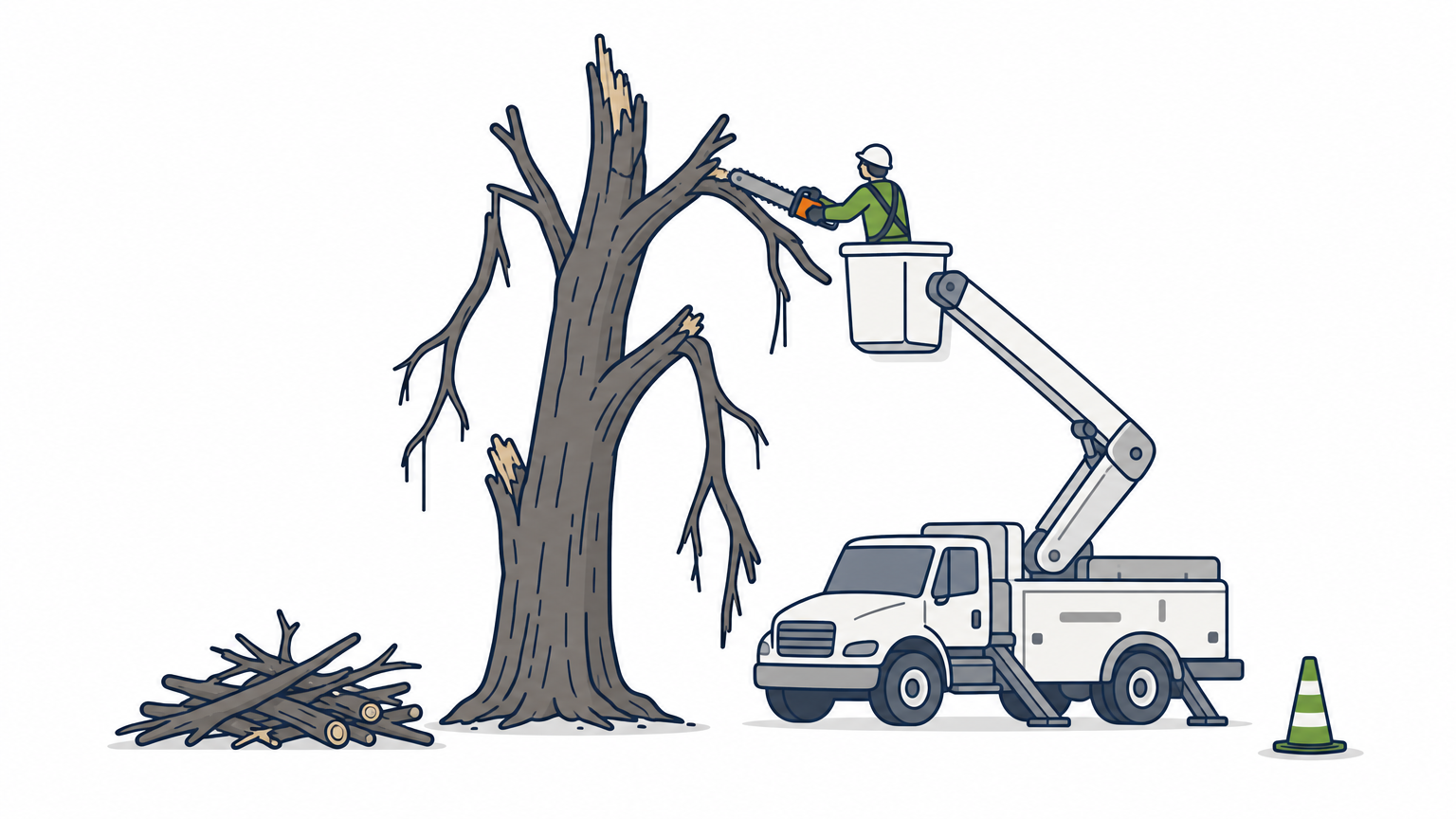
A dead tree in your yard is not a bargain removal, even though it looks like less work than a live one full of leaves. The cost of dead tree removal typically runs 10 to 25 percent higher than removing a healthy tree of the same size, because brittle wood, weakened limb attachments, and unpredictable breakage make every cut riskier. Crews often can't climb a dead tree the way they'd climb a live one, so they rely more heavily on bucket trucks or cranes, and that equipment cost gets passed along in the bid.
Why dead and dying trees cost more
Decay hollows out a trunk from the inside, and a crew has no way to know how much sound wood is left until they start cutting. That uncertainty means slower, more deliberate work, extra rigging to control falling sections, and sometimes a second person on site purely for safety spotting. A 50-foot dead oak that would run $800 as a live removal can climb toward $1,200 to $1,500 once you factor in the added caution and equipment.
Dead wood doesn't fall predictably, and that unpredictability is what you're actually paying for.
Storm damage and after-hours emergency calls
Hurricane season turns tree removal in Palm Beach County into a different kind of job entirely. A tree that's already split, leaning on a roof, or blocking a driveway after a storm needs a same-day or next-day response, and that urgency shows up in the price. Emergency removals commonly cost 15 to 30 percent more than a scheduled job, since crews are rearranging their week to fit you in and often working around downed power lines or unstable structures.
A few signs mean you're dealing with an emergency, not a routine job:
- The tree is leaning noticeably more than it was yesterday
- Roots are visibly lifted or the soil around the base has cracked
- Large limbs have already snapped and are hanging in the canopy
- The tree is resting against a roof, fence, or power line
If you see any of those, call for emergency tree removal right away instead of waiting for a routine quote cycle.
Extra costs to expect: stumps, debris, and cleanup
Most tree removal quotes cover cutting the tree down, but ask about stump grinding, debris hauling, and property cleanup before you sign anything, because these often show up as separate line items. A bid that looks like a bargain can end up costing more once you add these back in, so ask what's excluded before comparing numbers side by side.
Stump grinding and removal
A stump grinding service that takes the stump below grade typically costs $75 to $400, depending on trunk diameter, and full stump removal, digging out the roots entirely, runs higher because it involves more labor and sometimes fill dirt to level the hole. Stump grinding cost scales with diameter, and what stump and tree removal costs together follows the same logic:
| Stump diameter | Grinding cost |
|---|---|
| Under 12 in | $75 - $150 |
| 12-24 in | $150 - $250 |
| 24-36 in | $250 - $400 |
| Over 36 in | $400+ |
A tree isn't fully gone until the stump is, and that's usually a separate bill.
Debris hauling and log removal
Hauling away branches, logs, and wood chips adds another $50 to $200 to most jobs, though some companies fold this into the base quote for standard-sized trees. Large hardwood trunks sometimes get left on site if you want firewood, which can trim the final bill since hauling heavy logs off-property takes extra truck trips.
Cleanup and yard restoration
Landscape beds, sod, and irrigation lines near the removal site can get damaged during the job, especially with crane work or heavy equipment access. Full-service cleanup should mean raking, blowing off debris, and repairing any tire ruts left in the lawn, since a crew that leaves without a final walkthrough often leaves you with work of your own. Reputable crews build this into their process rather than treating it as an afterthought, which is worth confirming before the saws start.
What to keep in mind before you hire
Pricing a tree removal always comes back to the same variables: size, species, access, and condition. Tree service removal cost swings widely because every yard presents a different set of obstacles, and no phone quote can account for a fence six feet from the trunk or a canopy tangled in power lines. Getting a fair number means letting someone walk your property before you sign anything.
Questions about stump grinding, debris hauling, and permits belong in that first conversation, not buried in a follow-up invoice. Once you know what a company includes in its base price, comparing bids gets a lot simpler.
If you're ready for a real number instead of a guess, request an on-site tree removal estimate from Integrity Landscape's licensed, insured crew serving Jupiter and the surrounding coastal communities.