Cost of Tree Removal: What You'll Pay in 2026
You've got a tree that needs to come down, and before you call anyone, you want a real number. Not a vague range buried in someone's sales pitch, but an actual sense of what you'll pay. The cost of tree removal in Palm Beach County depends on more than just "how big is the tree," and quotes can swing by hundreds or even thousands of dollars depending on who shows up to give them.
So here's the direct answer: most homeowners in our service area pay between $400 and $2,500 for a single tree, with larger trees, storm damage, and tricky access pushing costs toward the higher end fast. Height, trunk diameter, proximity to your house or power lines, and whether a crane is needed all factor into that final invoice.
In this article, we'll break down real price ranges by tree size, explain what drives those numbers up or down, and cover extra costs like stump grinding and debris hauling that often get left off the initial quote. By the end, you'll know what a fair estimate looks like before you ever pick up the phone.
Why tree removal costs vary so much
Asking "how much does a tree removal cost" is a bit like asking how much a car costs. The answer depends entirely on what you're comparing. A 20-foot ornamental in your front yard and a 90-foot oak leaning over your neighbor's roof both fall under "tree removal," but the labor, equipment, and risk involved couldn't be more different. Understanding what actually drives the price helps you spot a fair quote from an inflated one, and it helps you avoid the lowball bid that turns into a change order once the crew shows up.
Height and overall size
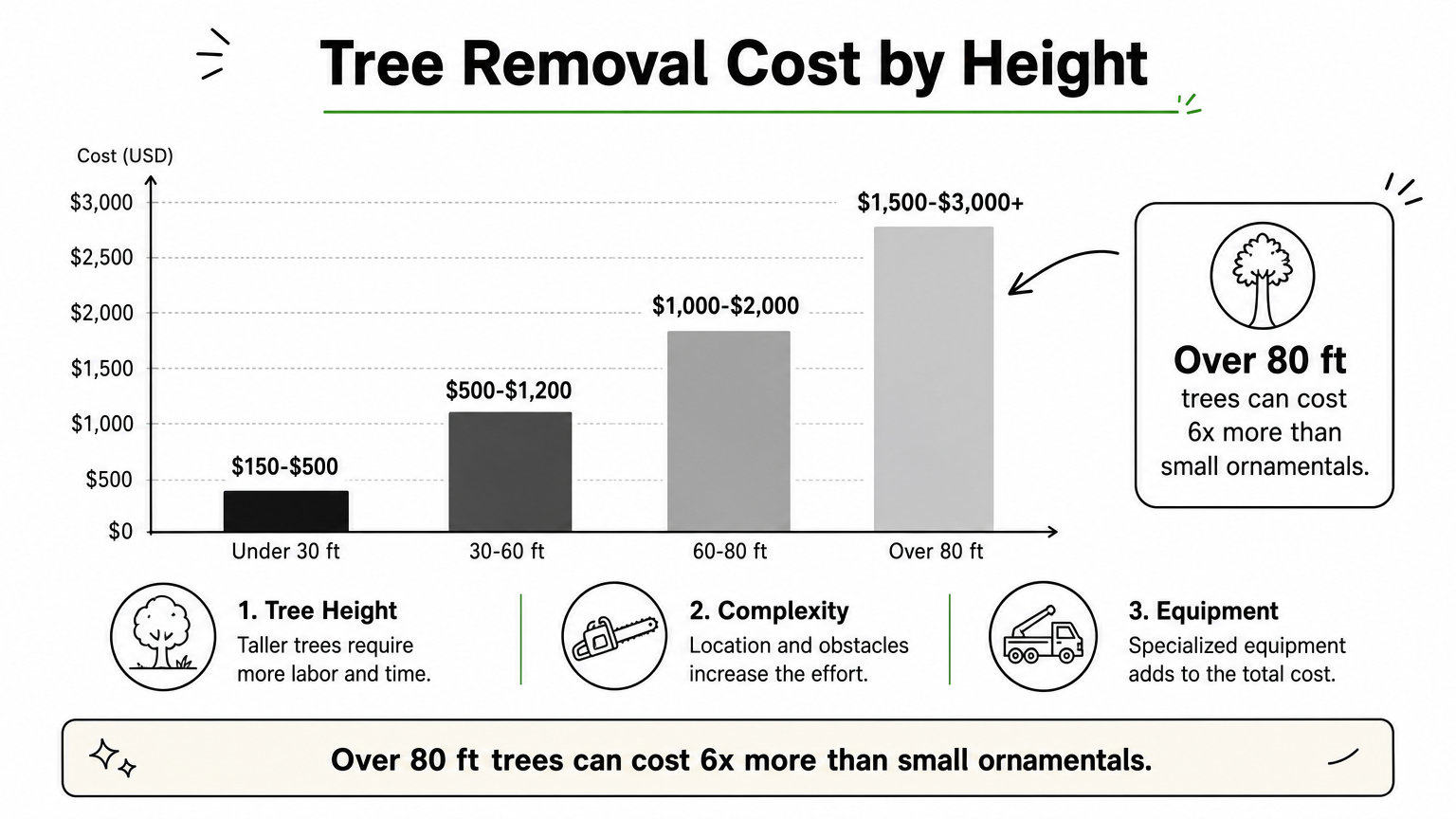
Size is the single biggest factor in any tree removal cost estimate, and most contractors, including us, price around it first before layering on other variables. A small tree under 30 feet might run $150 to $500 , while a mature tree over 80 feet with a wide canopy can climb past $2,000 before you factor in stump grinding or difficult access.
| Tree Height | Typical Cost Range |
|---|---|
| Under 30 ft (small ornamentals) | $150 – $500 |
| 30 – 60 ft (medium shade trees) | $500 – $1,200 |
| 60 – 80 ft (large oaks, pines) | $1,000 – $2,000 |
| Over 80 ft (mature canopy trees) | $1,500 – $3,000+ |
Height sets the starting price, but everything else on this list decides how far above it you'll actually land.
Trunk diameter and species
Diameter matters almost as much as height, because a short, thick trunk can be harder to cut and haul than a tall, skinny one. Hardwoods like oak take longer to cut through and produce heavier debris than softer species like pine or ficus , which adds labor time even when the height is similar. Palms are their own category entirely; they're often quicker to remove but require specialized handling for the fibrous trunk and heavy fronds, which some crews price differently than a typical shade tree.
Location and accessibility
Getting equipment to the tree changes everything about the job. A tree in an open backyard with truck access is straightforward. A tree wedged between a fence, a pool cage, and a power line is not, and that difficulty shows up directly on your invoice. Crews often need to remove branches by hand, use ropes to lower sections instead of letting them fall, or bring in a crane when the tree overhangs a roof or a neighbor's property. Crane-assisted large tree removal alone can add $500 to $1,500 to a job that would otherwise be routine, and it's usually the single biggest line item beyond the base removal itself.
Tree condition and complexity
Condition drives cost in ways homeowners don't always expect. A dead or storm-damaged tree can actually be riskier to remove than a healthy one, since weakened limbs are unpredictable and can shift or drop without warning. Emergency removals after a storm, when a tree is already leaning on a structure or blocking a driveway, typically carry a premium because crews are working under time pressure and higher risk. Diseased trees with internal rot sometimes complicate the cut itself, since arborists can't always predict how the trunk will fall once weight is compromised. All of this is why two quotes for what looks like the same tree can differ by hundreds of dollars, and why an in-person assessment beats a phone estimate every time.
How to get an accurate tree removal estimate
Getting a real number for tree removal service cost means skipping the phone quote and asking for someone to walk your property. Photos and a rough description over the phone might get you a ballpark, but they can't account for a hidden power line, a soft spot in the trunk, or a fence that limits equipment access. Reputable companies, including ours, offer free on-site estimates because the difference between a rough guess and an accurate one usually comes down to seeing the tree in person.
A quote you get without anyone stepping foot on your property isn't an estimate, it's a guess with a dollar sign attached.
What a written estimate should include
A proper estimate spells out exactly what you're paying for, not just a single lump-sum number. Before you sign anything, make sure the paperwork covers:
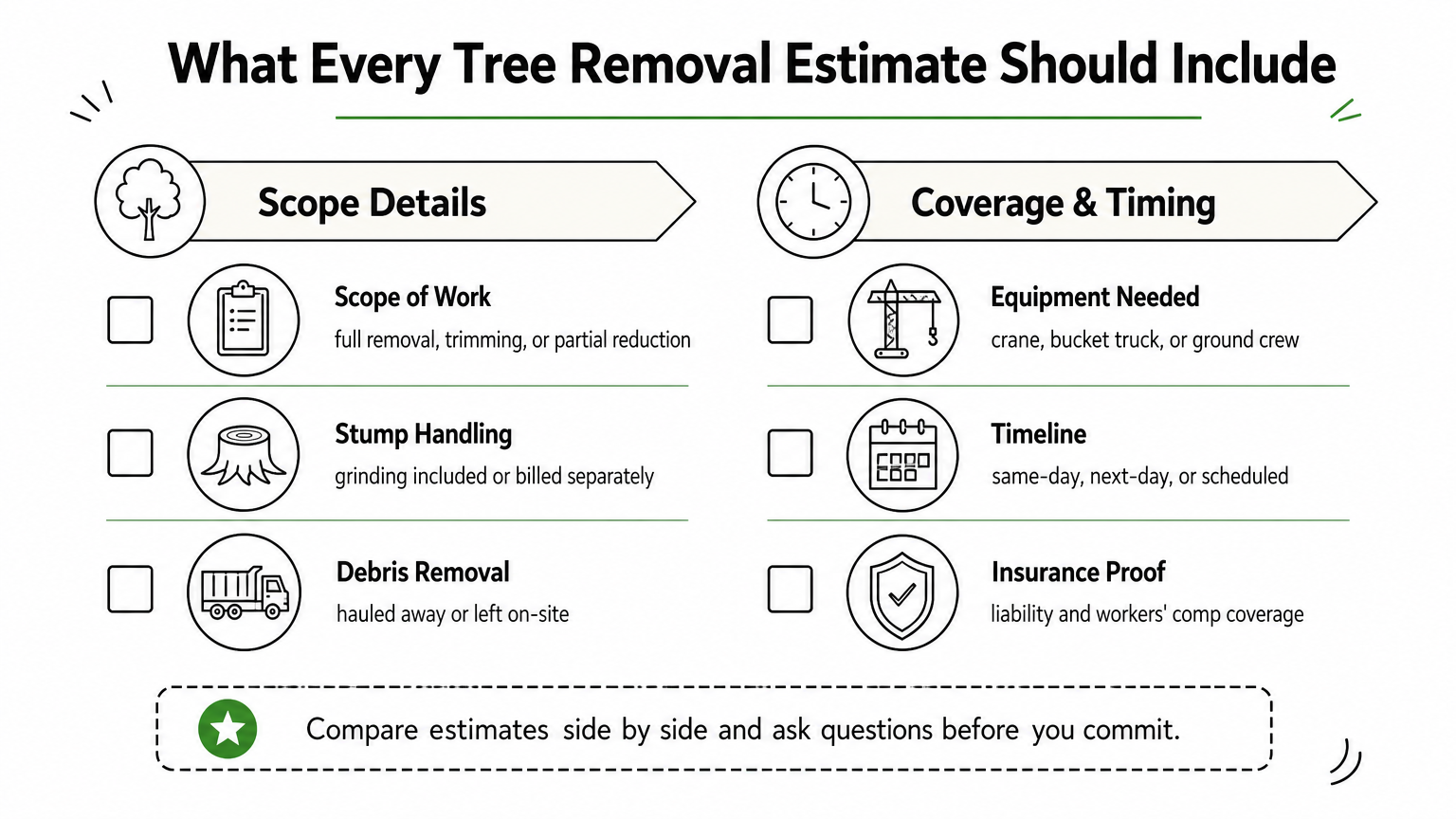
- Scope of work : full removal, trimming only, or partial canopy reduction
- Stump handling : grinding included or billed separately
- Debris removal : hauled away or left on-site for you to manage
- Equipment needed : crane, bucket truck, or ground crew only
- Timeline : same-day, next-day, or scheduled for a specific week
- Insurance proof : liability and workers' comp coverage, available on request
Vague estimates that just list a price with no breakdown are the ones that turn into surprise add-on charges once the crew arrives.
Get multiple quotes, but compare apples to apples
Three quotes for the same tree can look wildly different if one contractor includes stump grinding and hauling while another only prices the cut-down. When you're comparing an estimated cost of tree removal across companies, ask each one to itemize the same services so you're not comparing a bare-bones quote to a full-service one. Low bids are often low because something got left off, and that something shows up as an invoice add-on after the work's already started.
Ask about licensing and insurance upfront
Any company you're considering should carry both general liability and workers' compensation insurance, and they should hand over proof without hesitation. Tree work is dangerous, and an uninsured crew that damages your roof or gets hurt on your property can leave you holding the bill. At Integrity Landscape, every estimate comes with a dedicated project manager who walks the property with you, explains the scope, and puts everything in writing before a single cut is made. That kind of transparency is what separates a fair quote from one you'll regret accepting.
Timing your estimate request
Requesting quotes right after a storm, when demand spikes and crews are stretched thin, often means paying a premium. If the tree isn't an emergency, getting your estimate during calmer weather typically gets you a more competitive, unhurried price.
Additional costs that can affect your total price
The number on your initial quote rarely tells the whole story. Most homeowners budgeting for the cost of tree removal forget to ask about the extras that show up after the tree is already on the ground, and those extras can add hundreds of dollars to a job that looked affordable on paper. Knowing what's typically excluded from a base removal price helps you avoid sticker shock when the final invoice arrives.
Stump grinding
Grinding a stump down below grade is almost always priced separately from the removal itself, and it's the add-on people forget most often. Pricing usually runs by diameter, with small stumps costing far less than the wide base of a mature oak or banyan.
| Stump Diameter | Typical Grinding Cost |
|---|---|
| Under 12 inches | $75 – $150 |
| 12 – 24 inches | $150 – $300 |
| Over 24 inches | $300 – $500+ |
If stump grinding isn't listed on your quote, assume it's not included, and ask before you sign.
Debris hauling and cleanup
A felled tree turns into a lot of material fast, and someone has to deal with the logs, branches, and wood chips left behind. Some companies include full debris hauling in the base price, while others charge extra to haul it away or leave it stacked curbside for you to handle. If you want firewood or mulch kept on-site, say so upfront, since crews often assume you want everything cleared unless told otherwise.
Permits and HOA approval
Certain municipalities in Palm Beach County require a permit before a residential tree removal happens, especially for protected species or trees above a certain diameter. If you live in a community with an HOA, you may also need architectural approval before work starts. Permit fees are usually modest, but the paperwork can add a few days to your timeline, so factor that into any project with a deadline.
Multiple trees and bundled discounts
Removing several trees in one visit almost always costs less per tree than scheduling separate appointments, since the crew and equipment are already mobilized on your property. If you're clearing a lot for new landscaping or removing a row of storm-damaged trees, ask for a bundled quote rather than pricing each one individually.
Emergency and after-hours service
A tree down on your roof at 9 p.m. costs more to remove than the same job scheduled during regular business hours. Emergency crews often charge a premium for after-hours dispatch, and that's the tradeoff for getting someone out immediately instead of waiting until morning. If the tree isn't blocking access or threatening a structure, waiting for a standard appointment keeps the price down.
Tree removal costs in Jupiter and Palm Beach County
Local conditions push pricing in ways that generic national averages never capture. Jupiter, Palm Beach, and Singer Island sit in a hurricane corridor with sandy soil, mature ficus and oak canopies, and tight lot lines that make equipment access harder than in a typical suburban neighborhood. That combination means the average cost of a tree removal in our service area often lands toward the middle or upper end of national ranges, especially for older properties with decades-old growth.
Coastal soil and root systems
Sandy, waterlogged soil common along the coast doesn't anchor root systems the way denser inland soil does, so trees here are more prone to leaning and partial uprooting after heavy rain or wind. That instability changes how a crew approaches the cut, since a tree with a compromised root ball can shift mid-removal. Expect a slightly higher quote for any tree showing visible lean or exposed roots, since the crew has to plan for controlled sections instead of a straightforward drop.
Hurricane season demand spikes
Demand for tree removal service cost estimates spikes hard between June and November, when storm damage floods every crew's schedule at once. Booking removal work in the off-season, from December through May, typically gets you faster scheduling and more competitive pricing, since crews aren't stretched thin across dozens of emergency calls.
Book your removal before hurricane season starts, and you'll pay less for the exact same tree.
Local species that show up most often
Certain species dominate yards across Jupiter and Palm Beach County, and each comes with its own pricing quirks:
| Local Tree Type | Typical Removal Cost |
|---|---|
| Royal or Queen Palm | $200 – $600 |
| Ficus (mature) | $800 – $2,000 |
| Live Oak (large) | $1,000 – $2,500 |
| Australian Pine | $500 – $1,500 |
Ficus trees deserve special mention, since their aggressive root systems often crack pool decks and driveways, adding excavation work that isn't part of a standard quote.
HOA and municipal rules across the county
Many Palm Beach County communities, particularly on Jupiter Island and in gated developments near the coast, have strict tree protection ordinances covering native and canopy species. Removing a protected tree without approval can mean fines that dwarf the removal cost itself, so check with your HOA or the local municipality before scheduling work. Our project managers handle this coordination directly, so you're not left tracking down permit paperwork on your own.
If you want a number specific to your property instead of a countywide average, request a free service estimate and we'll send someone out to walk the site with you.
Signs a tree needs to come down
Not every damaged or aging tree needs to go, but knowing the difference between a tree that needs professional pruning and canopy shaping and one that needs to come down entirely can save you from a much bigger bill later. Waiting too long on a tree that's already failing often turns a routine removal into an emergency call, and emergency calls cost more across the board. Here's what actually signals a tree is done, not just struggling.
Dead branches and thinning canopy
A tree that's lost most of its leaves outside of normal seasonal drop, or one with large dead limbs scattered through an otherwise green canopy, is telling you something. Dead wood doesn't heal, and a limb that's already dry and brittle can drop without warning, especially during Florida's summer storms. If more than half the canopy looks dead or sparse compared to neighboring trees of the same species, that's usually past the point where trimming fixes the problem.
Visible lean or exposed roots
A tree that's started leaning, especially after heavy rain, is often dealing with a compromised root system underneath. Sandy coastal soil doesn't hold roots the way denser inland soil does, so a lean that would look minor elsewhere can mean serious instability here. Exposed roots, soil heaving near the base, or cracks radiating out from the trunk's base are all signs the tree could come down on its own, on your schedule or not.
A leaning tree isn't asking for a trim, it's asking to be removed before it picks the time itself.
Fungus, cavities, and trunk damage
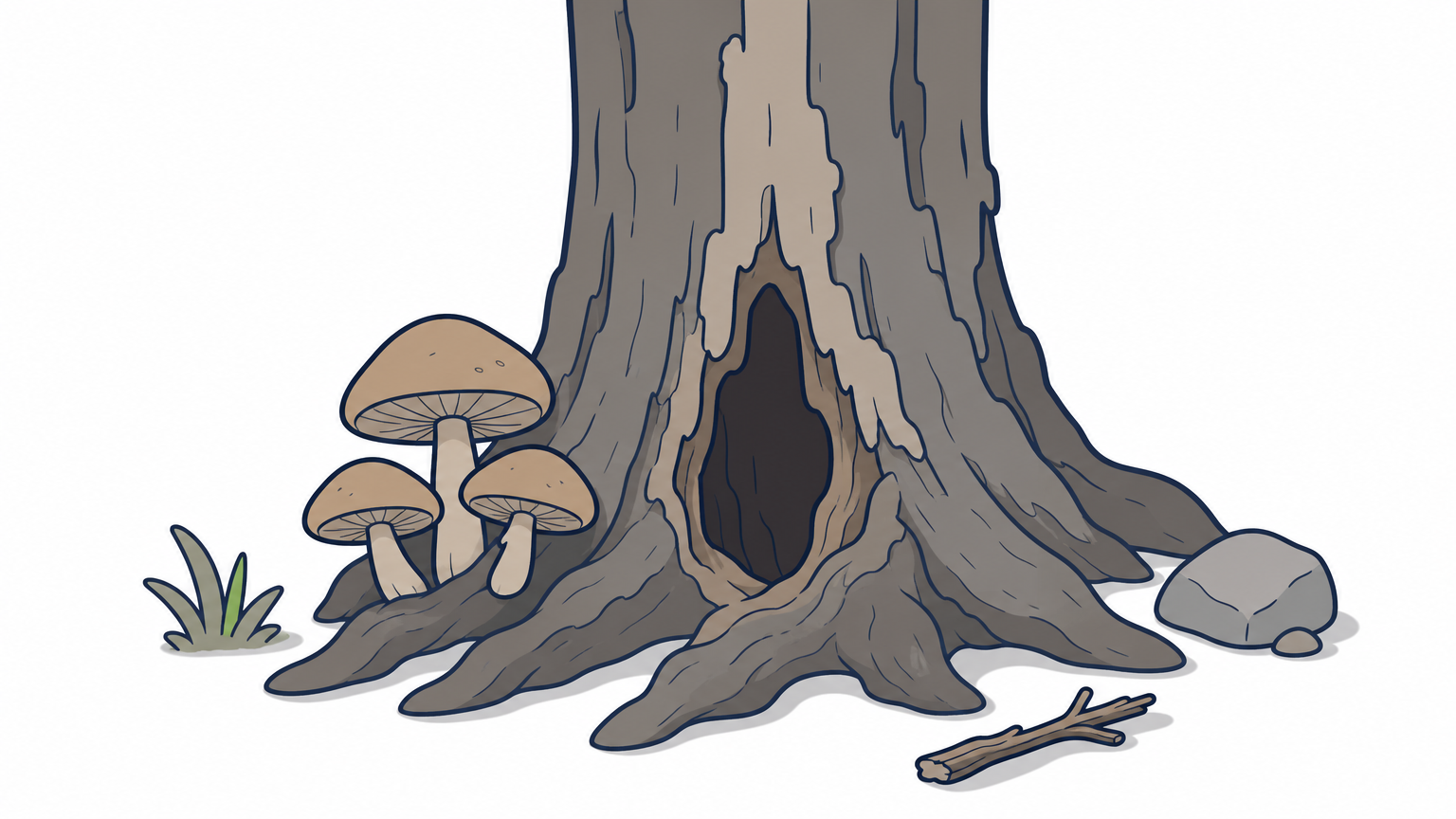
Mushrooms growing at the base of a trunk, soft or spongy wood you can push a finger into, and visible cavities all point to internal rot that's already spread further than it looks from the outside. Structural damage like large vertical cracks or peeling bark in sheets, paired with fungal growth, usually means the trunk can't be trusted to hold weight in wind. These trees often look fine from a distance right up until they don't.
Proximity to structures or power lines
Size and health aside, location alone can justify removal. A tree growing directly under power lines, close enough to your roofline that branches scrape it in wind, or with roots pushing into a foundation, creates ongoing risk that only grows as the tree matures. In these cases, removal isn't about the tree's condition, it's about what happens if it fails near something expensive.
If you're seeing any of these signs, don't wait for the next named storm to find out how serious it is. A quick assessment now is almost always cheaper than an emergency call later.
Planning your tree removal budget
Most single-tree jobs in Palm Beach County land between $400 and $2,500, but the real number depends on height, trunk diameter, access, and what condition the tree is actually in. The cost of tree removal you're quoted should always come from someone who's walked your property, not someone guessing off a photo. Build your budget around the base removal plus likely extras like stump grinding, debris hauling, and any permit fees your HOA or municipality requires, and you won't get blindsided by a final invoice that looks nothing like the estimate.
Don't wait for a leaning trunk or a storm warning to start asking questions. Get ahead of it now, while crews aren't slammed and pricing isn't inflated by emergency demand. If you're ready to see what your specific property would cost, book a free estimate for professional tree services in Jupiter, FL and get a real number from a team that shows up, walks the site, and puts it all in writing.