Tree Removal Cost Calculator: Estimate Your Price by Size
You've got a tree that needs to come down, and before you call anyone, you want a real number. Not a vague range some website spits out, but something tied to what actually drives price: height, trunk diameter, species, and how close that tree stands to your house or power lines. A tree removal cost calculator gives you that starting point, and it works whether you're pricing out one leaning oak or a whole row of overgrown pines.
This guide breaks down exactly how to estimate tree removal cost for your specific situation, from a small ornamental tree in the front yard to a massive canopy tree that needs a crane. We'll also cover the line items people forget to price, like stump grinding and hauling away debris, which can add hundreds of dollars once the tree itself is on the ground.
We work on properties across Jupiter and Palm Beach County every week, so these numbers reflect what removal actually costs here, not national averages that don't account for South Florida's palms, storm-damaged trees, and tight residential lots.
Why tree removal costs vary so much
Ask five tree companies for a quote on the same tree and you'll likely get five different numbers. That's not because someone's padding the bill. Tree removal pricing depends on a stack of variables that change from job to job, and missing even one of them throws off any estimate you calculate on your own.
Size and species set the baseline
Height and trunk diameter matter most. A 30-foot ornamental tree with a 12-inch trunk takes a two-person crew an hour or two. A 70-foot oak with a 36-inch trunk needs specialized rigging, more labor hours, and sometimes a crane. Species matters too: palm tree removal usually costs less per foot than hardwoods because palms have soft, fibrous wood that cuts fast, while a mature pine or live oak with dense wood and heavy limbs takes longer to bring down safely.
The single biggest cost driver isn't the tree's height, it's how hard the crew has to work to get it down without hitting anything.
Access and location change the labor math
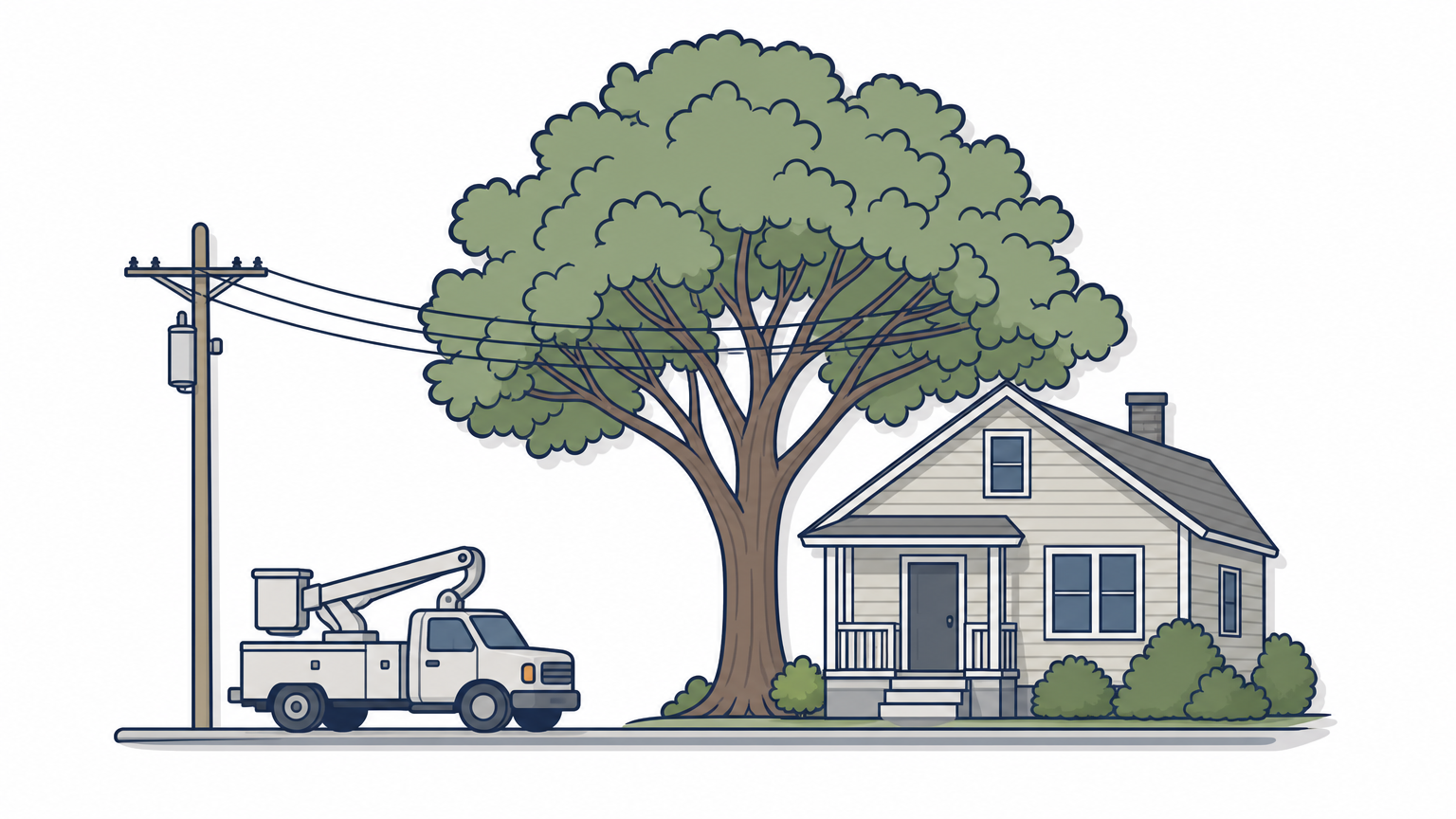
Where the tree stands changes everything. A tree in an open backyard with truck access is straightforward. A tree wedged between a pool cage, a fence, and a neighbor's property line forces the crew to remove it in smaller sections, by hand or with a crane, which adds hours and equipment costs. Overhead power lines add another layer of complexity, since crews near lines often need extra caution or a utility company on standby.
Condition and cleanup scope shift the final number
Condition plays a bigger role than most homeowners expect. A dead, leaning, or storm-damaged tree carries more risk, so fallen tree removal after a hurricane or windstorm often costs more than a controlled removal of a healthy tree, even if the fallen tree is smaller, because of the instability and debris involved. Cleanup scope is the last variable: hauling away a full canopy of branches and wood costs more than a job where you keep the wood for firewood.
| Factor | Low-cost scenario | High-cost scenario |
|---|---|---|
| Height/diameter | Under 30 ft, small trunk | Over 60 ft, large trunk |
| Species | Palm | Dense hardwood (oak, pine) |
| Access | Open yard, truck access | Tight lot, near structures |
| Condition | Healthy, standing | Dead, leaning, storm-damaged |
| Power lines | None nearby | Direct overhead conflict |
How to estimate your tree removal cost step by step
Grab a tape measure before you grab your phone. Most homeowners jump straight to requesting quotes, but a few minutes of measuring gives you a number you can sanity-check against any bid that lands in your inbox. Start with the basics that any tree removal cost estimator relies on, then adjust for the details that only apply to your specific tree.
Measure and multiply
Work through these steps in order, and you'll land within a realistic range before anyone shows up:
- Measure the height from ground to top, using a phone app or the shadow method if you don't have a laser measure.
- Measure trunk diameter at chest height, about 4.5 feet off the ground.
- Identify the species , since palms, pines, and hardwoods each carry different per-foot rates.
- Note access and obstacles , including fences, pools, sheds, and overhead lines.
- Assess condition , flagging anything dead, leaning, or storm-damaged.
- Add a complexity multiplier if the crew needs a crane, bucket truck, or hand-carrying through a gate.
A tape measure and ten minutes of honest observation get you closer to an accurate number than any generic online calculator.
Once you've got those six data points, you can plug them into per-foot pricing ranges (which we'll break down next by size and species) to build your own working estimate. Still, treat that number as a starting point, not a final bid. Every tree company weighs access and condition a little differently, which is exactly why getting a couple of in-person quotes from crews who know Palm Beach County lots matters more than trusting a spreadsheet formula alone.
Tree removal cost by size, type, and condition
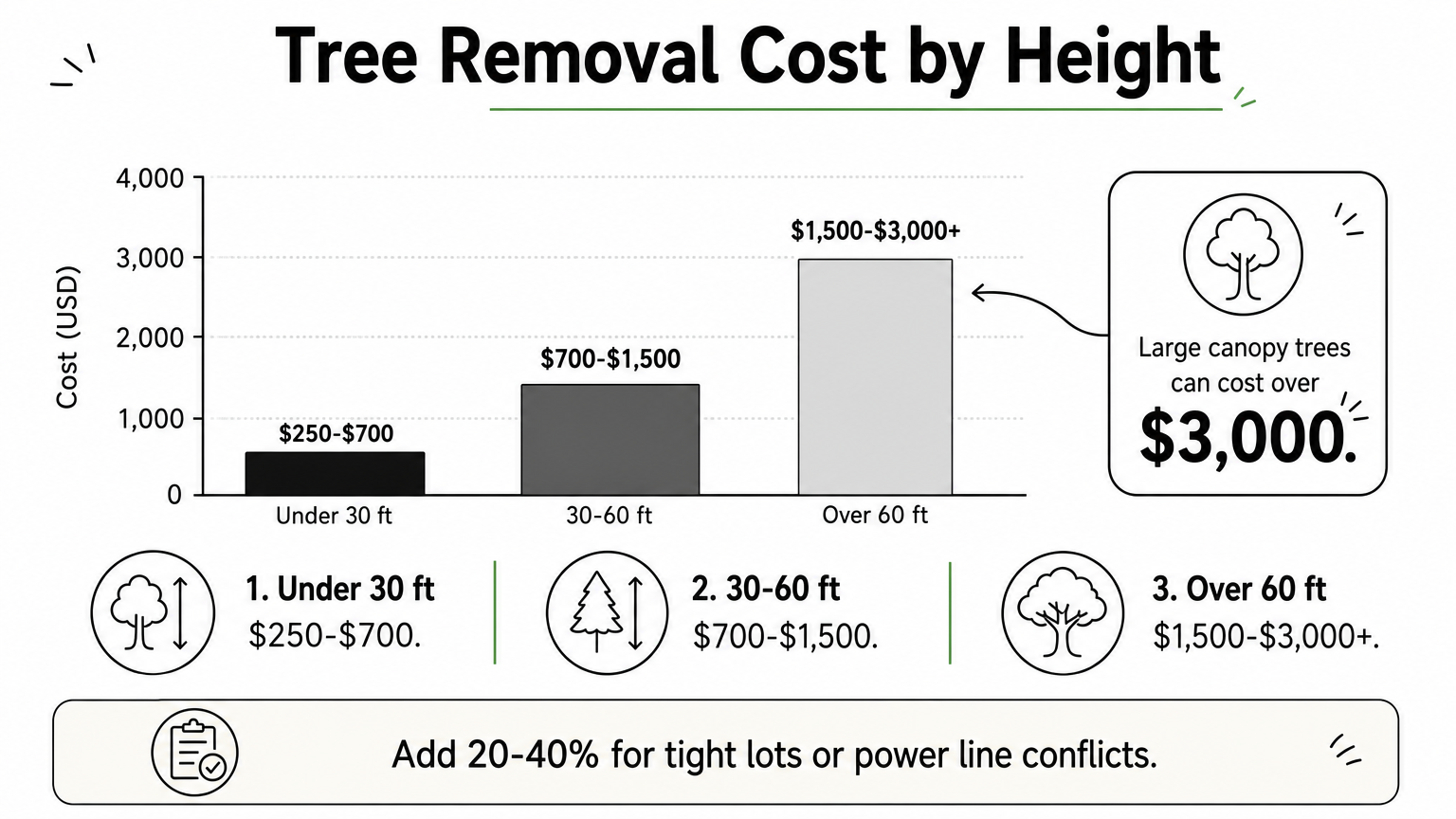
Numbers help more than ranges once you're staring at a quote, so here's the average tree removal cost by size across Palm Beach County jobs, broken down by the variables that matter most. These figures assume a straightforward job with truck access and no crane; add 20 to 40 percent for tight lots or power line conflicts.
Price ranges by size
Smaller jobs price differently than the big canopy removals, and a small tree removal cost calculator should reflect that gap instead of applying one flat rate across every size.
| Tree height | Typical cost range |
|---|---|
| Under 30 ft (small/ornamental) | $250 - $700 |
| 30-60 ft (medium) | $700 - $1,500 |
| Over 60 ft (large canopy) | $1,500 - $3,000+ |
A large tree removal cost calculator only earns its keep if it accounts for crane service for large tree removal, because that single line item can double the bill on a 70-foot oak.
Price ranges by species and condition
Species changes the math even at the same height. A palm tree removal cost calculator will land lower than a pine tree removal cost calculator for the same height, since palms cut faster and weigh less per section. Pines and hardwoods take longer to rig and drop safely, which pushes labor costs up.
| Species/condition | Adjustment vs. baseline |
|---|---|
| Palm | -10% to -20% |
| Pine | Baseline to +15% |
| Hardwood (oak, etc.) | +15% to +30% |
| Dead or storm-damaged | +20% to +40% |
Condition compounds these numbers fast. Storm-damaged trees carry structural risk that pushes even a mid-size job into the higher bracket.
Cost of stump grinding, branch, and debris removal
Getting the tree down is only half the job. Most quotes treat the trunk removal as one line item and stump grinding, branch chipping, and debris haul-away as separate add-ons, and skipping that math is how homeowners end up surprised by the final invoice. Stump and tree removal pricing should factor in stump diameter, since grinding a 12-inch stump takes a fraction of the time a 36-inch stump requires.
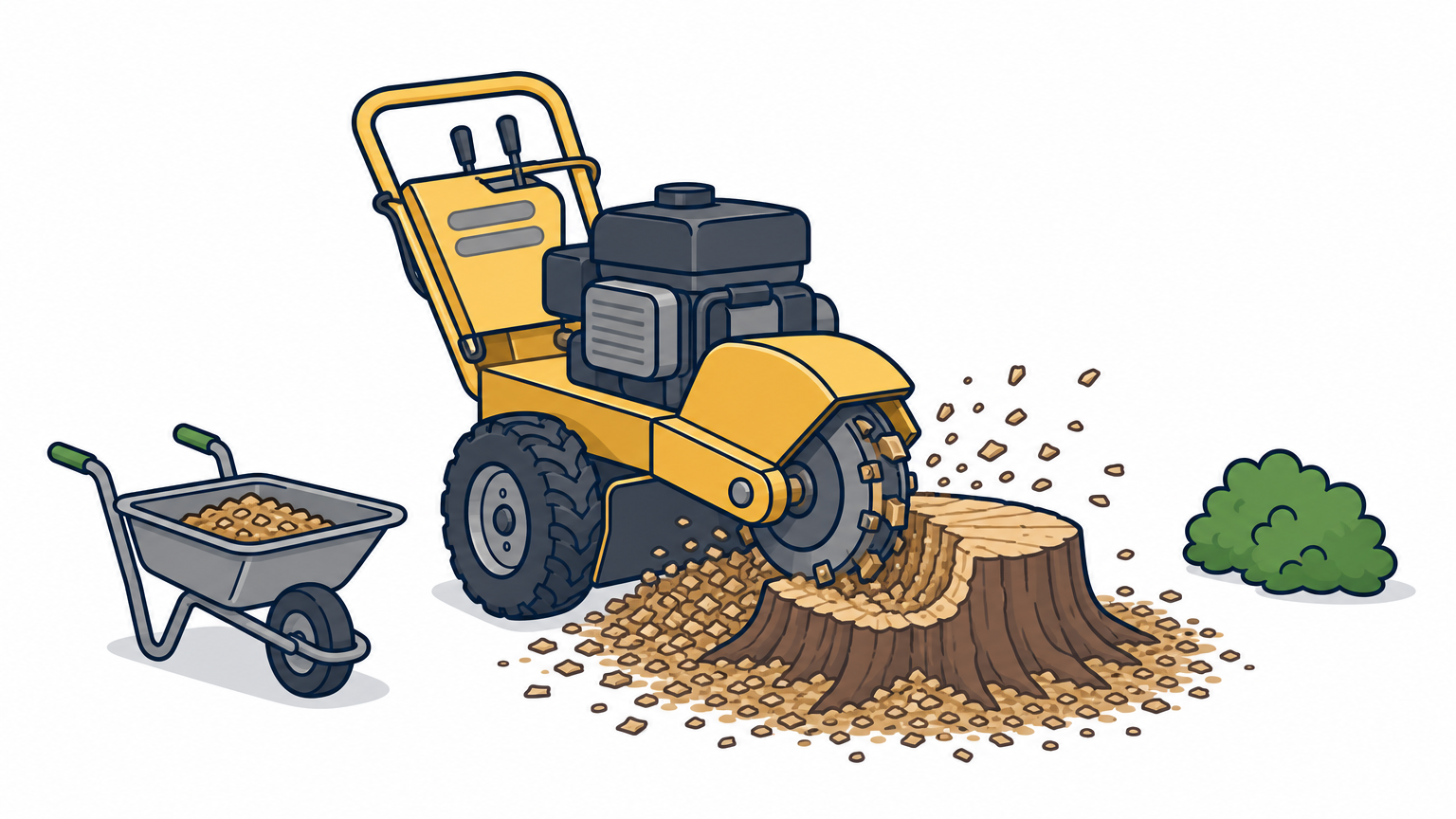
Budget for stump and debris removal separately, because treating them as "included" is the fastest way to underestimate your total cost.
What each add-on typically runs
Here's how these secondary costs break down across a typical Palm Beach County job:
| Service | Typical cost range |
|---|---|
| Stump grinding (per stump) | $100 - $400 |
| Branch/limb removal only | $150 - $500 |
| Full debris haul-away | $75 - $300 |
| Wood chipping on-site | Often free or low-cost add-on |
Species affects stump pricing too. Palms grind faster because the root ball is fibrous rather than solid wood, so a palm tree removal cost calculator paired with stump grinding in Jupiter, FL usually lands on the lower end of that range.
When branch and debris costs climb
Often overlooked, a tree branch removal cost calculator needs to account for whether limbs overhang a roof, pool cage, or fence line, since crews working around structures move slower and charge more per hour. Volume matters just as much for debris. A tree debris removal cost calculator should price debris and junk removal by truckload, not by tree, because a single storm-damaged oak can generate two or three loads of chipped wood and branches. If you plan to keep firewood or let a chipper leave mulch on-site, say so upfront. That one detail alone can shave $100 to $300 off your total bill.
How to get an accurate quote and avoid overpaying
Once you've got your own estimate, the next step is turning that number into real bids you can compare. A calculator gets you in the ballpark, but only an in-person quote accounts for exactly how a crew will access your specific tree, and that's where the real price gets locked in. Skipping this step and booking off a phone estimate is how homeowners end up with change orders mid-job.
Questions to ask before you sign anything
Getting three quotes only helps if you're comparing apples to apples. Ask every company the same set of questions:
- Does the quote include stump grinding , or is that priced separately?
- Is debris haul-away included, or will I be charged by the load?
- Are you licensed and insured for tree work in Palm Beach County?
- Who handles cleanup if the tree damages a fence, pool cage, or irrigation line?
- Is the price firm, or does it change if the crew finds rot or a different trunk diameter once work starts?
The cheapest quote usually isn't the best one, it's the one missing the line items that show up as extra charges later.
Why local, in-person quotes beat online estimates
Quotes matter more than any spreadsheet once trees sit close to structures, since clearing a damaged or overgrown tree after a storm needs someone walking the property to judge stability and access before naming a real number. Reputable companies send a project manager, not just a salesperson, to look at root systems, overhead lines, and cleanup scope in person. That's the difference between a number that holds and one that grows once the crew arrives with a chainsaw and finds the job is bigger than the photos showed.
Turning your estimate into next steps
A tree removal cost calculator gets you a working number, but it can't walk your property, check your trunk diameter, or spot the power line running through your canopy. Use everything above to build a realistic range, then treat that range as your negotiating floor when quotes start coming in.
Getting a real number still means getting eyes on the tree. Local expertise matters here because Palm Beach County lots, palms, storm patterns, and HOA rules don't match a national average, and a crew that knows Jupiter's soil and hurricane exposure will price your job more accurately than any online tool. Skip the guesswork on the parts that actually protect your property.
If you're ready to turn your estimate into a firm number, get a free tree removal quote from Integrity Landscape and have a project manager walk your property before anything comes down. You'll get a same-day estimate and a crew that treats your yard like it's their own.