
What Does Tree Branch Removal Cost? Prices and Key Factors
Tree branch removal cost is what a professional charges to cut a branch or limb off a tree and, in most cases, haul it away. For a small or medium branch, expect $75 to $250 . A large limb over 10 feet long typically runs $150 to $850 . The final number depends on the size of the limb, how high it sits, how easy it is to reach and what equipment the crew needs.
Those are national averages, so treat them as a baseline rather than a promise. You are paying for labor, risk and equipment, not for the wood. A quote that looks high or low only means something once you know what sits behind it.
This guide shows what drives the price of removing a branch, how to read and compare quotes, and how cleanup, insurance and timing change the total. Integrity Landscape handles tree trimming and removal in Jupiter, FL and across Palm Beach County, so the advice leans on how this work is scoped and quoted on residential properties.
Why tree branch removal prices vary so much
Tree limb removal prices vary because you are buying labor, risk and equipment, not wood. Two branches that look alike from the ground can differ by hundreds of dollars once a crew sees the height, the angle and what sits underneath.
Typical prices by type of job
The table below sets national averages side by side so you can place your own job. The figures come from cost data that homeowners and contractors report across the country.
| Job | Typical national cost |
|---|---|
| Small or medium branch | $75 to $250 |
| Large limb (over 10 feet long) | $150 to $850 |
| Broken or fallen limb | $80 to $100 per hour |
| Hauling away branches only | $75 to $250 per job |
| Trimming a whole tree | $400 to $900 per tree |
| Removing a whole tree | $400 to $1,200, by size |
| Emergency or after-hours work | $150 to $250 per hour |
The national average for a single branch job is about $150 . The reported floor is around $50 and the ceiling around $850. Your own quote can land above or below these numbers depending on access, season and the crew you hire.
A branch price is mostly labor, risk and equipment, so two similar-looking limbs can cost very different amounts.
Why a fair price beats the lowest price
The cheapest quote is not always the best deal. A very low number can mean a crew without proper insurance, or one that plans to cut corners on rigging. If a falling limb damages a roof, a fence or a screened pool enclosure, the repair will cost far more than the money you saved.
Cheap work also hurts the tree. Topping , which means cutting large branches back to stubs, can kill a tree. Climbing with spikes leaves lasting wounds in healthy wood. A fair price pays for a crew that lowers limbs with ropes, protects your property and cuts in a way the tree can recover from. Yards with pool enclosures, roofs and power lines under the canopy leave no margin for error.
What raises or lowers the cost of removing a limb
The cost of tree branch removal rises with limb size, height, difficulty of access and the equipment required. It falls when several branches are done in one visit, when the limb is already on the ground and when the area around it is clear.
Size, height and access
Large limbs on tall trees cost more because they take more labor, heavier equipment and extra safety precautions. A branch you can reach from a ladder is a different job from one 25 feet up and hanging over a roof. Crews often need a bucket truck once a tree reaches roughly 15 to 20 feet or more.
Access matters just as much. A tree beside a fence, a building or a power line slows the work, because the crew must lower each cut section on ropes instead of dropping it. A tight gate, a lawn that can't take a truck or a pool deck below the limb all add time. Removing several branches in the same visit lowers the cost per branch, since the crew only mobilizes once.
Height and access set the price more than the diameter of the branch does.
Equipment, crane work and crew size
Most small jobs need a climber, a pole saw and a chipper. Larger ones need a bucket truck and a crew of two or three. Hourly labor for tree trimmers typically runs $50 to $125 per hour , and some crews charge per branch for small jobs instead.
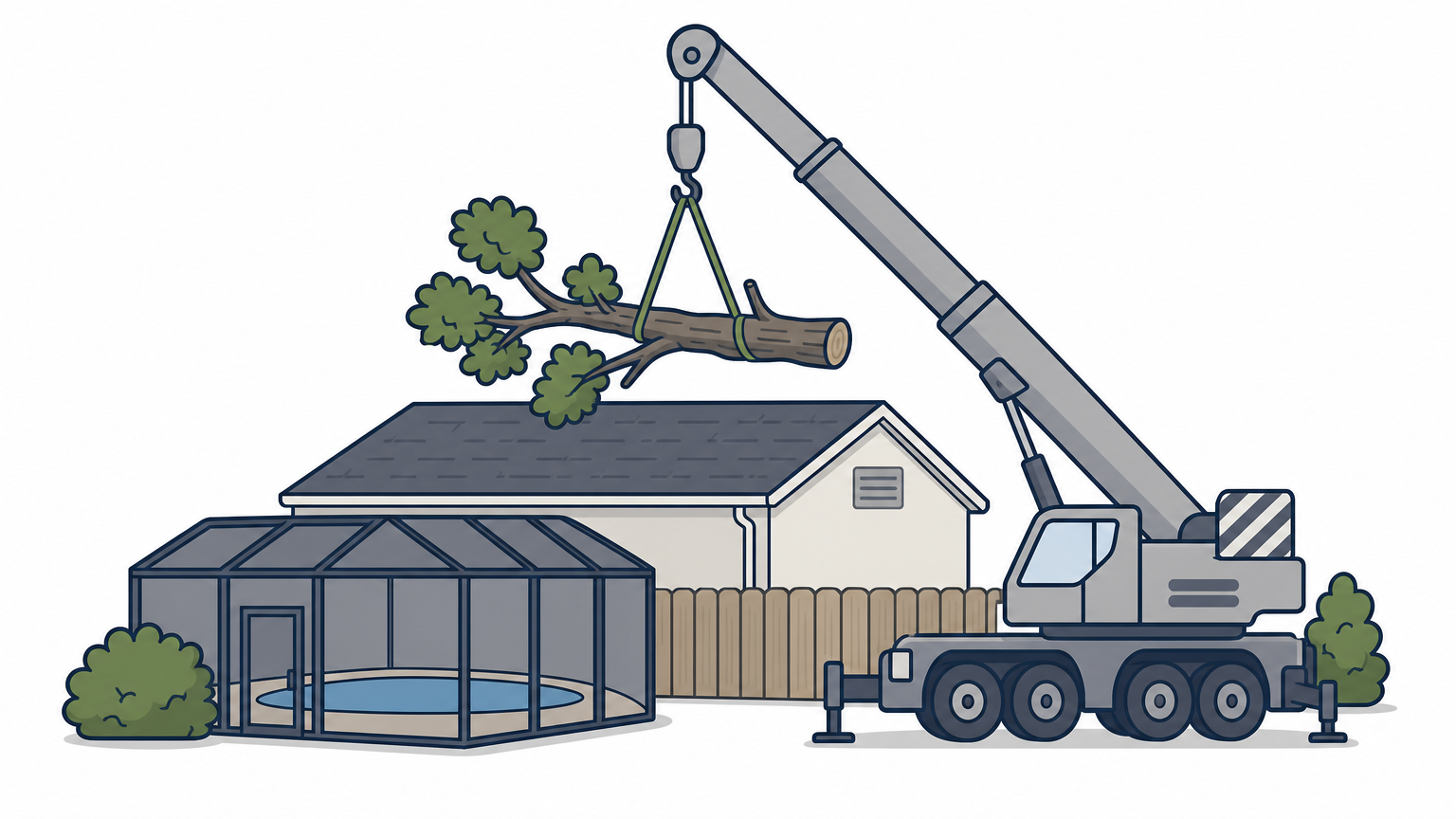
Limbs that hang over a house, a power line or a pool enclosure sometimes can't be lowered safely by hand. That is where crane support comes in. A crane lifts heavy timber straight up and over the obstacle, so nothing swings into your roof or screen. It costs more than a rope job, but it can be the cheaper choice once you count the risk of a damaged structure. Ask the crew early whether your limb needs a crane, because it changes the quote.
Timing, storms and tree health
Season and urgency move prices. Demand peaks in summer, and winter work can save as much as 20% . In Florida, hurricane season runs from June 1 to November 30, and after a major storm crews book up fast. Prices spike, so if the limb is not an immediate danger, waiting a week or more often brings them back down. Emergency and after-hours work adds roughly $100 to $250 per hour depending on the crew.
Tree health also counts. Diseased or rotting trees cost more to work on because wood can fail unpredictably. A certified arborist inspection typically runs $100 to $250 per hour . If the limb is part of a rotted or declining tree, removing the whole tree may make more sense than paying for repeated cuts. Whole-tree removal runs about $400 to $1,200 by size, and a tree of roughly 30 feet usually falls in the lower to middle part of that range. Stump grinding is a separate line item, around $100 to $400.
How to judge whether a quote is fair
You can judge a tree branch removal quote by checking three things: what the price covers, how it compares with national ranges for your limb size and whether the crew is licensed and insured. A fair quote is itemized and clear about cleanup.
Get an itemized quote
Ask each company to put the scope in writing. A usable quote lists these items:
- How many branches or limbs, and roughly how large each is
- Whether the price is per branch, per hour or per job
- The equipment planned, such as a bucket truck or crane
- Whether haul-away and chipping are included or charged separately
- Proof of license and liability insurance
- How the crew will protect your lawn, roof and fencing
Compare at least three estimates from different companies. Request a copy of the contract, and never pay in full up front . Photograph the tree before and after the work in case of a dispute.
A worked example
Say you have three branches to take off a mature oak: two small ones and one larger limb. A crew estimates three hours on site at $50 to $125 per hour. Haul-away is billed separately.
| Line | Low | High |
|---|---|---|
| Crew time, 3 hours at $50 to $125 per hour | $150 | $375 |
| Haul-away billed separately | $75 | $250 |
| Total | $225 | $625 |
A quote inside that $225 to $625 band is reasonable for the scope. A quote of $1,100 for the same job deserves a question. The reason may be a bucket truck, a crane or a limb over a roof, and a good company will tell you which one.
A fair quote is one where every dollar maps to a line you can read and a reason you can understand.
Red flags to walk away from
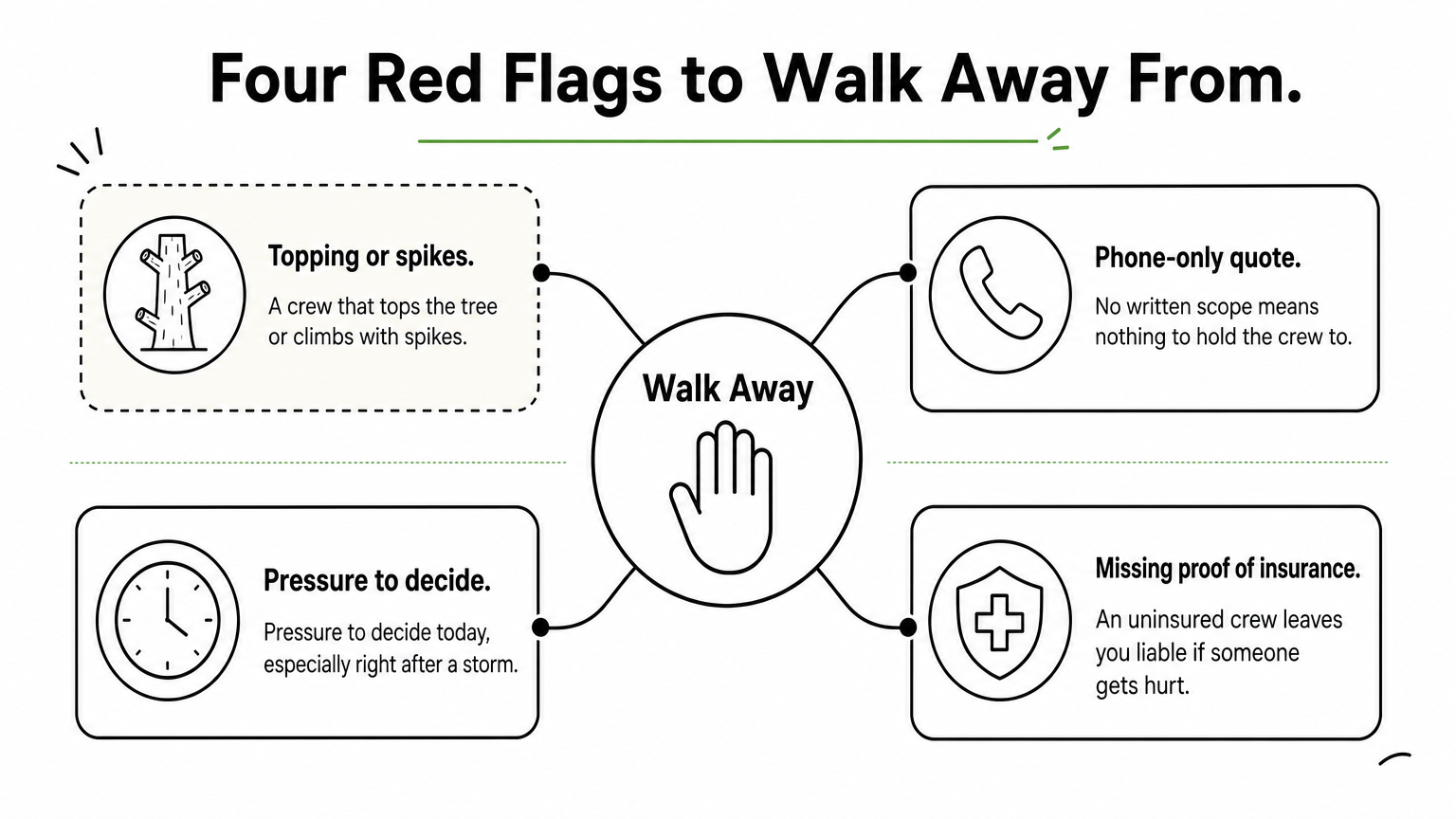
Several signs should end the conversation. A crew that offers to top the tree or climb with spikes does not understand pruning. A quote that arrives only by phone with no written scope gives you nothing to hold them to. Pressure to decide today is a bad sign, especially right after a storm. Missing proof of insurance is the biggest red flag of all, since an uninsured crew leaves you liable if someone gets hurt on your property.
Cleanup, insurance and ways to pay less
Cleanup adds $75 to $250 when it is billed separately, insurance may cover removal if a limb damages your home and you can lower the bill with timing, preparation and bundling. Knowing each of these before you book keeps the final invoice close to the quote.
Haul-away and disposal
Some crews include disposal in the estimate and others charge for it. Wood chipping runs about $100 to $150 per hour when there are many branches. If you have a large pile and want to handle it yourself, you can take it to an approved dump site, leave it for your city or county green waste collection when the rules allow, or rent a dumpster at roughly $280 to $500 per week . Check your local pickup limits first, since many collections cap branch length and bundle size.
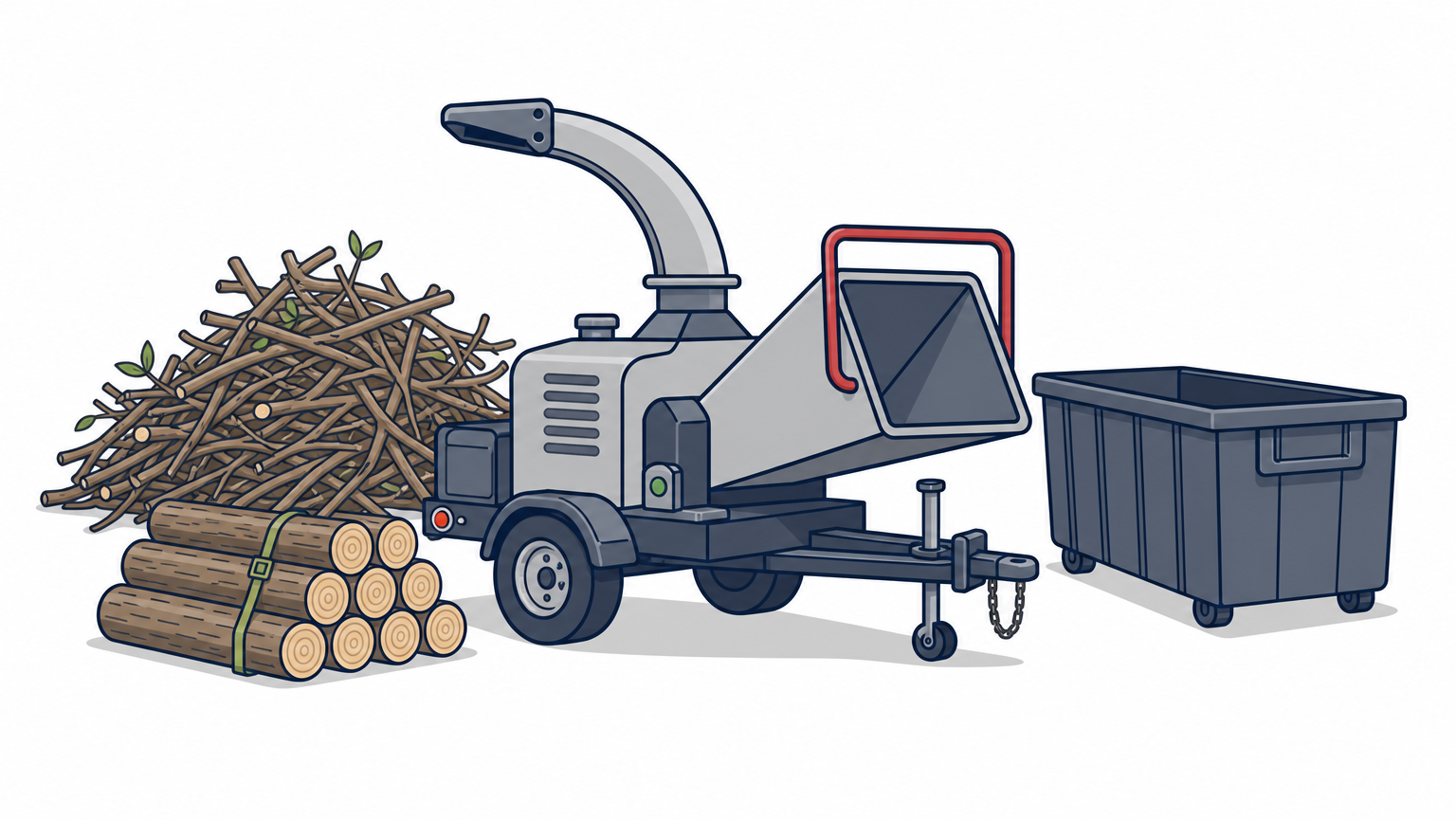
If you prefer one visit, ask for cutting and removal together. Integrity Landscape's debris and junk removal service hauls green waste and storm debris, and its tree removal work cuts wood into measured logs for storage or disposal to your specifications.
Does homeowners insurance cover limb removal?
It often does when a limb falls and damages your home, but rarely when you simply want a branch trimmed. If a limb lands on your roof or another covered structure, your policy typically helps pay for removal, subject to your deductible and policy limits . A branch that is only overhanging or dead and has not caused damage usually counts as maintenance, which most policies exclude.
Call your insurer before the crew starts, and photograph the damage. Ask your adjuster whether removal is covered under the same claim as the repair. Policies differ, so confirm the details with your own carrier.
Ways to lower the bill
A few habits cut the cost without cutting quality:
- Bundle the work. Have all branches done in one visit so the crew mobilizes once.
- Book in winter. Off-peak scheduling can save up to about 20%.
- Wait after a storm. If nothing threatens your house, hold off a week or more before requesting quotes.
- Clear the path. Move furniture, planters and vehicles so crews reach the tree quickly.
- Stack small debris. Neat piles near the street, with thick ends facing out, load faster.
You can also save by doing small cuts yourself, but limbs near power lines or above your roof are never a DIY job. If a limb touches a power line, call your utility company before anyone touches it.
The cheapest way to remove a branch is one visit, one clear path and a quote that already includes cleanup.
Getting a fair price on your branches
Tree branch removal cost comes down to a few things: limb size, height, access, equipment and cleanup . For small and medium branches, national averages sit at $75 to $250. Large limbs run $150 to $850, and storm timing, crane work or a damaged tree can push a quote higher. If you get an itemized quote, compare three of them and check for license and insurance, you will know whether a number is fair.
If you have a limb to deal with, start with a clear scope and a written estimate. Integrity Landscape is licensed and insured, and offers same-day quotes and next-day service for Jupiter and the surrounding Palm Beach County communities. To put a real number on your job, get a same-day quote from Integrity Landscape.