Cost of Paver Patio vs Concrete: Price and Long-Term Value
The cost of paver patio vs concrete comes down to a gap of roughly double at installation. Poured concrete usually costs $6 to $15 per square foot installed, while a paver patio typically runs $15 to $25. Over the life of the patio the gap narrows, because pavers can be repaired one unit at a time and a slab cannot. Even so, concrete still wins on pure price in most cases.
Put simply, comparing these two costs means looking at more than the quote. You are weighing the installed price per square foot against what each surface costs to maintain, repair and eventually replace. You also have to account for how it holds up in your soil and weather.
This article gives you the price ranges for both surfaces, a worked example for a 20x20 patio, the factors that move a quote up or down, and a cost-per-year comparison. It also covers what South Florida's sandy soil, storms and HOA rules do to the math. Integrity Landscape builds patios across Jupiter and Palm Beach County, using interlocking pavers, travertine and natural stone for homes. We are not a neutral party, so we also say plainly where concrete is the better buy.
Why the paver vs concrete cost question matters
The question matters because the two surfaces are far apart on installed price but much closer on cost over time , and most homeowners only see the first number. Deciding from the first quote is how people end up with a patio that cracks, settles or gets replaced sooner than planned.
The upfront gap is large
Concrete is the budget choice at install. Published contractor ranges put a plain poured slab at $5 to $15 per square foot and pavers at $10 to $30 , with most professional paver jobs landing between $15 and $25. At midpoints, a paver patio costs about twice as much as a basic concrete one.
The reason is labor. A crew can pour and finish a slab in a day or two. Pavers are excavated, backed with compacted stone, set on a bedding layer one at a time, cut at the edges and locked in with joint sand. You pay for those hours and for a more expensive material.
A paver patio usually costs about twice as much as a basic concrete slab on day one, and the question is whether the following years close that gap.
What the first quote leaves out
Several costs arrive after the invoice is paid. Cracks in a slab can be filled but never fully disappear, and a badly cracked slab means a tear-out and a new pour. Pavers let you lift and replace individual units , though that only works when the base underneath is sound.
These are the later costs to keep in mind when you compare:
- Crack repair or slab replacement for concrete
- Resealing, which concrete usually needs every few years and which pavers need if you choose to seal them
- Joint sand top-ups, weed and ant control, and resetting settled units for pavers
- Pressure washing and stain removal for both surfaces
- The effect of each surface on how buyers see your home
Why published prices are only a starting point
Every price in this article is a range, and the ranges are wide for a reason. Your lot, access, soil, finish and design all move the number. That is why the next section shows you how to build your own estimate instead of trusting one average. Treat any online figure as a sanity check for a quote , not as the quote itself.
How to compare paver and concrete patio costs
To compare them fairly, measure your patio, apply a per-square-foot range for each surface, collect itemized quotes for the same scope, and divide each total by the years you expect it to last. The steps below cover the first three, and the later sections cover lifespan.
Measure and apply per-square-foot ranges
Multiply length by width to get square feet. For an L-shape or a curved patio, split it into rectangles and add them up. Then apply the installed price ranges below, which draw on typical professional pricing and cover labor, base and materials.
| Surface | Typical installed price per sq ft | What moves the price |
|---|---|---|
| Broom-finish concrete | $6 to $15 | Slab thickness, reinforcement, site prep |
| Stamped or decorative concrete | $12 to $18 | Color, pattern, sealing |
| Concrete pavers | $15 to $25 | Paver style, pattern, base depth |
| Permeable pavers | $18 to $28 | Specialized base and joint stone |
| Natural stone and premium pavers | $35 to $50 | Material cost, cutting, complexity |
Simple, open jobs sit at the low end of each row. Travertine and other natural stone belong in the top row, so ask for those as a separate priced line item if you want them.
A 20x20 patio worked through
A 20 by 20 foot patio is 400 square feet. Multiplying by the ranges above gives these totals.
| Surface | Low | High | Midpoint |
|---|---|---|---|
| Broom-finish concrete | $2,400 | $6,000 | $4,200 |
| Stamped concrete | $4,800 | $7,200 | $6,000 |
| Concrete pavers | $6,000 | $10,000 | $8,000 |
| Permeable pavers | $7,200 | $11,200 | $9,200 |
| Natural stone and premium pavers | $14,000 | $20,000 | $17,000 |
On a concrete vs paver patio cost basis, that is about $4,200 versus $8,000 at midpoints, a difference near $3,800. Stamped concrete lands between them and closes roughly half of that gap. Small patios often price higher per square foot because fixed costs such as equipment delivery and crew setup are spread over fewer square feet. A 150 square foot patio may sit above the ranges, not within them.
At 400 square feet, expect about $4,200 for plain concrete and about $8,000 for pavers, with your site and finish deciding where the real quote lands.
Getting quotes you can compare
Ask each contractor to price the same scope, and insist on line items. A single lump number hides the differences that matter, such as how much base stone is under the surface. Make sure every quote states:
- Square footage and the depth of compacted base
- Surface or paver type and pattern
- Excavation, haul-away, and removal of any old slab or pavers
- Edge restraints for pavers, or forms, reinforcement and control joints for concrete
- Grading and drainage
- Who handles permits and HOA approval
- Sealing, joint sand type, warranty and cleanup
Confirm that the contractor is licensed and insured before you compare prices. We give same-day quotes and next-day service, and every job has a dedicated project manager, so the scope questions above have one person who answers them. Whoever you hire, a quote you cannot compare line by line is a quote you cannot trust.
What drives the price of each patio type
Four things drive most of the price: base preparation, surface and finish, the size and shape of the patio, and site conditions such as demolition and access. They hit pavers and concrete differently, so a cheap quote on one does not tell you much about the other.
Base preparation and site work
Both surfaces start with excavation and a compacted base, but they stack differently. A paver patio usually has 4 to 6 inches of compacted aggregate , about an inch of bedding sand and the pavers on top. A concrete patio typically has a 4 to 6 inch slab poured over a compacted base.
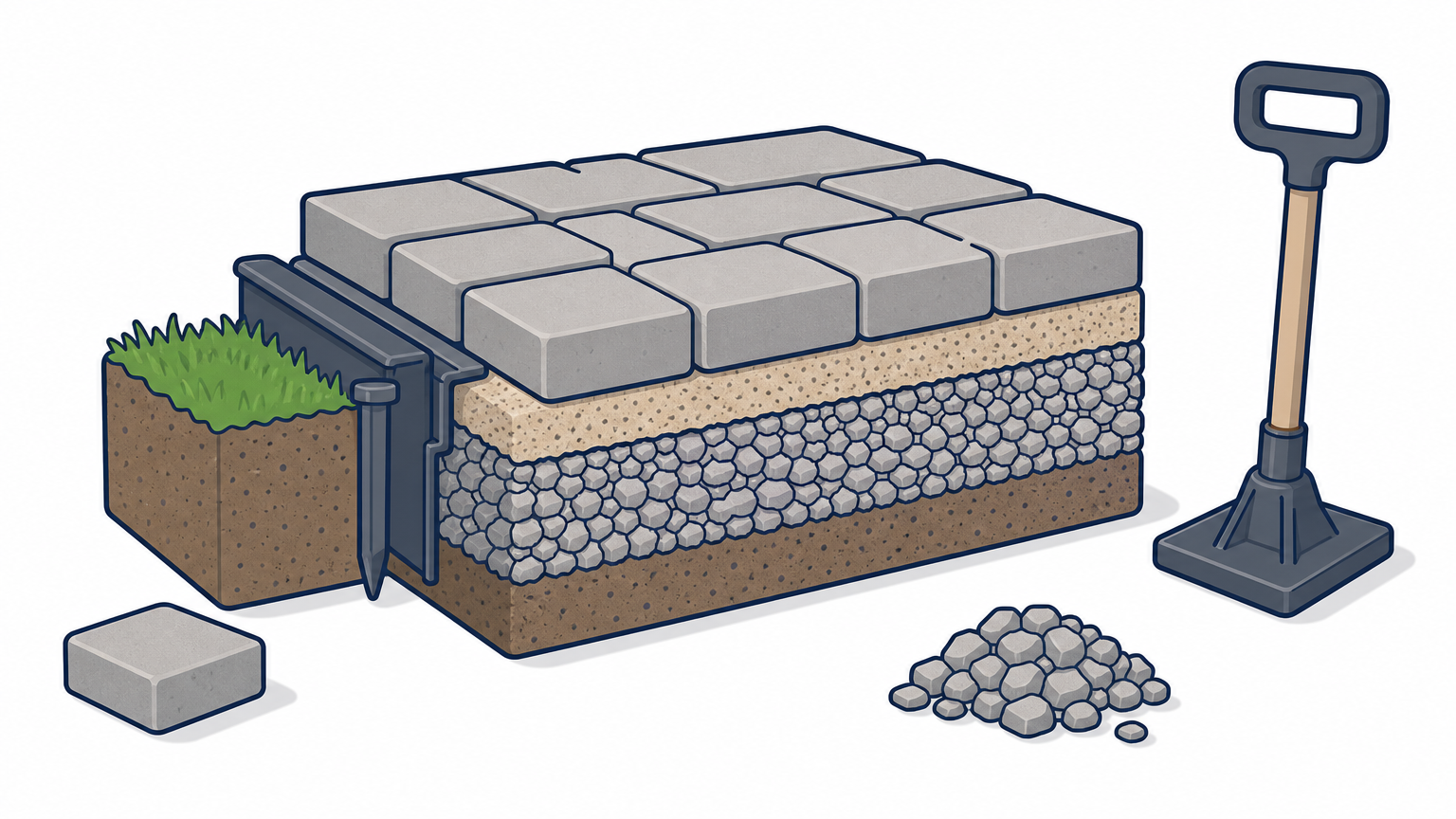
| Layer | Paver patio | Concrete patio |
|---|---|---|
| Excavation | Base, sand and paver depth | Base and slab depth |
| Base | Compacted aggregate | Compacted base under the slab |
| Surface | Bedding sand plus pavers | Poured and finished slab |
| Edges | Edge restraints | Forms, control joints |
| Joints | Polymeric sand | Cut or tooled control joints |
The base is where cheap quotes cut corners, because you cannot see it once the surface is down. Poor compaction is the most common reason a paver patio dips or a slab cracks over a soft spot. Ask how deep the base is and how it will be compacted.
The surface is the part you see, but the base is the part you pay for, and it decides whether the patio lasts.
Surface and finish choices
On the concrete side, finish is the main lever. Plain broom finish sits at $6 to $15 per square foot , while stamping and coloring push it to $12 to $18 . Stamped concrete can imitate stone or brick convincingly, but it still needs sealing, and a crack runs straight through the pattern.
On the paver side, material is a smaller share of the price than most people expect. Standard concrete pavers cost roughly $1.50 to $4 per square foot for the units alone, while premium pavers and natural stone run $6 to $15 or more. Since installed prices start near $15, labor and base work make up the bulk of the bill. That is why stamped concrete vs pavers is closer than the material costs suggest, and why upgrading from a standard paver to a premium one adds less than you might think.
Size, shape and access
Complexity costs money on both surfaces, but more on pavers. Curves, borders, inlays and angled cuts add labor because each unit has to be trimmed. A straight rectangle in a running bond pattern is the least expensive paver layout.
Site conditions matter just as much. Removing an old slab or pavers, hauling away soil, working around trees or equipment access, and fixing slope or drainage problems all add line items. Tight side yards where materials must be carried by hand raise labor on either surface. Check each of these before you compare totals.
Lifespan, repairs and upkeep over the years
Over time, a slab typically lasts 20 to 30 years before serious cracking, and a well-built paver patio can last 30 to 50 years, so pavers need to last about twice as long to match concrete on price per year. Lifespan is the first test, and repair cost is the second.
Cost per year of service
Dividing the 400 square foot midpoints by years of service shows the break-even. These figures ignore maintenance and repairs, so they isolate the installation cost.
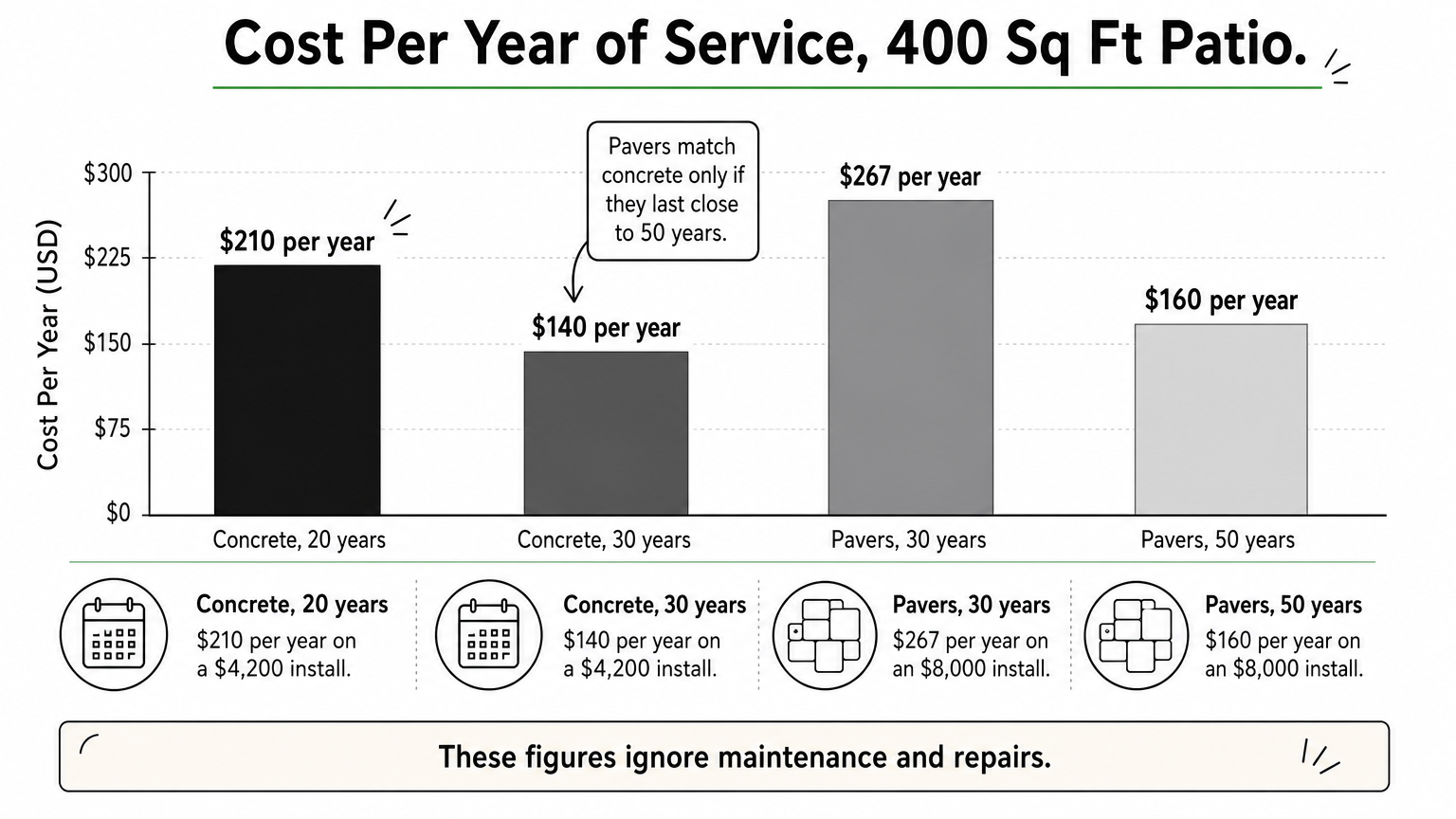
| Scenario | Install cost | Years of service | Cost per year |
|---|---|---|---|
| Concrete, shorter life | $4,200 | 20 | $210 |
| Concrete, longer life | $4,200 | 30 | $140 |
| Pavers, shorter life | $8,000 | 30 | $267 |
| Pavers, longer life | $8,000 | 50 | $160 |
The takeaway is honest: on installation cost alone, concrete usually wins or ties . Pavers only match it if they last close to 50 years. If you only care about the lowest cost per year and plan to keep the patio, plain concrete is hard to beat. Pavers earn their premium in the factors that follow.
Repairs and maintenance
Pavers need regular small tasks. Refresh the joint sand every few years, pull weeds and watch for ants in the joints, and reset any units that settle. Sealing is optional, but if you seal for color, plan on resealing periodically. When one unit stains or cracks, you lift it and drop in a replacement.
Concrete needs less routine work but costs more when something goes wrong. Plan to reseal every two to three years and to fill cracks as they appear. Oil and rust stains are hard to remove from an unsealed slab. A repaired crack stays visible, and a slab that has failed in several places usually means replacing it.
Pavers cost more to buy but less to fix, because a damaged section is a small job instead of a tear-out.
Resale value and curb appeal
Buyers tend to read a paver patio as an upgrade and a plain slab as a utility. That perception is real, especially in upscale markets like Jupiter, Palm Beach and Singer Island, where buyers notice entries, driveways and outdoor living areas. Pattern, color and material give pavers a wider design range than most concrete.
That said, no surface returns its full cost at sale, and we cannot promise a dollar figure. A well-finished stamped concrete patio can look excellent, and a poorly built paver patio that has sunk and sprouted weeds hurts appeal more than a clean slab. Condition and craftsmanship count for more than the material name.
How South Florida conditions change the comparison
South Florida changes the math in a few ways. Freeze-thaw damage, a common argument against concrete, does not apply in Jupiter. Sandy soil, heavy rain and intense heat make base preparation and surface choice matter more than they do in many other climates.
Sandy soil, heavy rain and storm season
Sandy soil drains well but does not hold a load by itself. If the base is not compacted in layers, either surface will settle: a slab cracks over the soft spot and pavers dip and rock. Whichever you choose, base compaction is the line item to question.
Heavy summer rain and hurricane season, which runs from June 1 to November 30, test the edges and joints. Strong runoff can wash out joint sand and undercut an unrestrained edge. Polymeric sand and proper edge restraints reduce that risk for pavers. Permeable pavers, at roughly $18 to $28 per square foot, let water pass through the joints, which helps on lots where standing water is a problem.
Heat, pool decks and traction
Any surface in full Florida sun gets hot. Lighter-colored pavers and travertine tend to stay cooler underfoot than dark surfaces, which matters around a pool where people walk barefoot. Smooth, troweled concrete can be slippery when wet, so a broom or textured finish is the right call near water.
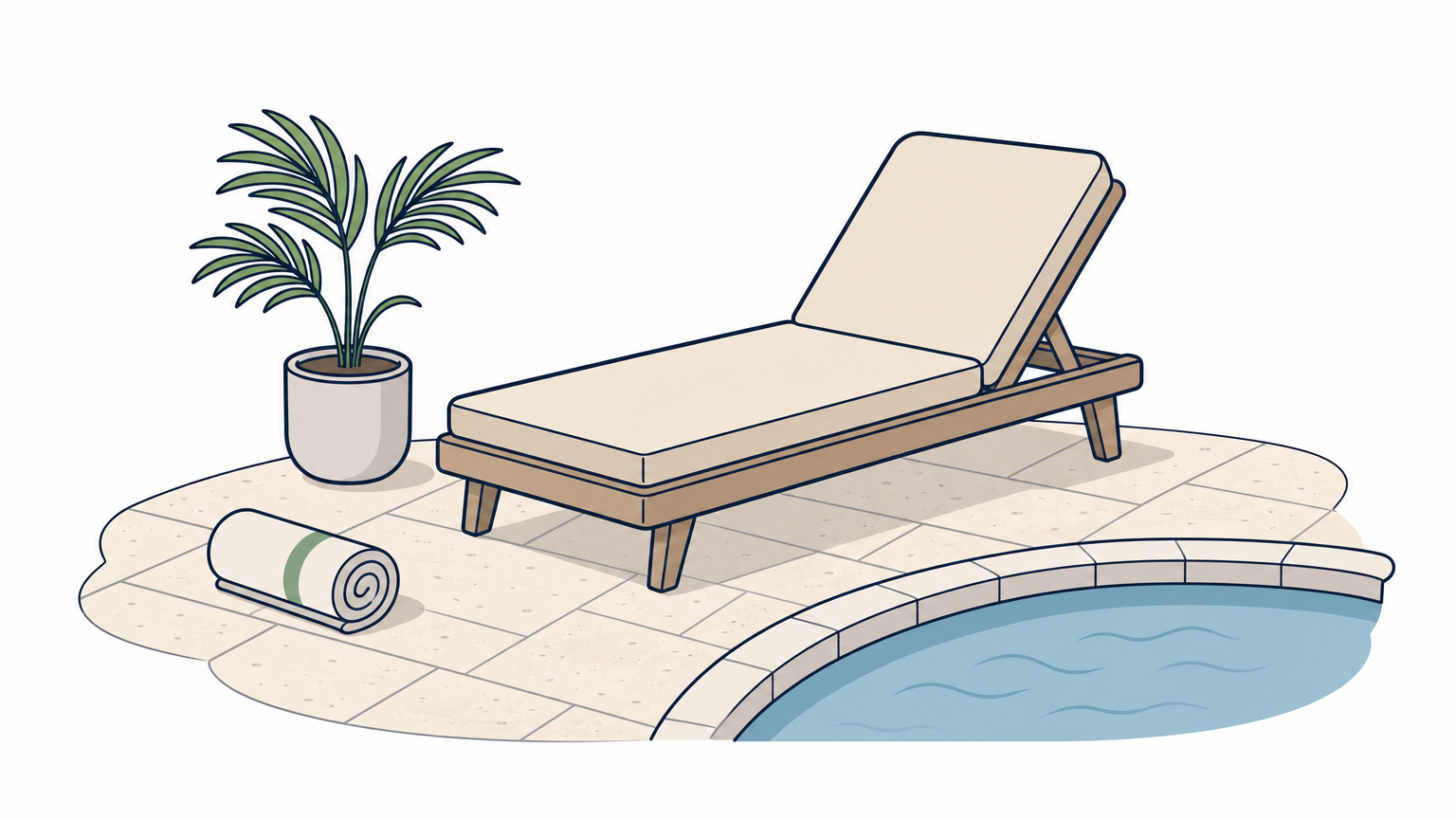
When you request quotes for a pool deck or a patio next to one, ask each contractor about:
- Surface color and how hot it gets in direct sun
- Slip resistance when wet
- Sealing that suits chlorine and salt air
- How runoff is directed away from the pool and house
Permits, HOAs and drainage rules
Rules vary by town and by HOA, so check before you design. Many Palm Beach County communities require HOA approval of materials and colors, and some municipalities limit how much of a lot can be covered by hard surfaces. How pavers, permeable pavers and slabs count toward those limits differs by location, so ask your town or association directly.
Larger projects sometimes need a permit. Ask your contractor who pulls it and who handles HOA paperwork, and get that answer in writing as part of the quote.
In South Florida the soil under the patio matters more than the surface on top, so compare base specs before you compare prices.
Choosing between pavers and concrete for your yard
Choose concrete when budget and speed come first. Choose pavers when you want repairability, design range and a premium look you expect to keep for many years. Both are good choices when installed on a properly compacted base.
When concrete is the smarter buy
Concrete makes sense for large, simple areas where the cost per square foot dominates, such as a big utility pad, a long service walkway or a basic patio you do not plan to dress up. It also suits a quick turnaround. A slab takes a day or two to pour, then needs a few days to cure before furniture goes on it.
It is also a sound choice for commercial walkways and common areas that need to be smooth and accessible at the lowest price. We build commercial patios and pathways in either paver or concrete surfaces, and we recommend concrete for large plain areas where appearance is secondary.
When pavers earn the premium
Pavers pay off when the patio is part of the design of your home. If you want pattern, color or natural stone , if the area sits near a pool or the front entry, or if you expect to stay for decades, the repairability and appearance justify the higher cost. Pavers also tolerate small ground movement without a visible crack when the base is right.
We install interlocking pavers, travertine and natural stone on residential patios and pathways in Jupiter and the surrounding area. If you are weighing those options, ask for the stone and the paver priced as separate options so you see the real difference.
A short decision checklist
Answer these five questions, and your choice is usually clear:
- Is the lowest installed cost your top priority? Lean toward concrete.
- Do you want a specific pattern, color or natural stone? Lean toward pavers.
- Will you stay in the home for 15 years or more? Pavers become easier to justify.
- Is the patio next to a pool or at the front entry? Pavers or a textured, sealed finish.
- Does your HOA or town restrict hard surfaces? Ask about permeable pavers first.
Pick concrete to save money now, pick pavers to save trouble later, and pay for a proper base either way.
Pick the patio that fits how long you will stay
The cost of paver patio vs concrete is a trade between price today and trouble later. Concrete costs about half as much to install and often wins on cost per year. Pavers cost about twice as much, last longer when built right, and are far easier to repair. On a 20x20 patio, that is roughly $4,200 versus $8,000 at midpoints, so quote your own square footage and compare line items.
Whichever you choose, spend on the base, because sandy South Florida soil punishes a shortcut under either surface. If you want a clear number for your own yard, request a free estimate from Integrity Landscape and compare it fairly against other quotes.