Tree Removal Cost Near Me: What You Pay and What Drives It
If you are searching for tree removal cost near me , here is the short answer. Nationally, removing a single tree runs from about $200 to $2,000, and a typical job on a mid-sized tree lands between roughly $400 and $1,200. Stump grinding, hauling and cleanup can add several hundred dollars on top. Large trees, tight access or crane work can push the total well past $2,000.
Tree removal cost is the total price a crew charges to fell a tree, cut it into pieces and take it away, often including the stump. You pay for labor, equipment, insurance, disposal and risk. The tree itself is the smallest part of the bill. That is why two trees of the same height can get very different quotes.
This guide shows what the price is made of, what pushes it up or down, and how to get a quote you can compare. It also covers when to book, what Florida homeowners should check before work starts, and how to pick a local crew. We are Integrity Landscape, a Jupiter, FL company that does tree removal across Palm Beach County, so the local advice comes from jobs we do ourselves.
Why tree removal costs are worth understanding first
Knowing the price range before you call protects you from two mistakes: accepting an inflated quote and hiring the cheapest bid that skips insurance or cleanup. A removal is a one-time expense that is hard to reverse. A clear picture of the numbers lets you budget and negotiate with confidence.
What most homeowners pay
National cost guides agree on a broad range for one tree and a handful of common add-ons. Use the table below as a starting point, not a quote. Local labor rates and the details of your tree will shift every line.
| Item | Typical national figure |
|---|---|
| Removal of a single tree | $200 to $2,000 |
| Tree cutting, common range | $400 to $1,200 |
| Basic single-tree removal in online calculators | about $620 to $760 |
| Stump removal | $100 to $150 per stump |
| Dump fees for large branches | $25 to $100 |
| Landscape cleanup afterward | $100 to $250 |
| Health or hazard inspection | $30 to $300 |
Trees over 60 feet, trees beside a house or power lines, and any job that needs a crane can run well above $2,000 . Treat the top of the table as the ceiling for ordinary jobs only.
A removal quote pays for labor, equipment and risk, not for the tree itself.
Why the range is so wide
The spread comes from how different the jobs are. Dropping a 20-foot tree in an open yard takes a small crew and an hour or two. Taking a 70-foot tree apart piece by piece above a roof takes climbers, rigging, a bigger crew and often a crane. The crew time and equipment needed explain most of the gap.
Insurance also sits inside the price. A legitimate company carries liability and workers' compensation coverage , and that cost is part of every quote. An unusually low bid often means the crew has none, which leaves you exposed if a limb lands on your roof or someone gets hurt.
What counts as a fair price
A fair price is one that matches the work described, with each piece written down. For a common question like how much it costs to take down a 30-foot tree, expect a figure inside the $400 to $1,200 band if the tree is healthy and has open access. Trees leaning toward a structure, multi-trunk trees and those with wide canopies cost more.
Judge fairness by comparing at least three written quotes for the same scope. If one bid is far lower or higher than the others, ask what is different. Usually the answer is cleanup, stump work or equipment, and the answer tells you which bid to trust.
What drives the price of removing a tree
Four things set most of the price: the size and type of the tree, what surrounds it, its condition and how urgent the job is. Each one changes how many people, how much gear and how many hours the job needs.
Size, species and trunk structure
Height matters, but trunk diameter and the number of trunks matter nearly as much. A short tree with a thick trunk, or one that splits into several stems near the ground, takes more cuts and produces more debris than a tall, slim single trunk. More wood also means higher hauling and disposal costs.
Species changes the work too. Dense hardwoods with heavy, spreading limbs, such as the live oaks common in Florida yards, take longer to section and rig than a lightweight tree of the same height. Palms are a different job, with their own tall-trunk handling and debris, so quote them separately.
Access and what stands nearby
An open backyard is the cheapest setting. A tree wedged between a house, a pool cage, a fence and a power line forces the crew to lower every piece by rope instead of dropping it. In South Florida, screen enclosures, pools and irrigation lines are common obstacles that add careful rigging time.
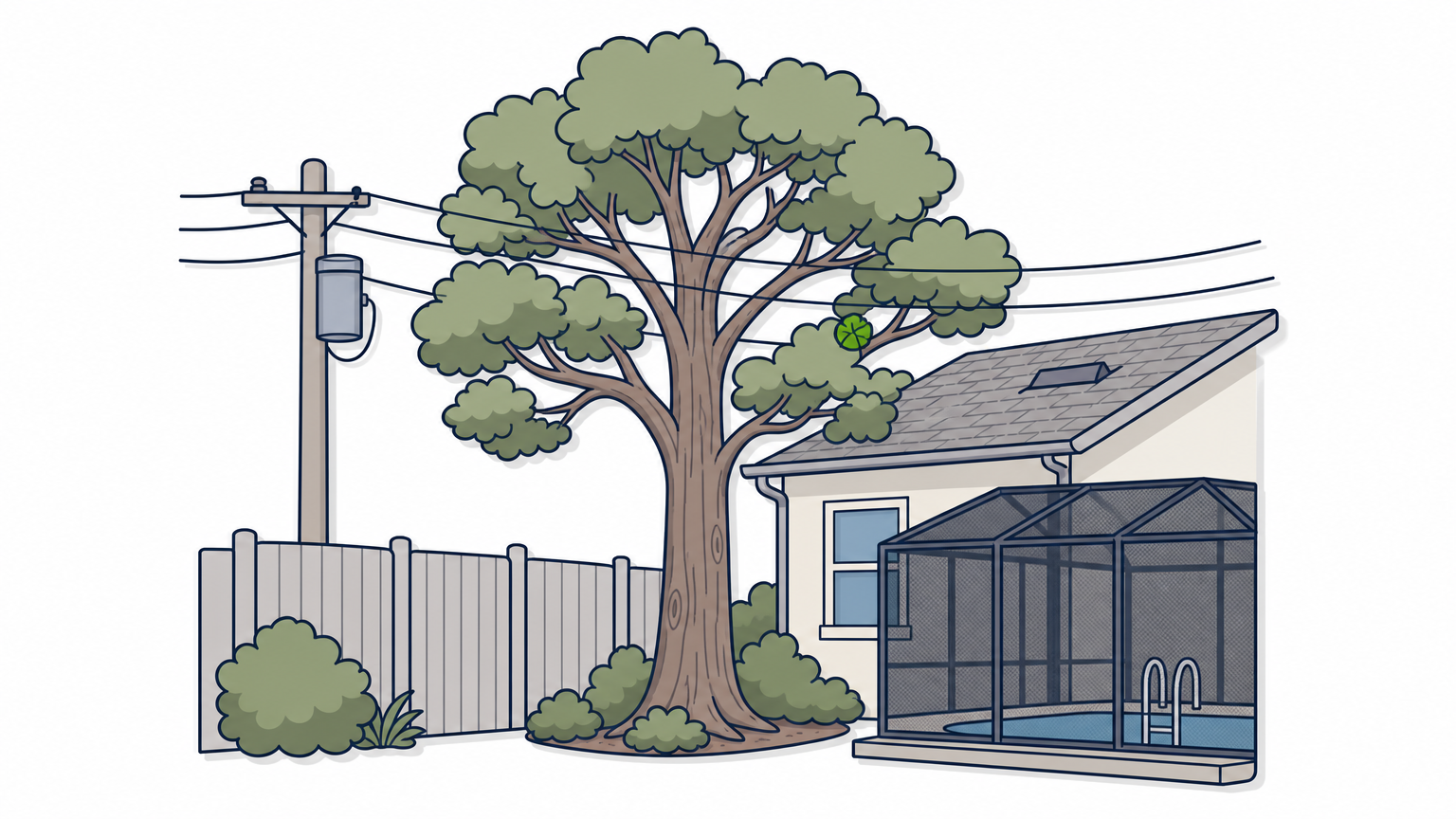
When pieces cannot be lowered safely by hand, a crane becomes the safest option. It adds a crane fee , but it also cuts crew hours and protects your property. The table shows how common site conditions move the price.
| Site condition | Effect on price |
|---|---|
| Open yard, tree can fall whole | Lowest |
| Tree must be taken down in sections | Higher |
| Near a pool cage, fence or roof | Higher |
| Touching or near power lines | Highest, may involve the utility |
| Crane required | Highest |
Condition, lean and urgency
A dead tree can be cheaper to remove than a healthy one because the crew does not need to protect it or surrounding plants. The catch is that dead wood is unpredictable . Hollow trunks and brittle limbs can make a simple-looking job riskier once the crew is up close.
A tree that leans toward your house, or one cracked by a storm, usually costs more. Emergency and after-hours calls carry a premium because crews have to drop other work and respond fast, often in poor conditions. Planning a removal before a tree becomes an emergency is one of the most reliable ways to pay less.
The harder a tree is to reach and the closer it stands to your house, the more you pay.
How to get an accurate quote for tree removal near you
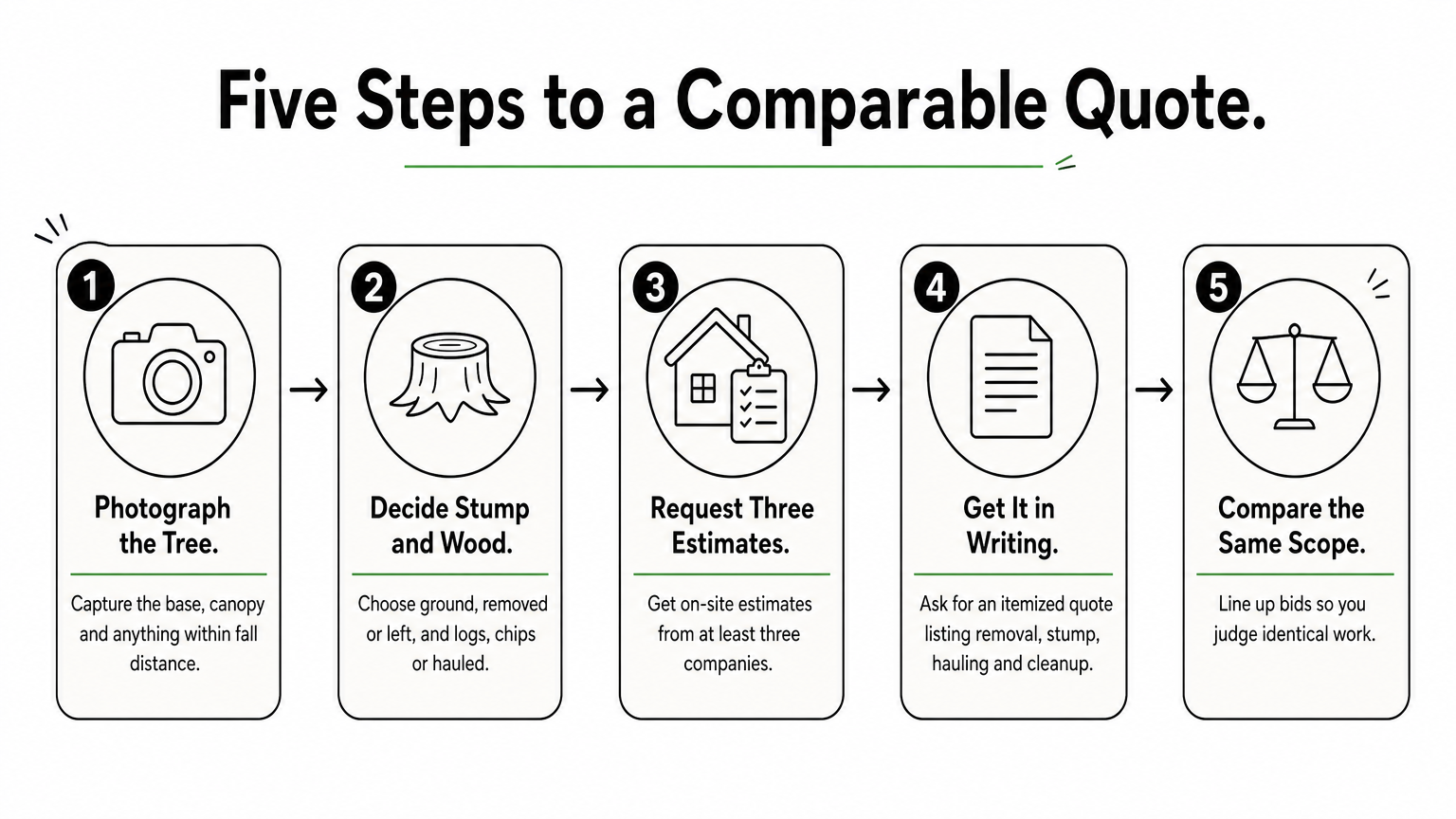
An accurate quote comes from a site visit and a written, itemized estimate. A phone price based on a guess about height is only a placeholder. Follow the steps below and you will end up with bids you can compare line by line.
The steps to follow
- Photograph the tree and its surroundings. Include the base, the canopy and anything within fall distance, such as roofs, fences and wires.
- Decide what you want done with the stump and wood. Say whether you want it ground, removed or left, and whether you want logs, chips or everything hauled away.
- Request an on-site estimate from at least three companies. A reputable crew walks the site before giving a firm number.
- Ask for the quote in writing, itemized. It should list removal, stump work, hauling, cleanup and any crane or equipment fee.
- Compare the same scope. Line up each bid so you are judging identical work, not different packages.
A worked example
Say you have a mid-sized tree in a back yard and the removal quote is $1,000. That figure is an illustration, not a price list. Here is how the total can build once you add the common extras from the national ranges.
| Line | Low | High |
|---|---|---|
| Tree removal quote (assumed) | $1,000 | $1,000 |
| Stump grinding or removal | $100 | $150 |
| Dump fees for large branches | $25 | $100 |
| Landscape cleanup | $100 | $250 |
| Total | $1,225 | $1,500 |
Many companies include cleanup and hauling in the base price, so your real total may sit closer to the low end. The point of the table is to show why a $1,000 bid and a $1,300 bid are not necessarily different in value.
Questions and warning signs
Ask each company the same short list: Are you insured, and can I see proof? Who hauls the debris? Is stump work included? Is there a crane or equipment charge? What deposit do you need? Clear, specific answers in writing are a good sign.
Be wary of a crew that knocks on your door after a storm and asks for cash up front , of a quote with no breakdown, and of any company that cannot show insurance. Pressure to decide on the spot is another warning. A solid company is happy to let you compare.
Never compare a total price until you have confirmed that each quote covers the same work.
How to lower the cost without cutting corners
You can lower a removal bill through timing, scope and the choices you make about wood and stumps. None of these require hiring a less qualified crew. They simply remove cost that does not need to be there.
Time the job well
The cheapest time for tree removal is whenever demand is low. In Florida, hurricane season runs June 1 through November 30, and crews fill up fast after a named storm. Scheduling a non-urgent removal outside storm cleanup rushes gives you more room to compare bids and more flexibility on dates. National data shows that booking during peak season can add hundreds of dollars.
If a tree is dead or damaged, do not wait for a better season. Removing a hazard before the next storm is cheaper than repairing a roof afterward.
Bundle work and trim the scope
Having several trees removed in one visit often earns a discount, because the crew is already set up. National guides put the savings at around $100 per tree . If you have a tree you have been putting off, add it to the same appointment.
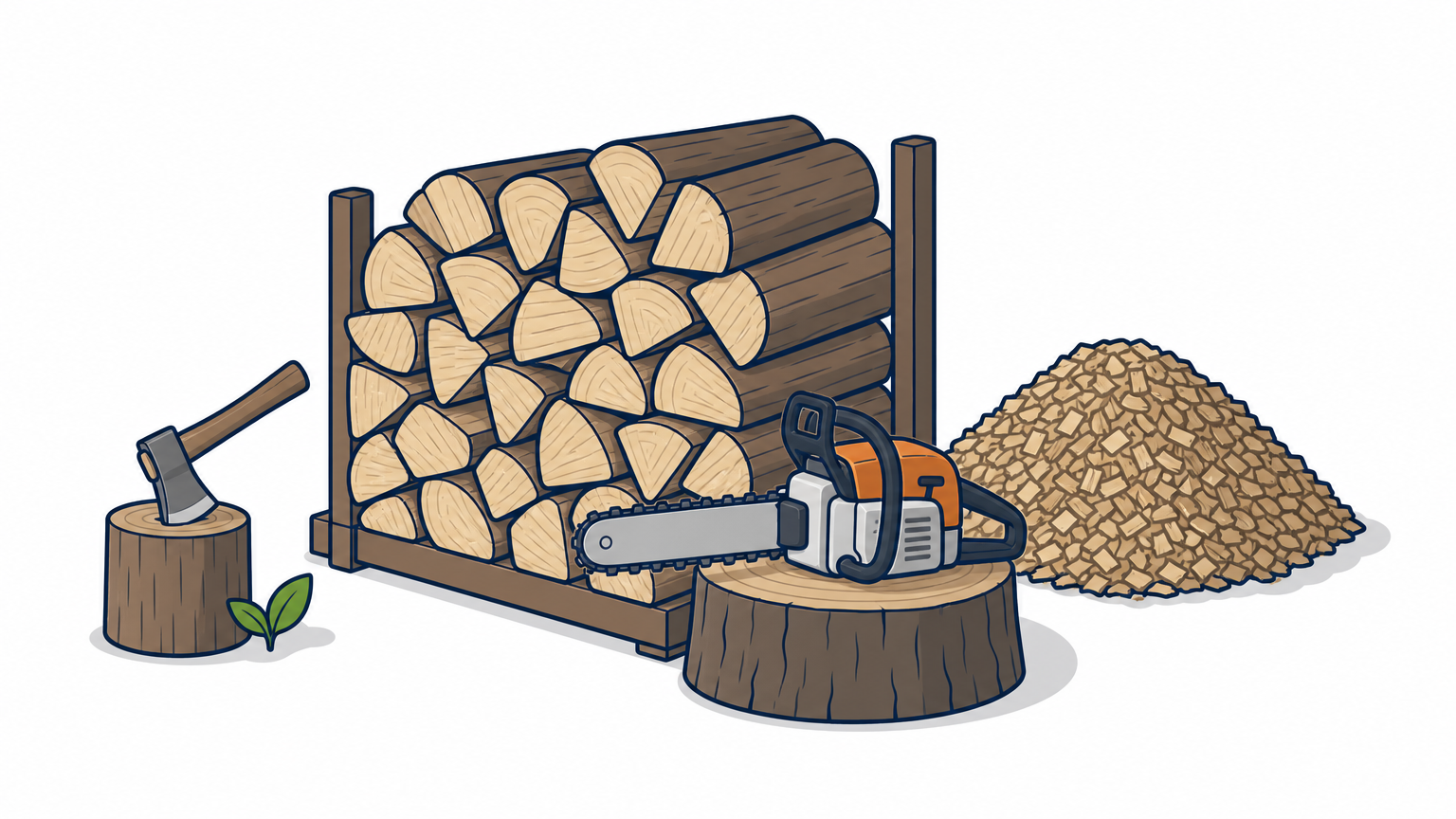
You can also reduce the scope. Keeping the cut logs for firewood or mulch instead of paying for disposal trims the hauling charge. Ask whether trimming, cabling or bracing could solve the problem and save the tree. Not every tree needs to come out, and a heavy limb removed before a storm may be all you need.
Free or discounted removal
Free tree removal for seniors is rare. No broad program covers it. Occasional help comes from electric utilities when a tree threatens their lines, from city or county programs for trees in the public right-of-way, and from nonprofit or disaster-recovery programs after major storms. Start with your town or county office and ask what is available.
Homeowner's insurance usually pays for removal only when a covered event, such as a storm, caused the damage. Preventive removal of a dead or leaning tree is generally treated as maintenance and is not covered. Call your agent before assuming either way.
The cheapest removal is the one you book before the tree becomes an emergency.
What to know about hiring a tree service in Jupiter and Palm Beach County
Tree removal in Jupiter and the rest of Palm Beach County comes with local rules and local conditions. Check permits and HOA requirements first, then choose a crew you can verify. Doing it in that order avoids fines and delays.
Permits, HOA rules and protected trees
Many Florida towns and counties regulate the removal of certain trees, especially large or protected ones, so check with your municipality or county before booking. Florida law generally lets homeowners remove a tree that poses a documented danger without a local permit, but the documentation requirements are specific. Confirm what applies to you before the crew arrives.
Mangroves are a special case. Florida law restricts trimming and removing them and requires a permit in most situations. If you live on the water, ask before any work starts. Homeowners in an HOA community often need written approval too, so check your association's rules, and ask your electric utility about any tree touching a power line.
How to vet a local crew
Start with proof of liability and workers' compensation insurance , a local business license and a written, itemized estimate. Ask how long the company has worked in your area and whether it has the equipment for your tree. A crew that owns or can bring a crane is better prepared for large or awkward removals.
Look for neighbors' recommendations and check what the company says about cleanup, stump handling and wood disposal . A company that explains the plan clearly before the job usually runs a clean job too.
Tree removal with Integrity Landscape
We have worked in Jupiter and surrounding Palm Beach County for over 10 years, and we are licensed and insured. We give free estimates, same-day quotes and next-day service , with a dedicated project manager on each job site. Our tree service covers trimming, removals and stump grinding, with crane support for larger jobs.
When we remove a tree, we cut the stump flush or remove it completely, and we cut the wood into measured logs for storage or disposal to your specification. We also haul green waste and storm debris, so the yard is clear when we leave. For firm local pricing, contact us for a free estimate and we will schedule a visit.
A local crew that is licensed, insured and clear in writing will always beat a lower bid that is vague.
Getting a firm number for your tree
A fair removal price starts with the work itself. Most single trees cost between $200 and $2,000 nationally, with the height, trunk, access, condition and urgency of your tree deciding where you land. Stump grinding, hauling and cleanup are the extras to ask about, and a written, itemized quote from at least three insured companies is the best way to compare them.
If you live in Jupiter or elsewhere in Palm Beach County, plan around hurricane season, check permit and HOA rules before you book, and avoid paying emergency rates if you can. When you are ready for a number based on your actual tree, request a free tree removal estimate and we will come out and quote it.