Tree Removal Cost: Average Prices by Size and Stump Removal
You noticed a dying oak, a leaning pine, or a palm that dropped fronds on your roof, and now you need a number. Quotes for the same tree can differ by hundreds of dollars, which makes it hard to know what is fair. Here is how how much is a tree removal cost gets answered in real terms.
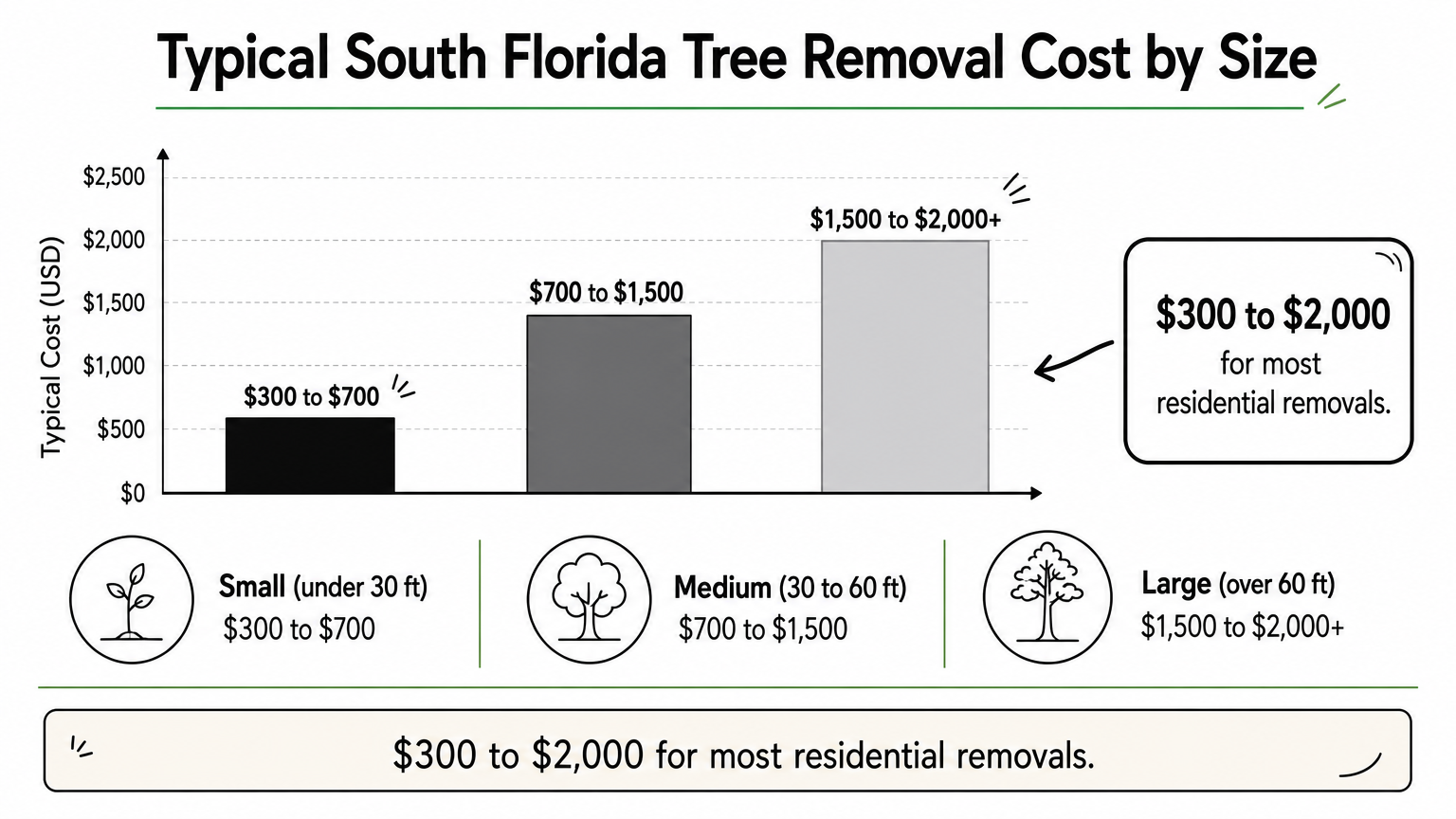
Most residential removals in South Florida run $300 to $2,000 , depending mainly on height and trunk diameter. Small trees under 30 feet often land at $300 to $700. Mid-size trees of 30 to 60 feet usually cost $700 to $1,500. Tall or hazardous trees over 60 feet can reach $1,500 to $2,000 or more. Stump grinding typically adds $100 to $400 , and a crane can add more for large jobs near homes or pools.
Below, we break down average prices by size, show what stump removal and cleanup change, and explain which quote line items matter. We have removed trees across Jupiter and Palm Beach County for over 10 years, so you will also learn how to spot a low-ball or incomplete quote before you sign.
Why tree removal cost varies so much
Tree removal cost is built like a small construction bid, not like a product price. No two trees share the same risk, access, or cleanup, so a flat per-tree rate rarely exists. Crews price time, risk, and equipment , and each of those changes with the site.
Labor, risk, and equipment drive the price
Height and trunk diameter set the baseline because they decide how long the crew works and how many people it takes. A 25-foot ornamental may need two workers and a chipper for half a day. A 70-foot oak can need a climber, a ground crew of three, and a bucket truck for a full day or more. Labor is the largest line on most invoices, and taller, wider trees mean more labor.
Equipment is the next layer. Chainsaws and a chipper are standard. A bucket truck adds cost, and bringing in a crane is the biggest jump. You need one when a heavy trunk hangs over a house, pool, or screen enclosure and can't be dropped safely. A crane day can add several hundred dollars or more , but it often costs less than repairing a roof.
A tree removal quote is a price for risk and crew hours, not for the wood.
Site conditions can double a job
Access changes the math more than most homeowners expect. A tree in an open front yard can be cut and dragged out. The same tree behind a locked gate, a pool cage, or a narrow side yard may need to be rigged down in small sections by hand , which can nearly double the labor hours. Power lines add risk too, so work near them needs slower, more careful cutting and sometimes coordination with the utility.
Here is how the main factors stack up.
| Factor | What the crew deals with | Effect on price |
|---|---|---|
| Height and trunk diameter | More rigging, more wood to cut and haul | Largest baseline driver |
| Access | Gates, pool cages, tight side yards | More labor hours |
| Structures and power lines | Sectional rigging, bucket truck, or crane | More equipment and risk |
| Tree condition | Dead, split, or leaning wood | Higher risk, slower work |
| Debris volume | Chipping, logs, hauling | Cleanup charges |
Timing, rules, and what the quote includes
Timing matters in Florida. After a named storm, demand spikes and emergency calls cost more than scheduled work. If the tree isn't an immediate danger, booking in a calm week usually gets you standard rates and a firmer date. A dead tree leaning on your roof is the exception, and you should call right away for hazard tree removal.
Scope is the last variable, and it is the one that makes quotes hard to compare. One company includes hauling and cleanup. Another leaves logs and brush on your lawn. Stump grinding is often a separate line. Some towns also require permits for certain trees, and mangroves are protected under Florida law, so confirm permit rules first and ask whether the quote covers cleanup and haul-off before anyone starts cutting.
How to estimate your tree removal cost by size
Size is the fastest way to get a ballpark tree removal cost before anyone visits your yard. Place your tree in a band by height and trunk width, then adjust for the site factors above. If you're asking how much is a tree removal cost for your own tree, start with two measurements.
Average prices by height and trunk width
The table shows typical South Florida ranges for a standard removal with basic cleanup. Stump grinding is extra , and so is a crane.
| Size | Height | Trunk diameter | Typical cost |
|---|---|---|---|
| Small | Under 30 ft | Under 12 in | $300 to $700 |
| Medium | 30 to 60 ft | 12 to 24 in | $700 to $1,500 |
| Large | Over 60 ft | Over 24 in | $1,500 to $2,000+ |
Treat the top of each band as the price for a tree that is wide as well as tall. A 40-foot tree with a 10-inch trunk costs less than a 40-foot tree with a 22-inch trunk. Heavier wood means more cuts, more rigging, and more hauling.
Trunk width moves the price almost as much as height does.
Measure your tree in four steps
Measuring takes five minutes and gives you numbers a contractor can quote from, or that you can plug into a tree removal price calculator. A tape measure and your phone are all you need.
- Wrap a tape around the trunk at chest height (about 4.5 feet up). Divide the circumference by 3.14 to get the diameter.
- Estimate height with shadows. On a sunny day, measure your own shadow and the tree's. Height equals your height times the tree's shadow, divided by yours.
- Note what sits within falling distance, such as roofs, pool cages, fences, and power lines.
- Photograph the whole tree, the base, and the access path from the street.
Send those details with your request and you will get a tighter phone estimate , which a crew then confirms on site.
Palms price a little differently
Palms have no heavy limbs, so crews often price them by trunk height rather than diameter. A 20-foot palm usually falls in the small band, and a tall royal palm near a house can climb into the medium band because of the rigging involved. Ask whether frond and trunk haul-off is included, since a palm produces a surprising amount of bulky green waste.
How tree type, health, and location change the price
Two trees of the same height can price very differently once a crew looks at the species, the condition of the wood, and where the tree stands. Think of size as your starting point and these three factors as the adjustments that move your quote up or down within a band.
Species and wood density
Hardwoods like live oak and mahogany are dense and heavy, so every section takes more effort to lower and haul. Pines and palms are lighter. Ficus and banyan bring wide canopies and surface roots , which means more rigging and more debris. If you wonder how much is a tree removal cost for a live oak, expect the upper end of its size band .
| Tree type | What the crew deals with | Where it lands in the band |
|---|---|---|
| Live oak, mahogany | Heavy, dense wood | Upper end |
| Pine | Light, tall, straight trunk | Middle |
| Palm | No limbs, bulky fronds | Low to middle |
| Ficus, banyan | Wide canopy, large roots | Upper end |
Health and structural condition
Dead trees surprise homeowners. You would think dead wood is easier, but it is brittle and can snap without warning, so a climber can't trust it. Crews often switch to a bucket truck or crane instead of climbing, and the price rises with them.
A dead or leaning tree often costs more to remove than a healthy one of the same size.
Disease and storm damage matter too. A palm hit by lethal bronzing may need careful disposal and cleaned equipment so the problem doesn't spread. A tree split or uprooted by wind is under tension, which slows every cut. Call quickly in those cases, but remember that emergency rates apply right after a storm.
Location on your property
Where the tree stands can matter as much as what it is. A tree 40 feet from the house is a simple drop. The same tree over a pool cage, roof, or neighbor's fence has to come down in pieces. Gated communities and tight lots add time because trucks can't always park close.
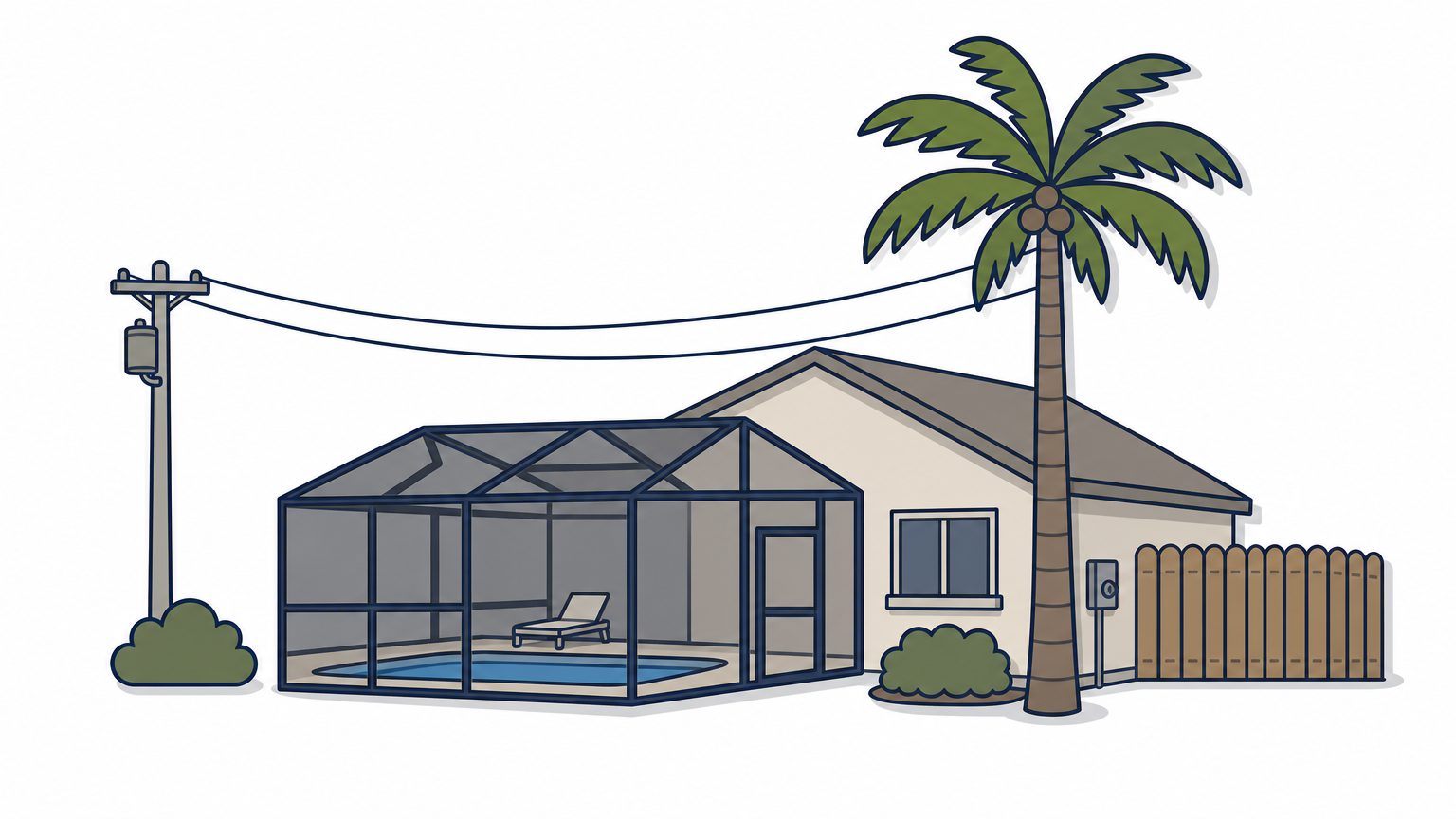
Give your contractor these details up front:
- Distance to the house, pool, fences, and power lines
- Gate width and truck access to the tree
- Any HOA approval or permit requirement
- Whether the tree overhangs a neighbor's property
How much stump removal and cleanup add
The base price usually covers cutting the tree down and nothing else. Stump removal costs and cleanup sit on top, and they are where final invoices surprise people. When you ask how much is a tree removal cost, make sure the answer says whether it includes the stump and whether the crew hauls everything away .
Stump grinding vs. full stump removal
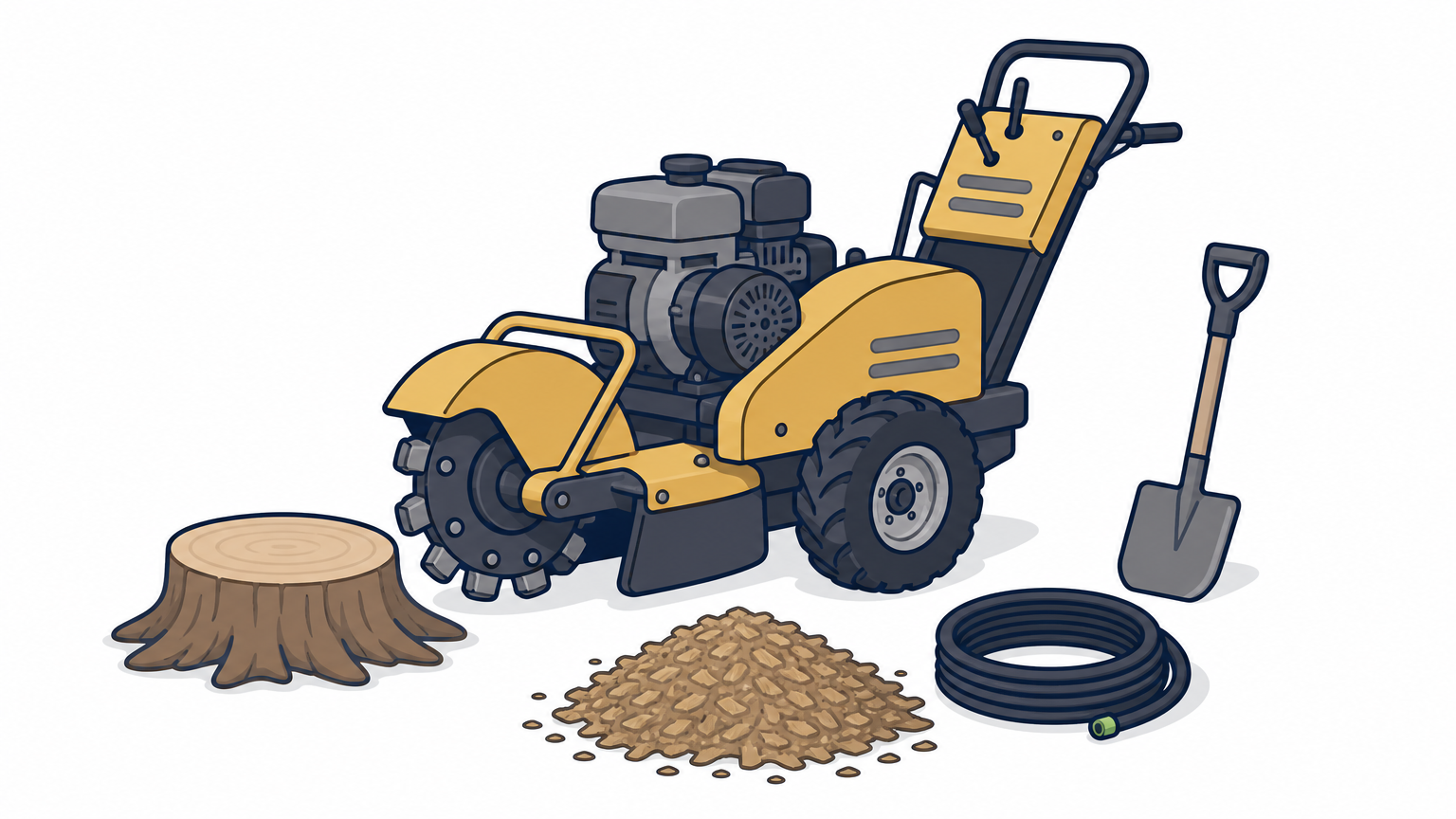
Professional stump grinding is the standard choice. A grinder shreds the stump 6 to 12 inches below grade , and you can sod or plant over it. Full removal digs out the stump and major roots, which takes an excavator and leaves a hole to backfill. Leaving the stump costs nothing today, but it decays slowly and can attract termites and other pests.
| Option | Typical cost | What you get |
|---|---|---|
| Stump grinding | $100 to $400 | Stump ground below grade, chips left behind |
| Full stump removal | $300 to $1,000 | Stump and main roots excavated, hole to fill |
| Leave the stump | $0 | Slow decay, possible pest and trip hazards |
Most crews price grinding by stump diameter and set a minimum charge , often around $100. Wide surface roots, hard soil, or a stump near a wall or irrigation line push the price toward $400. Several stumps in one visit usually bring a lower price per stump , so book them together.
Cleanup and haul-off
Cleanup is the quiet variable. A tree produces a lot of material, and someone has to chip it, load it, and dump it. Some companies fold all of that into the price. Others stop at the cut and leave logs and brush on your lawn , which can add roughly $100 to $300 if you hire a yard debris hauling service to clear it.
Ask for stump grinding and haul-off as separate line items, so every quote you compare covers the same work.
Use this checklist before you accept a price:
- Is brush chipped and hauled away?
- Are logs removed, or cut to firewood length and left?
- Is the lawn raked and blown clean?
- Can you keep the wood chips for mulch at no charge?
- Is stump grinding included, or priced separately?
Trees with heavy debris, like a mature oak or a palm full of fronds, make this list matter more. If a quote is far below the others, missing cleanup is the most likely reason .
How to read and compare tree removal quotes
Once two or three quotes land in your inbox, the total is the least useful number on the page. A $600 quote and a $950 quote for the same oak can both be honest if they cover different work. Scope decides whether quotes are comparable , so read the lines before the price.
What a complete quote includes
Ask for a written, itemized quote . A one-line price hides gaps. A solid estimate lists:
- Tree location and species
- Removal method, including any bucket truck or crane fee
- Stump grinding, listed separately
- Cleanup, chipping, and haul-off
- Permit handling, if your town requires one
- Proof of license, liability insurance, and workers' compensation
Insurance matters more than most homeowners think. If an uninsured climber falls or a limb crushes your roof, you can end up liable . Ask for a certificate and call the insurer to confirm it is active.
A cheap quote without insurance is an expensive risk.
Red flags that signal trouble
Low-ball bids share a few traits. Watch for cash-only pricing , pressure to sign the same day, and a number given without anyone seeing the tree. Door-knockers after a storm are a common source.
Deposits deserve a look too. A small deposit to hold your date is normal, but full payment upfront is not. Pay the balance after the crew finishes and you have walked the yard.
Compare quotes side by side
To settle how much is a tree removal cost on your property, put every quote on the same scope. Add the missing items to the cheaper bids and compare the all-in totals . Here is an example for one 45-foot tree.
| Item | Quote A | Quote B |
|---|---|---|
| Removal | $600 | $750 |
| Stump grinding | Not included (about $150) | Included |
| Haul-off | Not included (about $200) | Included |
| All-in total | About $950 | $950 |
The gap vanished. Quote B simply stated everything up front, which is the better sign of a crew that runs jobs cleanly.
How to lower your tree removal cost safely
You can pay less without cutting corners, but the savings come from planning and scope , not from hiring the cheapest climber. The goal is a lower all-in price for the same safe work .
Savings that cost you nothing in safety
Small habits add up. Start by scheduling the removal for a calm week instead of right after a storm, when emergency rates apply. Then bundle the work . Ask the crew to take down every tree and grind every stump in one visit, since the truck, crew, and setup are costs you pay once.
These steps also trim the bill:
- Move cars, patio furniture, and planters out of the work zone.
- Unlock gates and show the crew where to park.
- Keep the wood chips for mulch instead of paying for haul-off.
- Compare three itemized quotes written for the same scope.
- Ask whether a healthy tree with one bad limb can get targeted tree pruning instead of removal.
The safest savings come from planning ahead, not from cutting the crew's insurance or equipment.
Where cutting costs backfires
Doing it yourself looks cheapest and often is not. Chainsaws, ladders, and the tension in a leaning trunk injure homeowners every year, and a dropped limb on a roof or pool cage can cost far more than the $300 to $700 you saved. Anything near the house or power lines is work for insured professionals .
Insurance can help in one situation. If a tree falls and damages a covered structure, many homeowners policies pay part of the removal, often with a cap somewhere around $500 to $1,000. Read your policy and call your insurer before the crew starts , then photograph the damage first. Skipping that call is the most common way people lose a claim they were owed.
Finally, be wary of a price that is far below the rest. If you are still asking how much is a tree removal cost and one bid is half the others, it usually leaves out cleanup, stump work, or insurance. Add those back before you decide, and the gap tends to close.
Budgeting for your tree removal
Most homeowners in South Florida can plan on $300 to $2,000 for a standard removal. Size sets the starting point, and species, health, and access move the number within that band. Add $100 to $400 for stump grinding , and leave room for cleanup or a crane on tougher jobs.
So when you ask how much is a tree removal cost for your own yard, the honest answer is a range that tightens once someone sees the tree. Collect itemized quotes written for the same scope , confirm the crew's insurance, and add any missing cleanup before you compare totals.
If you want a firm number for your property, request a free tree removal estimate from Integrity Landscape. We offer same-day quotes and next-day service across Jupiter and Palm Beach County, with a dedicated project manager on every job site.