Crane Tree Removal Cost: Fair Prices and What Drives Them
Crane tree removal cost typically runs $1,500 to $3,500 for a moderate tree with easy crane access and $3,000 to $6,000 for a large tree on a tight lot. Very tall trees near power lines or structures can reach $5,000 to $9,000 or more. Complex multi-tree jobs can climb past $10,000.
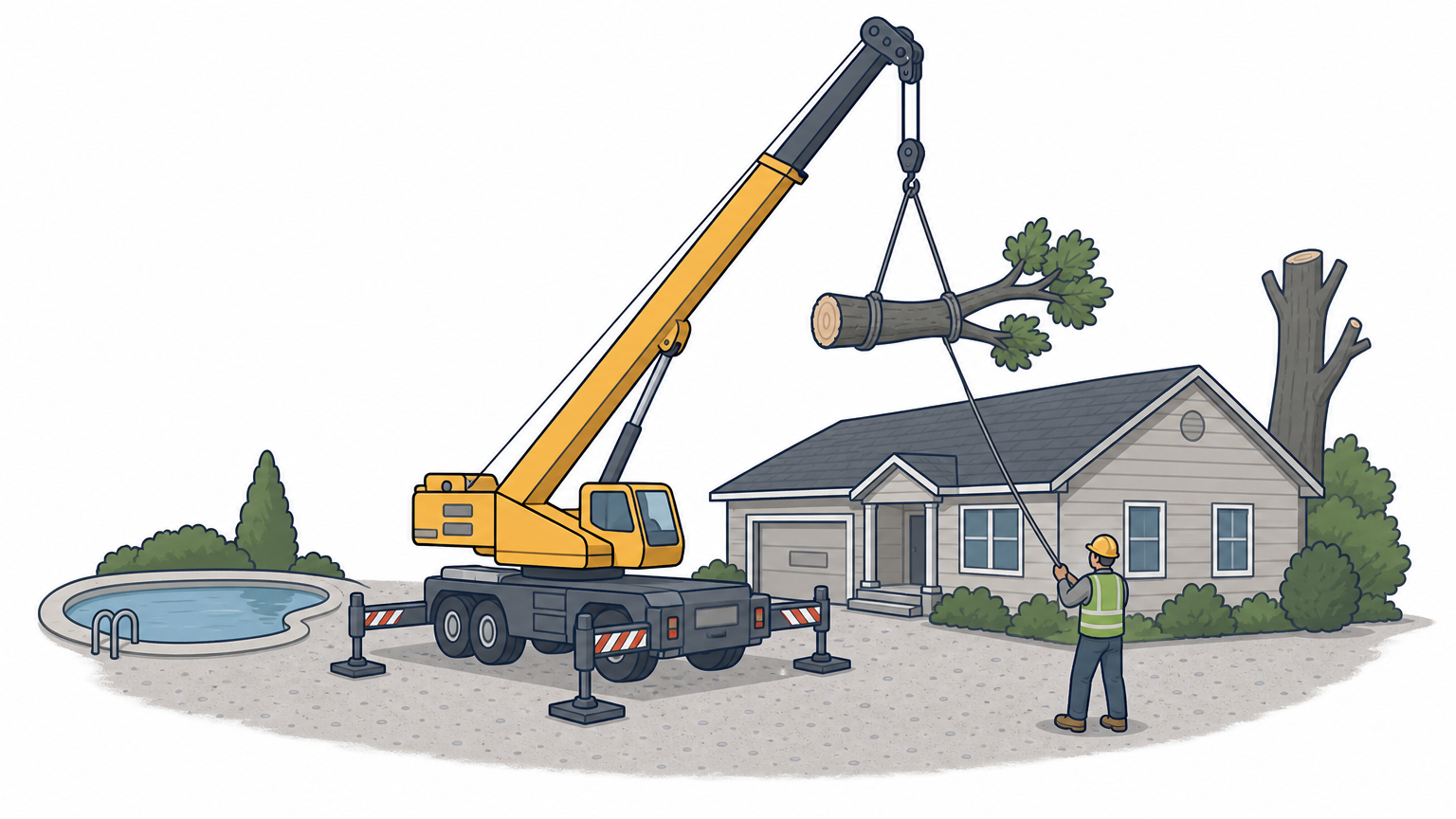
Crane-assisted removal means a mobile crane grips each section of the tree while a climber cuts it. The crane then lifts the section clear and sets it down. Heavy wood never swings over your roof, pool, or pavers. You pay for the crane, the operator, the rigging crew, and the cleanup as one package.
This guide shows what pushes the price up or down, how to read a quote line by line, and how to keep the number fair. Integrity Landscape brings crane support to large tree jobs across Jupiter and Palm Beach County, so the examples reflect South Florida properties.
Why crane tree removal cost varies so much
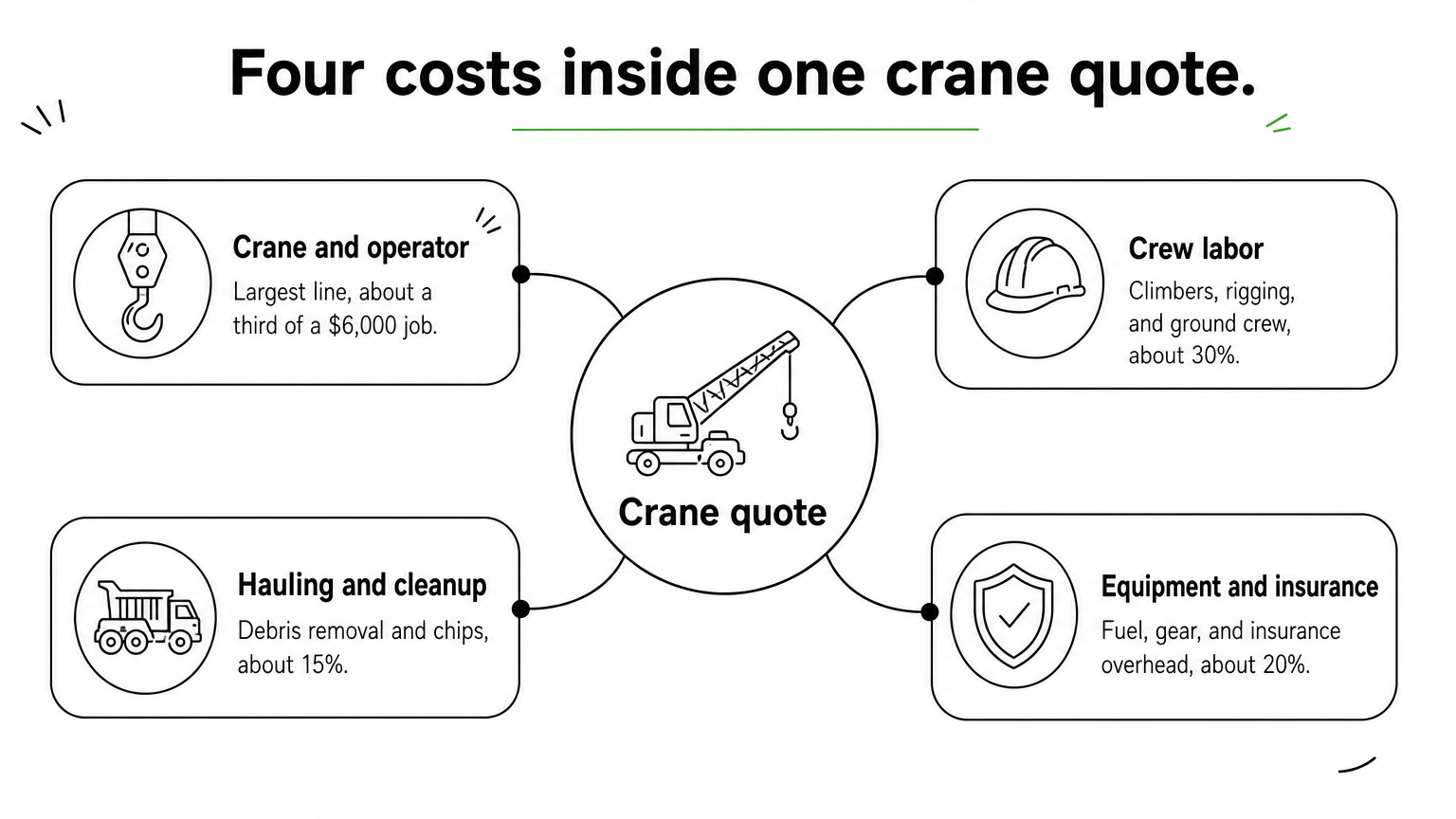
The price varies because a crane job bundles four separate costs: the crane and operator, the crew, hauling and cleanup, and the risk the job carries. Each one changes with the tree and the site. Two trees of the same height can differ by thousands of dollars.
Typical price ranges at a glance
The table below sets side by side the ranges that tree services publish for crane-assisted work. Treat it as a reference frame, not a price list. Your lot, your tree, and your market move the number.
| Job type | Typical range | What it usually involves |
|---|---|---|
| Moderate tree, open access | $1,500 to $3,500 | Crane sets up close, clear landing zone, short time on site |
| Large tree, tight lot | $3,000 to $6,000 | Structures nearby, limited crane positioning, larger crew |
| Very large tree (80+ ft) | $5,000 to $9,000+ | Heavy sections, power lines or buildings on several sides |
| Multiple trees or worst case | $9,000 to $15,000+ | Bigger crane, utility coordination, full-day or multi-day work |
Some crews price by time instead. Half-day packages of about four hours land around $1,650 to $2,400 before cleanup, and a dedicated cleanup crew can add several hundred dollars per hour.
Why quotes for the same tree can differ by thousands
Crane time is the biggest line. A 40-ton crane handles most residential tree work and costs hundreds of dollars per hour with an operator. A 60 to 80 ton crane for a very large tree costs more, and getting either one to your property and back is billed as mobilization.
A rough split on a $6,000 job looks like this: about a third goes to the crane and operator, 30% to crew labor, 15% to debris hauling, 10% to equipment and fuel, and 10% to insurance overhead. That last slice matters. A crew that skips proper insurance can quote lower, and you carry the risk.
The crane is the largest single line on the quote, but the scope around it decides whether the total is fair.
Scope is why a tree removal crane cost can look inconsistent from one bid to the next. One quote includes hauling and stump grinding. Another leaves both out. Compare scope first and price second.
What drives the cost of tree removal with a crane
Five factors set the cost of tree removal with a crane: crane size, time on site, access, tree condition, and extras such as permits, hauling, and stumps. Knowing which ones apply to your tree tells you where a quote should be high and where it should not.
Crane size and time on site
Heavier sections need a bigger crane. A live oak limb section can weigh thousands of pounds, and the crane must hold it with margin to spare. Crews match the crane to the heaviest lift, not the tree's height, and the outriggers need stable ground. In some cases crews lay mats to spread the load.
Time on site matters more than most homeowners expect. Hourly crane billing means every hour of delay costs money. A prepared crew with a clear rigging plan finishes in a half day. A disorganized one runs long. Ask how many hours the quote assumes.
Access and what surrounds the tree
A tree in a front yard with a driveway beside it is cheaper than one behind the house. The crane may need to set up farther away, which calls for a larger machine. Gates, walls, pool decks, and irrigation lines all complicate the setup.
Targets raise the price too. A tree over a roof, a screened enclosure, or a pool requires precise placement of every section. Power lines add utility coordination, and sometimes the utility must shut off or shield the line. Expect those jobs near the top of the ranges.
Where the crane can sit and what lies under the swing path often move the price more than the tree's height.
Tree condition, species, and South Florida factors
Dead or decaying trees cost more because climbers cannot trust the wood. The crane takes the load first, so the crew can cut safely. Species matter as well. Live oaks and banyans carry heavy, wide limbs. Tall palms are different, because trunk weight is concentrated and the sections are long and heavy.
Storm season adds a local factor. Hurricane season runs June through November, and demand for cranes and crews spikes after a storm. Emergency work can cost 50% to 100% more than planned removal. A hazardous tree you remove before the season is cheaper than the same tree after it fails.
Permits, cleanup, and stumps
Many Florida municipalities and HOAs regulate removal of certain trees, and mangroves are protected under state law. Confirm permit and approval rules with your town or HOA before you book. Ask who handles the paperwork and whether the fee is in the quote.
Cleanup and stumps are the usual add-ons. Full hauling of logs and chips is standard on many quotes, while stump grinding is often separate. A stump is a second line item, so it should be priced as one.
How to check whether your crane quote is fair
A quote is fair when it names the crane size, the hours, the crew, and the cleanup, and the total sits inside the range for your tree's size and access. Anything vague should be clarified in writing before you sign.
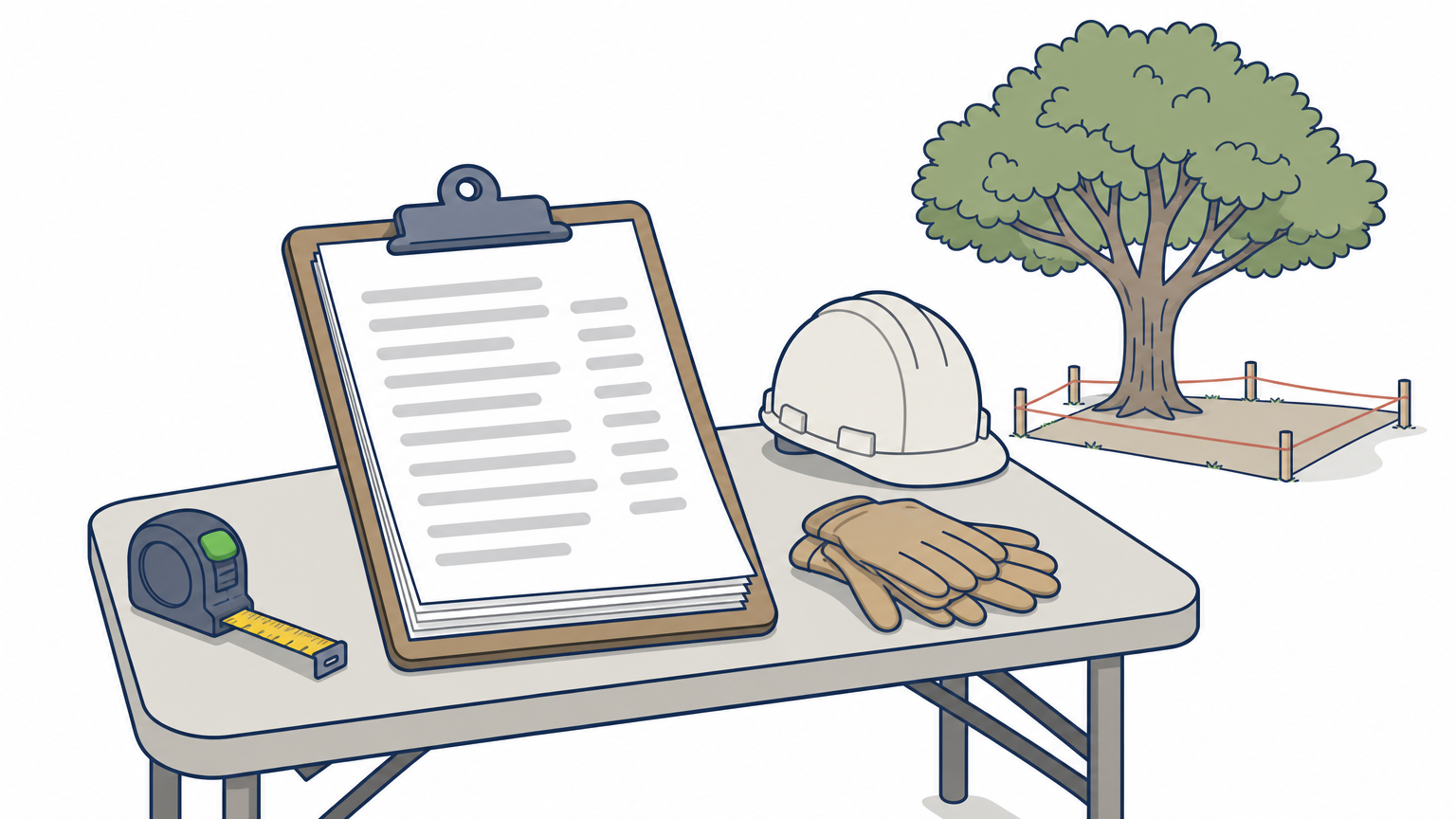
Ask for line items
Request a written scope that covers these points:
- Crane tonnage and who supplies it
- Estimated hours on site and what happens if the job runs over
- Crew size and whether a certified arborist leads the work
- Debris hauling, chipping, and final cleanup
- Stump grinding, included or priced separately
- Permit handling and fees
- A certificate of insurance showing general liability and workers' compensation
- Start window and payment terms
You can copy and send this to every contractor you invite to bid, so all quotes cover the same ground:
 Hi, I need a quote for crane-assisted removal of [number] tree(s) at [address].
Tree type and approximate height: [ ]
What is nearby: [house, pool, power lines, fence]
Please list: crane size, estimated hours, crew size, hauling and cleanup,
stump grinding (included or separate), permit handling, and your
certificate of insurance. When can you schedule a site visit?
Compare quotes on equal terms
Put the quotes side by side after you match the scope. If one bid is $2,000 lower, check what it left out. A low price that excludes hauling and stumps often ends up higher once you add them.
A fair quote also follows a site visit. Photos help, but they do not show root condition, soil stability, overhead clearance, or where the crane can set up. A contractor who firms up a crane price from a phone call is guessing.
If nobody has looked at the tree and the crane pad, the quote is an estimate at best.
Red flags to walk away from
Be cautious with door-to-door crews after storms, large deposits before any work, and no proof of insurance. Verify the insurance certificate with the carrier. If an uninsured crew drops a section on your roof, your homeowner's policy may not cover it. A very low crane tree removal cost with no written scope is a warning sign, not a bargain.
How to lower the cost without cutting corners
You can reduce what you pay by bundling work, preparing access, and confirming that a crane is needed at all. Do not trade safety for savings. Cutting a tree over your house by hand to avoid crane fees is how roofs get damaged.
Bundle trees, stumps, and cleanup
Mobilization is billed once, so adding a second tree to the same crane visit costs far less than a separate trip. Grinding stumps the same day avoids another crew visit. If you have several trees in need of work, schedule them together.
Prepare the site and pick your timing
Move vehicles, open gates, and flag sprinkler heads before the crew arrives. Clearing the path to the crane pad saves crew time, and time is what you pay for. Schedule planned removals outside storm season when possible, since availability is better and you avoid emergency rates.
Confirm that you actually need a crane
Most trees do not need one. A 30 to 40 foot tree in an open yard usually comes down with a climber and rigging, and tree removal cost averages for that kind of job run far less than the crane figures above. A crane job rarely lands near $1,000, because crane time, mobilization, and the crew use that budget quickly.
Choose a crane when the tree is over a structure, dead or unstable, near power lines, or too heavy to rig by rope. A reputable contractor will tell you honestly which category your tree falls into, and will not upsell a crane you do not need.
A fair price starts with a clear scope
Crane tree removal cost depends on the crane, the hours, the access, the tree's condition, and what the quote includes. Match the scope across bids, ask for line items, verify insurance, and insist on a site visit before anyone commits to a number.
If you have a large or hard-to-reach tree in Jupiter or elsewhere in Palm Beach County, Integrity Landscape offers free estimates, same-day quotes, and crane support for large jobs. We will tell you whether your tree needs a crane and put the price in writing.