How Much Does Tree Removal Cost? A Pricing Breakdown
You've got a tree that needs to come down, and before you call anyone, you want a real number. Not a vague "it depends" answer, but an actual sense of what you're about to pay. How much cost tree removal varies more than most homeowners expect, and the range can run from a few hundred dollars to several thousand depending on what's actually involved.
In Palm Beach County, most homeowners pay somewhere between $400 and $3,500 per tree, with small tree removal cost landing on the lower end and large, hazardous, or hard-to-access trees pushing toward the top, according to the crews handling tree care and removal across Palm Beach, FL. Height, trunk diameter, location relative to structures, and whether you need stump grinding or crane support all factor into the final quote. Species matters too. Florida's palms, oaks, and ficus trees each come with their own removal challenges.
Below, we break down exactly what drives tree removal pricing, share realistic cost ranges by tree size and job complexity, and explain what separates a fair quote from an inflated one. If you're planning a removal in Jupiter or the surrounding coastal communities, this pricing breakdown will help you budget accurately and spot a trustworthy contractor when you see one.
Why tree removal costs vary so much
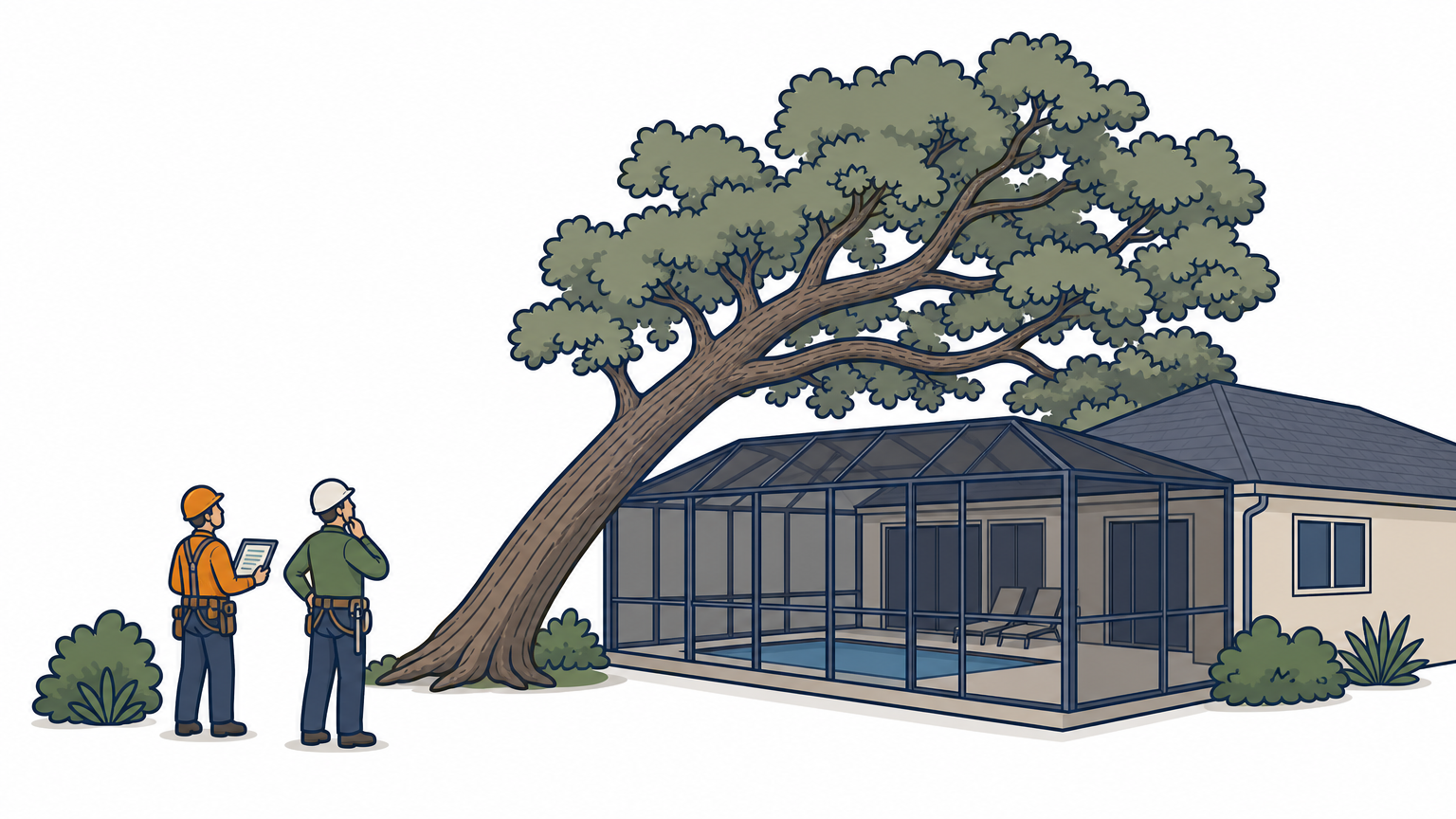
Arborists don't quote off a flat rate card, because no two trees present the same job. What you'll pay to take a tree down depends on a stack of variables that combine differently every time: size, location, condition, species, and what has to happen to the wood once it's on the ground. A 20-foot ligustrum in an open backyard and a 60-foot oak leaning over a pool cage might both be "one tree," but the second job could cost five times more.
Height and trunk diameter set the baseline
Size is the single biggest driver of price, since it determines how many crew members, how much rigging, and how many hours the job takes. A tree under 30 feet with a slim trunk might come down in an hour or two with basic tools. A mature oak or banyan over 60 feet tall, with a trunk diameter over 24 inches, requires sectional cutting, rope work, and sometimes a crane to lower limbs safely.
The taller and thicker the trunk, the more labor and equipment it takes to bring it down safely, and that's what really sets the price.
Location and access change the equation
Crews price based on how hard it is to reach and remove the tree without damaging anything nearby. A tree standing alone in a wide backyard is straightforward. One growing beside a house, over a seawall, tangled in power lines, or wedged between fences forces the crew to work piece by piece instead of felling it whole, which adds hours and sometimes requires specialized equipment like a bucket truck or a crane lift for large tree removal. Narrow side yards and tight HOA lots in Jupiter and Palm Beach neighborhoods often push quotes higher for exactly this reason.
Tree health and hazard level matter too
Dead, diseased, or storm-damaged trees carry more risk, and contractors price that risk into the quote. Brittle limbs, hollow trunks, and unstable root systems make a removal unpredictable, so crews often bring in extra safety gear or additional workers. A healthy tree in stable soil is a more controlled job than a dead one that could shed limbs mid-cut.
Species affects labor and disposal costs
Different Florida species behave differently under a chainsaw. Palms are lighter and quicker to section but their fibrous trunks dull blades fast. Oaks and ficus trees have dense wood and sprawling root systems, which slows the cut and complicates stump removal. Below is a quick look at how common factors shift the final number:
| Factor | Lower cost | Higher cost |
|---|---|---|
| Tree height | Under 30 ft | Over 60 ft |
| Trunk diameter | Under 12 in | Over 24 in |
| Access | Open yard | Tight side yard, near power lines |
| Condition | Healthy | Dead, diseased, storm-damaged |
| Species | Palm, ligustrum | Live oak, ficus, banyan |
Gathering these details before you call anyone helps you understand why one company's quote looks different from another's, and it gives you a real basis for comparison when you start requesting estimates.
How to estimate your tree removal cost
Before you pick up the phone, you can get a reasonably close ballpark yourself with a tree removal price estimator. Measuring your tree and answering a few honest questions about its condition puts you in a much stronger position when quotes start coming in, and it helps you spot a number that's out of line.
Measure what you can safely see
Grab a tape measure and walk around the tree. You don't need an arborist's precision, just rough figures that let you place the job in the right cost bracket.
- Height : Estimate by comparing the tree to a known reference, like your house's roofline or a nearby power pole.
- Trunk diameter : Measure around the trunk at chest height (about 4.5 feet up) and divide by 3.14 to get diameter.
- Canopy spread : Wider canopies mean more branches to rig and haul away.
- Distance to structures : Note how close the tree sits to your house, fence, pool, or power lines.
A tape measure and a five-minute walk around the yard will tell you more about your likely quote than any online calculator.
Factor in condition and access
Once you've got dimensions, look honestly at the tree's health. Is it leaning? Are there dead branches or visible cavities in the trunk? Dying or storm-damaged trees push the price up because crews have to plan for unpredictable breakage. Also consider how a crew would actually get equipment to the tree. If they'd need to cross a fence, squeeze between structures, or work above a roofline, expect that to add to the total.
Get an in-person quote to confirm your estimate
Self-estimating gets you close, but tree removal how much does it cost ultimately comes down to what a crew sees on-site. Photos and phone descriptions miss details like buried roots, soil conditions, or hidden power lines that change the job's difficulty. A same-day, in-person estimate from a licensed crew turns your rough numbers into a firm quote, and it lets you ask direct questions about equipment, cleanup, and stump handling before you commit. Treat your own measurements as a starting point, not a final answer, and use them to sanity-check whatever number a contractor hands you.
Tree removal cost by size and tree type
Numbers help more than ranges once you're trying to set a real budget, so here's what Palm Beach County homeowners typically pay based on size and species, and here's how the averages compare from saplings to mature trees. These figures assume reasonably easy access; add more for tight lots, power line proximity, or storm damage, as this breakdown of tree removal service pricing explains.
Cost by tree size
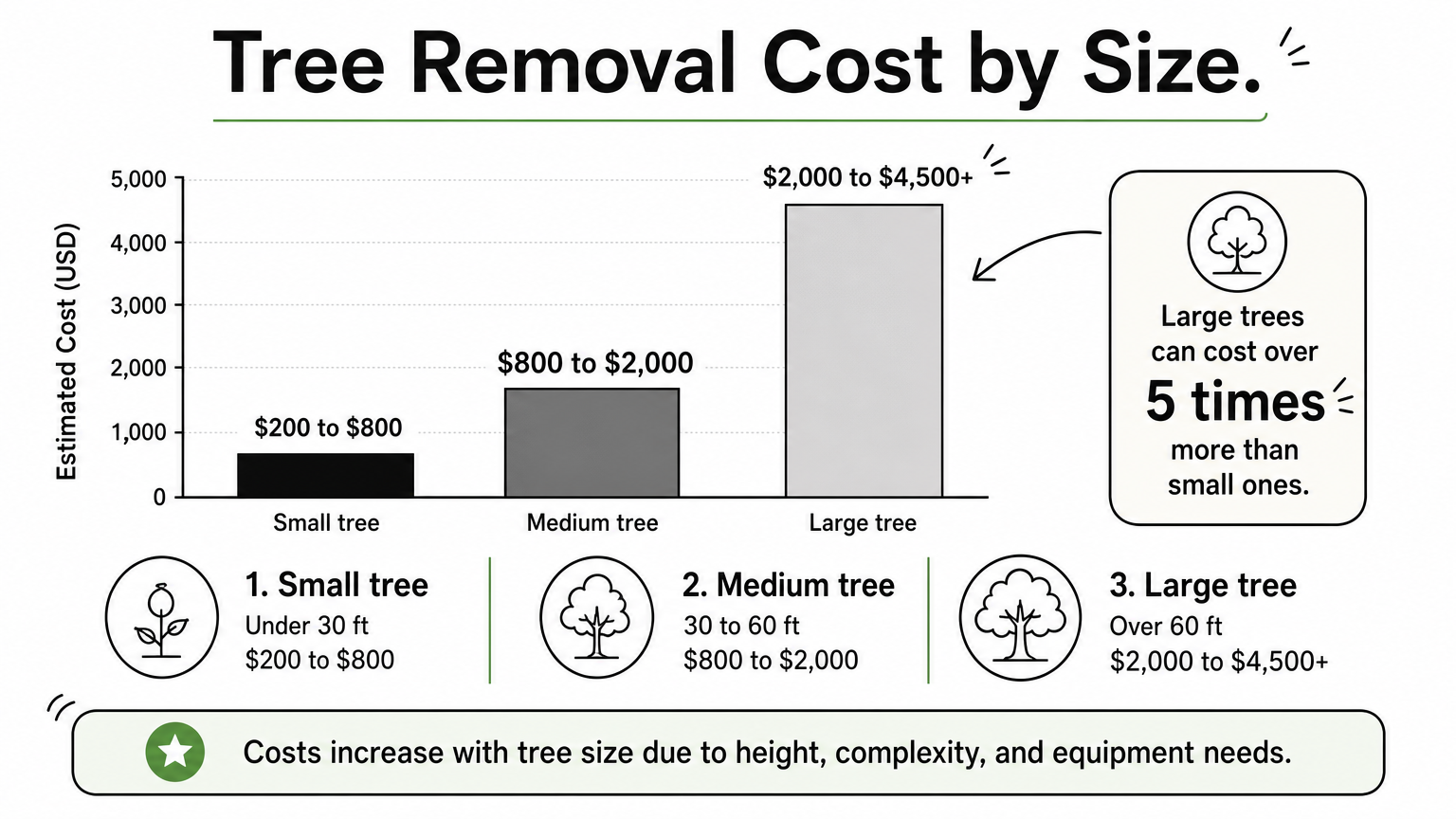
Small trees are the cheapest category by a wide margin, and small tree removal cost usually falls well under $1,000 unless access is unusually difficult. Mid-size trees sit in the middle range, while large, mature specimens push toward the top of the market because of the rigging, crew size, and disposal volume involved.
| Tree size | Height | Typical cost |
|---|---|---|
| Small | Under 30 ft | $200 to $800 |
| Medium | 30 to 60 ft | $800 to $2,000 |
| Large | Over 60 ft | $2,000 to $4,500+ |
Size sets the floor for your quote, but species and condition decide where in that range you actually land.
Palms versus hardwoods
Palms come down fast and light, which usually keeps prices near the bottom of a given size bracket. A single mature royal palm or coconut palm often runs $300 to $900 since the trunk sections easily and the fibrous wood is quick to cut, even though blades dull faster on the silica-rich fibers. Hardwoods tell a different story. Live oaks, ficus, and banyans have dense wood, heavy limbs, and root systems that can undermine pavers or foundations, so removal on a mature specimen frequently lands between $1,500 and $4,500.
Why species changes the number even at the same height
Questions like " how much do tree removal cost " don't have one answer because two 40-foot trees can require completely different amounts of labor. A 40-foot ficus with a sprawling canopy and aggressive roots takes longer to rig, cut, and haul than a 40-foot palm of the same height, and the ficus often needs extra work to manage root regrowth near hardscaping. Melaleuca and Brazilian pepper, both common invasive species in this region, sometimes cost less to remove since local crews handle them often and disposal rules are more straightforward. Always ask your contractor which bracket your specific species falls into before you compare quotes.
Extra costs to plan for
A quote for cutting down a tree rarely covers everything you'll actually pay. Several add-ons show up so often that you should ask about them upfront rather than getting surprised on the invoice. Extra costs to plan for typically fall into a handful of predictable categories, and knowing them ahead of time keeps your budget realistic.
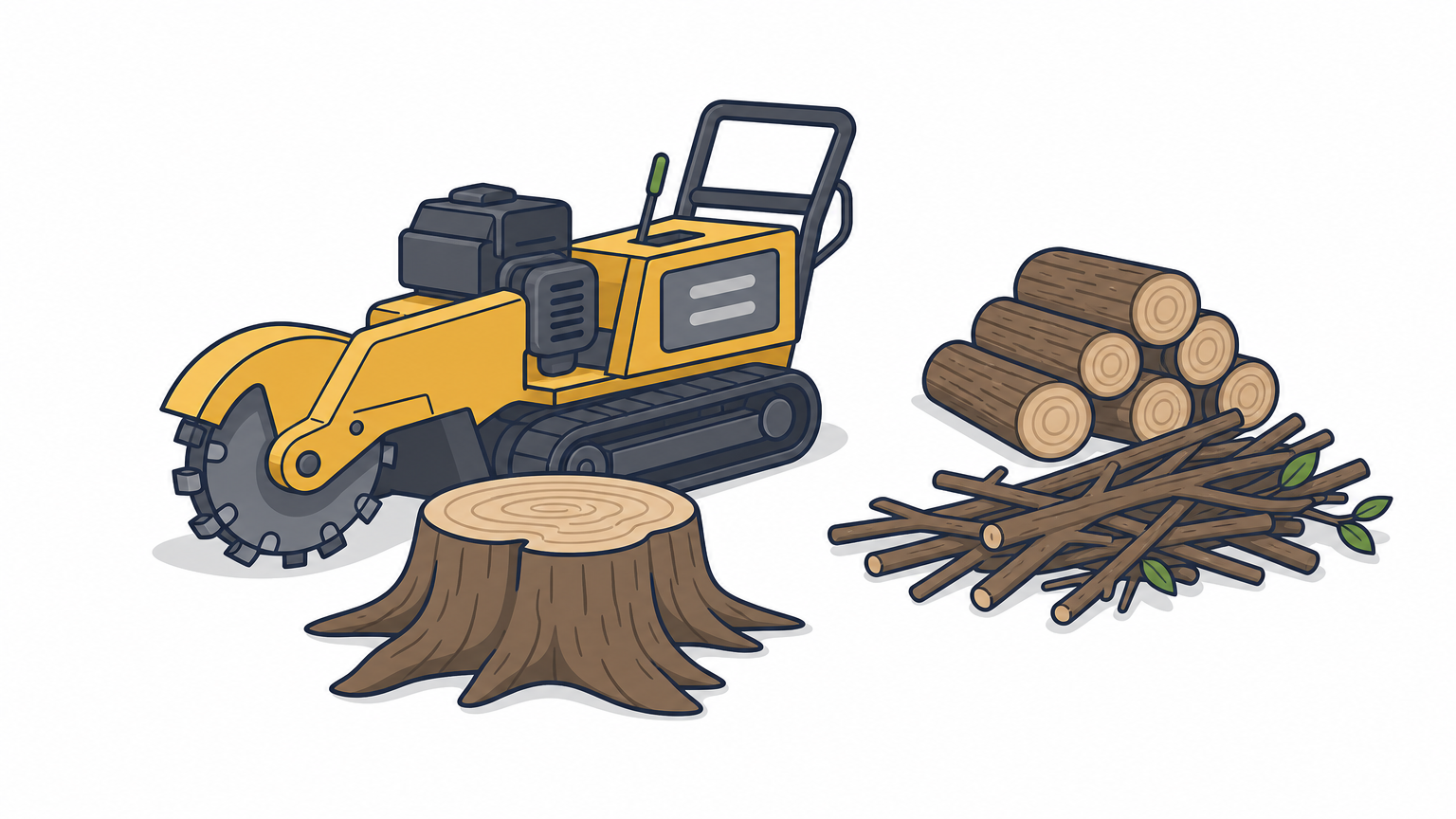
Stump grinding isn't automatically included
Most companies quote the tree removal itself separately from the stump. Grinding the stump and roots out below grade usually adds $100 to $400 depending on trunk diameter, and full stump and root extraction costs more since it involves digging and hauling out soil. If you plan to replant, install pavers, or lay sod where the tree stood, factor stump removal into your original request instead of treating it as an afterthought.
Debris hauling and cleanup add up fast
Some contractors leave cut wood in your yard unless you pay for haul-away, so always confirm whether cleanup is bundled into the price. A large hardwood generates a lot of material, and hauling the wood and yard waste off-site can run an extra $150 to $500 on bigger jobs. Ask specifically whether your quote includes chipping branches, removing logs, and raking debris, since these details separate a fair price from a low-ball number that gets padded later.
Permits, HOAs, and emergency situations
Jupiter and several Palm Beach County municipalities require permits for removing certain protected or heritage trees, and HOA approval can add a few weeks to your timeline. Storm-damaged or leaning trees that pose an immediate hazard often get an emergency surcharge for after-hours or same-day response, sometimes 25% to 50% above standard rates.
| Extra cost item | Typical add-on |
|---|---|
| Stump grinding | $100 to $400 |
| Full stump/root extraction | $200 to $600+ |
| Debris haul-away | $150 to $500 |
| Permit fees (varies by municipality) | $50 to $200 |
| Emergency/same-day service | +25% to 50% |
A cheap-looking quote that skips stump grinding and debris removal usually costs more than the honest number once you add it all back in.
A licensed, insured crew like Integrity Landscape's Jupiter tree service team will spell out these line items in writing before work starts, which is exactly what you want to see in any estimate you're comparing.
DIY vs. hiring a professional tree service
Renting a chainsaw for a weekend feels like the cheaper option, and for a small, healthy shrub or a sapling nowhere near your house, it can be. But before you decide, it helps to look honestly at what DIY tree removal actually saves versus what it risks, because the math changes fast once a tree gets taller than your roofline.
When cutting it yourself makes sense
A tree under 15 feet, standing well clear of structures, power lines, and fences, is often within reach of a homeowner with basic tools and some caution. Small ligustrums, young palms, or storm-snapped saplings fall into this category. Renting equipment might cost $50 to $150 for the day, versus $200 to $400 for a professional to handle the same small job.
When you need a licensed crew
Anything with real height, weight, or proximity to your home crosses into professional territory. Felling and removing a large tree safely — rigging a 40-foot limb over a roof, dropping a leaning oak near a pool cage, or working close to power lines — requires insurance, specialized gear, and training that a homeowner simply doesn't have. One bad cut on a tree that size can total a roof, snap a fence, or send someone to the hospital, and DIY equipment rental won't cover any of that damage.
A $150 chainsaw rental looks cheap until it turns into a $15,000 roof repair or an ER visit.
| Job type | DIY risk level | Recommended approach |
|---|---|---|
| Small, open-yard sapling | Low | DIY acceptable |
| Mid-size tree near fence/shed | Moderate | Professional recommended |
| Large tree near house, pool, or power lines | High | Professional required |
| Dead, leaning, or storm-damaged tree | Severe | Professional required |
When you're weighing how much cost tree removal against the price of a rental, remember that a licensed contractor also carries liability insurance, hauls the debris, and often grinds the stump as part of the job. That bundled value rarely shows up in a simple equipment-rental comparison, but it's exactly what protects your property and your budget if something goes wrong mid-cut.
Planning your tree removal budget
Getting a fair price on tree removal starts with understanding what actually drives the number: size, access, condition, species, and whatever extras your contractor bundles in or leaves off the invoice. Knowing these factors before you request a quote means you can spot a lowball estimate that's hiding stump grinding and cleanup fees, or a fair price that reflects the real complexity of your job. Trees near your house, over a pool cage, or tangled near power lines aren't a place to cut corners on experience, no matter how tempting the DIY savings look on paper.
Once you've measured your tree and have a realistic range in mind, get a same-day estimate from a licensed, insured crew that puts every cost in writing. If you're ready to see a real number for your property, book a free, same-day tree removal estimate built around your yard, not a generic price chart.