
Full-Service Lawn Care: What It Includes and What It Costs
Full-service lawn care is one recurring contract that covers the whole yard, not just the grass. A crew mows, edges, trims and blows off hard surfaces, then adds the work that keeps turf healthy, such as fertilizing, weed and pest control, irrigation checks and seasonal cleanups. Nationally, a full-service plan averages about $350 a month, with small lawns near $100 and large properties above $1,000. Your quote depends on lot size, visit frequency and how much work you bundle in.
This article walks through what that means for a lawn in Palm Beach County. You will see why bundling matters for Florida grass, what belongs in a real plan, what the work costs with a worked example, how to compare providers, and what a full year of service looks like. It also covers how the same idea applies to HOAs and commercial grounds.
Integrity Landscape has worked on residential and commercial properties in Jupiter and the surrounding area for over 10 years , from mowing and irrigation to tree service and hardscape. The advice below reflects what lawns here actually need, so you can judge any proposal, ours included, with a clear checklist.
Why full-service lawn care matters for a Florida lawn
Full-service lawn care matters because a South Florida lawn grows almost all year, and the problems that damage it move faster than a mowing-only schedule can catch. One accountable crew handling the whole yard is cheaper than repairing the damage later.
A lawn that never really stops growing
Most lawns in Jupiter and Palm Beach County are warm-season grasses. St. Augustinegrass is the most common, with zoysia, bahia and bermuda also in use. These grasses grow hard through the rainy season and slow, but rarely stop, through winter. That means a weekly mowing rhythm for much of the year and a looser one in the cooler months.
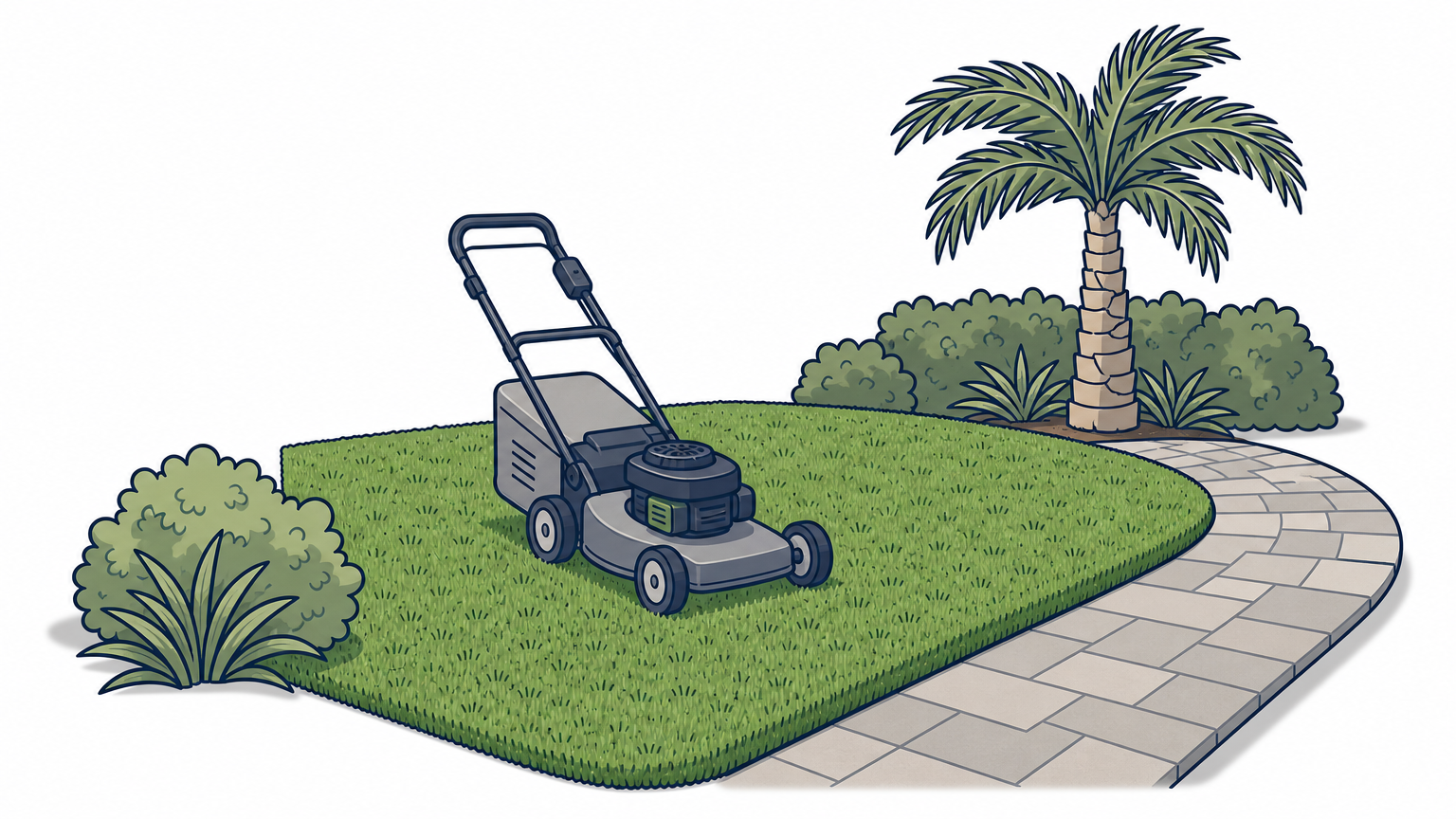
How the grass is cut matters as much as how often. The general rule is to remove no more than one third of the blade per mowing. Common St. Augustinegrass does best left tall, around 3.5 to 4 inches. Crews that scalp it to look tidy weaken the roots and open the lawn to weeds. Tell any provider your target height in writing.
A mowing-only crew cuts the grass, while a full-service crew is responsible for how the lawn looks three months from now.
Problems that mowing alone misses
Most lawn damage starts small and out of sight. A crew that visits every week for mowing, edging and cleanup sees it early. A homeowner who glances at the yard on weekends often does not. These are the usual culprits here:
- Chinch bugs: They feed on St. Augustinegrass and leave yellow, dry-looking patches, often along hot driveways and sidewalks.
- Fungal disease: Warm, humid, wet weather encourages brown and gray patches that spread quickly.
- Weeds: Broadleaf weeds and sedges take hold in thin turf and in bare spots.
- Irrigation faults: A broken head or a bad timer setting shows up as a dry zone or a soggy one.
- Compaction: Packed soil keeps water and nutrients from reaching the roots.
Catching any of these in week one is a spot treatment. Catching them in week eight can mean replacing sections of sod.
Time, consistency and property standards
Hiring a pro costs more than doing the work yourself. It also saves time and equipment upkeep , and it puts one crew on the hook for the result. That matters in a coastal market where curb appeal and HOA standards are high, and where a week of rain can leave a yard a foot taller than the rules allow.
Consistency is the other benefit. When mowing, trimming, mulch, irrigation and debris all sit with one provider, nothing falls between contractors. You also have one number to call when something looks wrong.
How to build a full-service lawn care plan
Build the plan in three layers: core visits every week or two, seasonal treatments a few times a year, and add-ons you request when the property needs them. Writing each layer down is what separates a real plan from a vague promise.
What a core visit includes
The core visit is the backbone and should be identical every time. Most monthly packages include a regular cut plus the finishing work around it. Expect this list on every stop:
- Mowing all turf at the agreed height
- String trimming along fences, structures, trees and bed edges
- Edging walks, driveways and bed lines
- Blowing clippings off driveways, sidewalks, patios and porches
- Quick check of beds for weeds and debris
If a proposal leaves out the blow-off or the trimming, ask why. Those are the steps a visible result depends on.
Seasonal services and add-ons
Seasonal work is where full-service lawn care separates from basic mowing. Timing in Florida is shaped by the rainy season and by local fertilizer rules, so ask your provider to name the months, not just the service.
| Service | What it does | Typical frequency |
|---|---|---|
| Fertilization | Feeds turf for color and density | A few rounds a year, timed to local rules |
| Weed control | Prevents and treats weeds in turf and beds | Pre-emergent in late winter, spot treatment as needed |
| Pest and disease treatment | Stops chinch bugs, fungus and similar damage | When symptoms appear, or preventively |
| Aeration | Relieves compaction | Once a year if the soil is packed |
| Mulch or rock refresh | Holds moisture, blocks weeds, finishes beds | One to two times a year |
| Irrigation inspection | Finds broken heads and bad zones | At least seasonally |
| Shrub, hedge and palm trimming | Keeps growth under control | Several times a year |
| Debris and storm cleanup | Clears green waste and fallen limbs | After storms and heavy growth |
Integrity Landscape's own services cover much of the lower half of that table. They include rock and mulch installation with delivery and prep, irrigation installation , repair and maintenance, sod installation with Florida-adapted varieties, and debris and junk removal for green waste and storm debris. For fertilizer, weed and pest treatments, ask any provider which work their own crew does and which they hand off.
Lawn care, lawn service and landscaping maintenance
These terms get used loosely, so the difference is worth pinning down. Lawn service usually means cutting: mow, trim, edge and blow. Lawn care focuses on the health of the turf itself, which means feeding, weed and pest control, aeration and watering. Full-service lawn care combines the two and usually extends to beds, shrubs and cleanups.
Landscaping maintenance is the broadest label. It adds tree and palm trimming, bed renovation and sometimes hardscape upkeep. When you request quotes, describe the work you want, not the label. A company can call a mowing visit "full service" and still leave out half of this section.
If a proposal lists only mowing, edging and blowing, you are looking at a lawn service, not full-service lawn care.
What full-service lawn care costs
Nationally, full-service lawn care averages about $350 a month, and the range runs from roughly $100 to more than $1,000 depending on lot size and scope. Treat national figures as a starting benchmark, because a Palm Beach County quote will reflect local labor, a longer growing season and the services you pick.
National price benchmarks
These figures are national averages published for the whole country, set side by side so you can see how the pieces add up. They are not Jupiter quotes, so use them to test whether a proposal is in a sensible range.
| Service | National average |
|---|---|
| Single mowing visit | $30 to $50 |
| Hourly mowing rate | About $25 per hour |
| Weekly mowing, up to 8,000 sq ft | $30 per week, $120 per month |
| Weekly mowing, 8,001 to 15,000 sq ft | $35 per week, $140 per month |
| Weekly mowing, 15,001 to 20,000 sq ft | $40 per week, $160 per month |
| Package for a 1,000 to 2,500 sq ft lawn | $60 to $90 per month |
| Package for a 5,000+ sq ft lawn with cleanups, shrubs, weeding, minor irrigation repairs | $110 to $150 per month |
| Full-service maintenance, typical suburban home | $40 to $50 per hour, about $350 per month on average |
| Aeration | $70 to $100 |
| Professional fertilization, per application | Under $50 to over $200 |
The gap between the $110 to $150 package and the $350 average looks odd at first. The average is pulled up by larger lots and by bundles that add shrub work, bed care and frequent cleanups.
A worked example for an 8,000 square foot lawn
Take a typical home with about 8,000 square feet of turf and weekly mowing all year. Using the national figures above, the math runs like this:
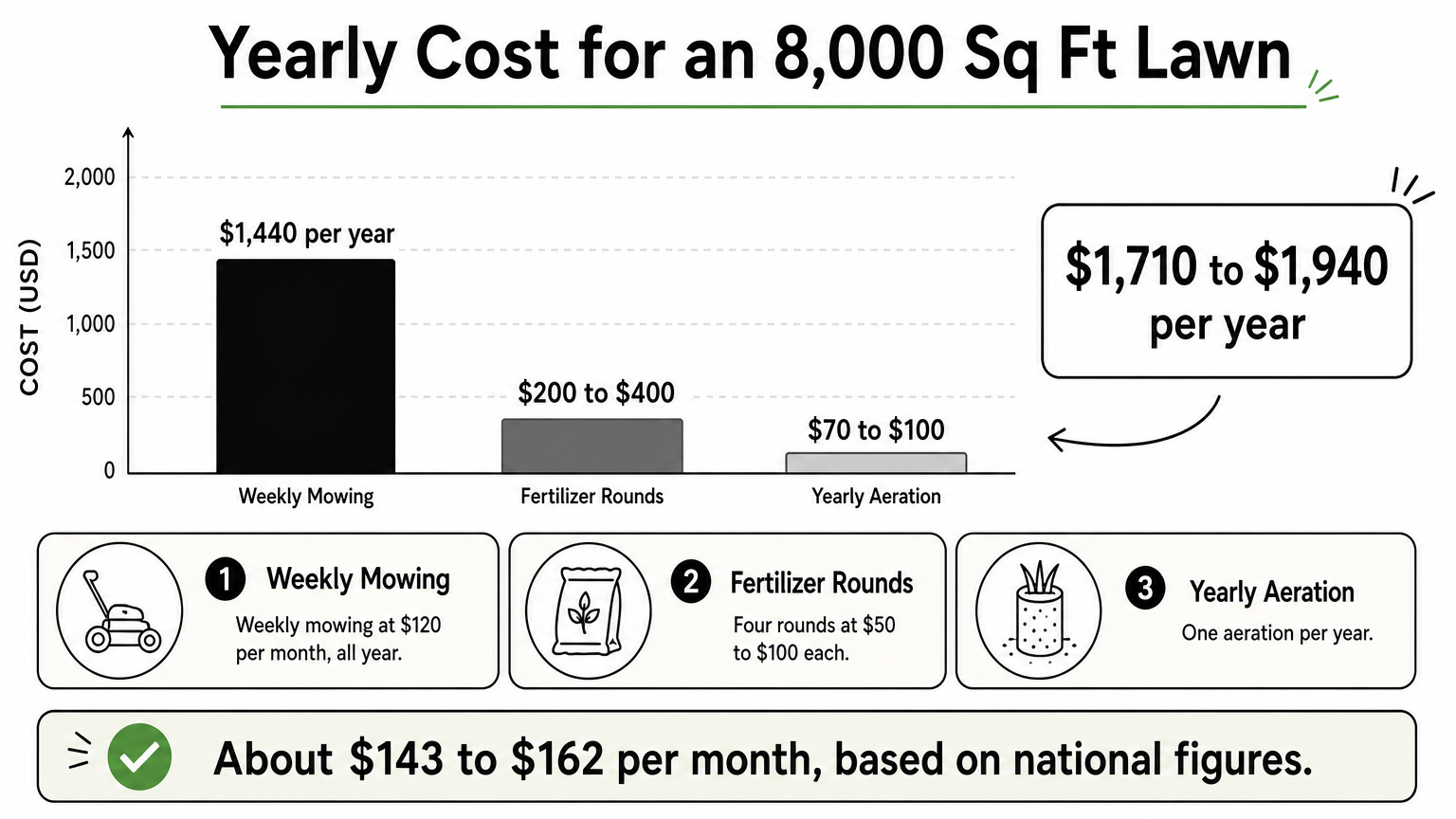
- Weekly mowing at $120 per month: 12 × $120 = $1,440 per year
- Four fertilizer rounds at $50 to $100 each: $200 to $400
- One aeration at $70 to $100
- Yearly total: $1,710 to $1,940 , or about $143 to $162 per month
Jupiter lots with palms, hedges, large bed areas or irrigation repairs will land higher. Use this as a floor to compare against, not a promise. Ask each provider for the price per visit and the number of visits per year, then multiply to compare quotes fairly.
What pushes your quote up or down
Seven factors move the price more than anything else:
- Lot size and turf area, not the square footage of the whole property
- Visit frequency, which in Florida means weekly mowing for most of the year
- Bed and shrub work, including mulch, hedges and palms
- Access, such as gates, slopes, tight side yards or obstacles
- Starting condition, since an overgrown first cut costs more than a maintained lawn
- Add-ons, such as treatments, aeration and irrigation service
- Travel distance outside a provider's usual route
Doing it yourself still costs a mower, fuel, fertilizer, replacement parts and your weekends. For most homeowners with a lawn above a few thousand square feet, the hired price is closer to the true DIY cost than it first appears.
Multiply the price per visit by the number of visits, then compare scopes, because the monthly total alone hides what is missing.
How to choose a full-service lawn care provider
Choose a provider by comparing written scopes, not monthly totals. Two quotes that both say $150 a month can cover very different work, and the difference shows up in month three.
Questions to ask before you hire
Use the same list with every company you call. The answers tell you more than a price does.
- Are you licensed and insured, and can you send proof of liability coverage?
- Who applies fertilizer and pest treatments, and are they certified in Florida?
- How many visits do I get per year, and how do you handle rain delays?
- What mowing height will you use on my grass type?
- Is blowing off hard surfaces and debris cleanup included every visit?
- What does the contract say about cancellation and price changes?
- Who do I call when something looks wrong, and how fast do you reply?
Written answers are better than verbal ones. If a company cannot say how it handles a missed week, it will not handle one well.
How to read reviews and quotes
Review scores matter less than review details. Look for repeated mentions of cleanup quality , on-time arrival, communication and the same crew showing up each week. A single complaint about clippings left on the driveway is normal. A pattern of missed visits is not.
When quotes arrive, line them up item by item. Check for the same visit frequency, the same trimming and edging, the same treatments and the same cleanup. Integrity Landscape gives same-day quotes and next-day service , is licensed and insured, and puts a dedicated project manager on every job site. Whoever you call, ask for a similar level of structure in writing.
Local crew or national treatment company
Readers often ask which company beats a national name such as TruGreen. The honest answer is that they sell different things. National treatment programs focus on fertilizer and weed control schedules and usually do not mow. A local full-service crew bundles mowing, trimming, beds and irrigation with the same people on site each week.
If your lawn is healthy and you only need feeding and weed control, a treatment program can be enough. If you want one team responsible for the entire yard, hire a local full-service provider and confirm in writing who does the treatments.
Compare scopes line by line, because the cheapest monthly price usually leaves out the work you were counting on.
A year of full-service lawn care in Jupiter
In Palm Beach County the year splits into a drier, cooler season and a wet, hot one, and a good provider changes the schedule between them. Use the calendar below to check whether a proposal matches how Florida grass actually behaves.
The seasonal calendar
This is a general guide. Your grass type, shade and soil can shift the timing.
| Season | Lawn focus |
|---|---|
| Winter (Dec to Feb) | Slower growth, mowing every one to two weeks, watch for cool-weather fungus, tree and hedge trimming, mulch refresh, pre-emergent weed control in late winter |
| Spring (Mar to May) | Growth picks up, weekly mowing resumes, feeding before summer restrictions, irrigation check, aeration if compacted |
| Summer (Jun to Sep) | Fast growth, weekly mowing or more, chinch bug and fungus watch, storm preparation and cleanup |
| Fall (Oct to Nov) | Growth slows, treat pests and disease still active, cleanup, mulch and bed refresh |
Fertilizer and watering rules to check
Palm Beach County and many Florida cities restrict nitrogen and phosphorus fertilizer during the summer rainy season, generally June 1 through September 30 . Rules also limit how close fertilizer can go to water bodies. Check the current local ordinance, and ask your provider how they schedule around it.
Watering is limited too. The South Florida Water Management District and local governments set allowed days and hours for lawn irrigation, and those schedules change. A provider that maintains your irrigation should know the current rules and set the controller to follow them.
Storm season planning
Hurricane season runs from June 1 to November 30. Trimming overgrown limbs and palm fronds before a storm and clearing loose debris reduces what can become a projectile in high wind. After a storm, fast hauling of fallen limbs and green waste keeps the yard usable and safe.
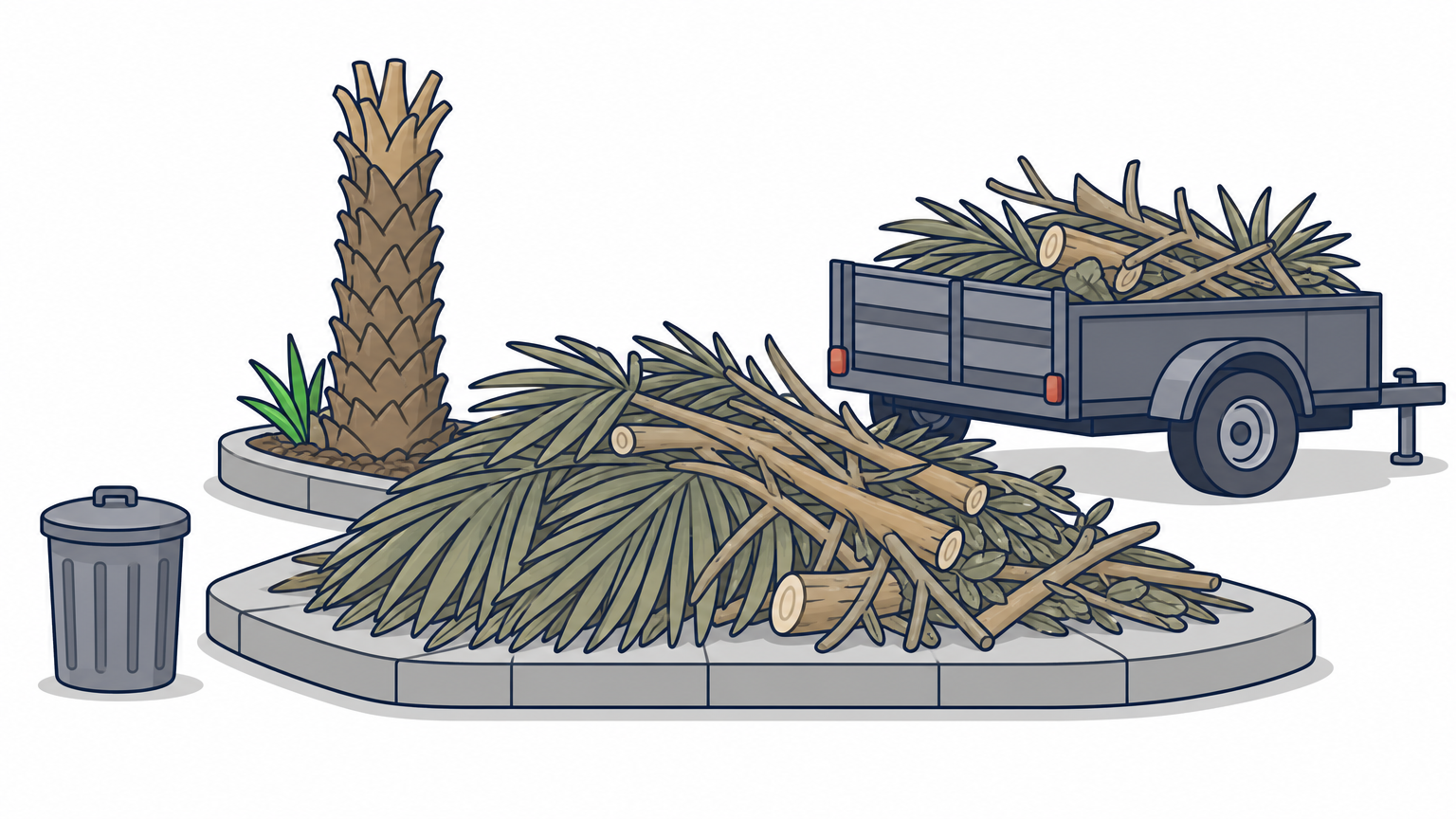
Ask your provider whether storm cleanup is inside the contract or billed separately, and who handles the heavy work. Large limbs sometimes need tree crews, equipment or a crane. Know the plan before the forecast turns.
The best schedule is the one that changes with the season, with heavier work in the growing months and cleanup after storms.
Full-service lawn care for HOAs and commercial properties
Commercial full-service lawn care uses the same layers as a home plan but adds scale, documentation and accountability. The contract matters more because many people depend on the grounds looking right every week.
What commercial scope looks like
Commercial work covers retail centers, office buildings and industrial parks . The core is grass cutting, trimming and ongoing yard maintenance on a fixed schedule. Integrity Landscape offers dedicated commercial lawn care and mowing in Jupiter and the surrounding area for these property types.
For larger sites, add bed maintenance, tree trimming, irrigation service and seasonal color or mulch. A site manager should be able to see what was done on each visit.
What an HOA board should put in the contract
HOA boards in this region often manage dozens of owners' expectations at once, so the contract should leave little to interpretation. Include these points:
- Visit frequency by season and by area, such as entrances, common lawns and retention areas
- Standards for mowing height, edging and cleanup
- Proof of license and liability insurance, with the association named where required
- Storm response and cleanup terms
- One named contact and a response time for complaints
- Treatment and irrigation responsibilities, spelled out
A dedicated project manager is worth asking for, since one person who knows the property is faster than a call center. The more structure the contract has, the less rework the board sees.
A commercial lawn contract works when responsibilities, standards and contacts are written down before the first visit.
Getting your lawn on a plan
Full-service lawn care is a bundle of mowing, trimming, treatments, irrigation attention, bed care and cleanups under one accountable crew. In Florida it pays off because the grass never really sleeps and problems spread quickly. Nationally, expect about $350 a month on average, with small lawns far less. Your own price comes from lot size, visit frequency and scope.
Before you sign anything, write the scope down, ask the seven questions above and compare quotes line by line. Check the fertilizer and watering rules in your area, and ask how storm cleanup is handled.
If you would like a clear scope and price for your property, request a quote from Integrity Landscape and describe what you want your yard to look like.