Average Cost for Large Tree Removal: Ranges by Height
The average cost for large tree removal is about $800 to $2,300 for a tree over 40 feet tall. The national average for removal jobs of every size is roughly $750. Complex jobs, such as a tall tree over a roof or beside power lines that needs a crane, commonly run $2,000 to $5,000 and can reach $10,000. "Large" is not an official category. It means a tree tall or wide enough that a crew needs rigging, a lift, or a crane instead of a climber and a saw.
This guide gives you the price bands by height, the factors that push a quote up or down, and a worked example you can copy for your own tree. It also gives you a checklist for judging a written quote. A section on Jupiter and Palm Beach County covers what changes locally, where pool enclosures, tight lots, and hurricane season shape the final number.
We are Integrity Landscape, and tree removal is one of our core services in Jupiter, FL. The figures below are published national ranges, not our price list. Use them to set a budget, then compare them against a written quote for your specific tree.
Why the average cost for large tree removal is a range
A single average hides the real spread. Typical removal costs about $750 nationally, but a large tree over 40 feet usually costs $800 to $2,300 . Crane-assisted or hazardous jobs sit above that, and the extreme end approaches $10,000 .
What counts as a large tree
Most price guides start their top height band at 40 feet. Crews think in terms of method, though. A tree is large when a climber cannot simply cut it down in small pieces and drop them into an open yard. If the job needs a bucket lift, rigging lines, or a crane, you are pricing a large tree.
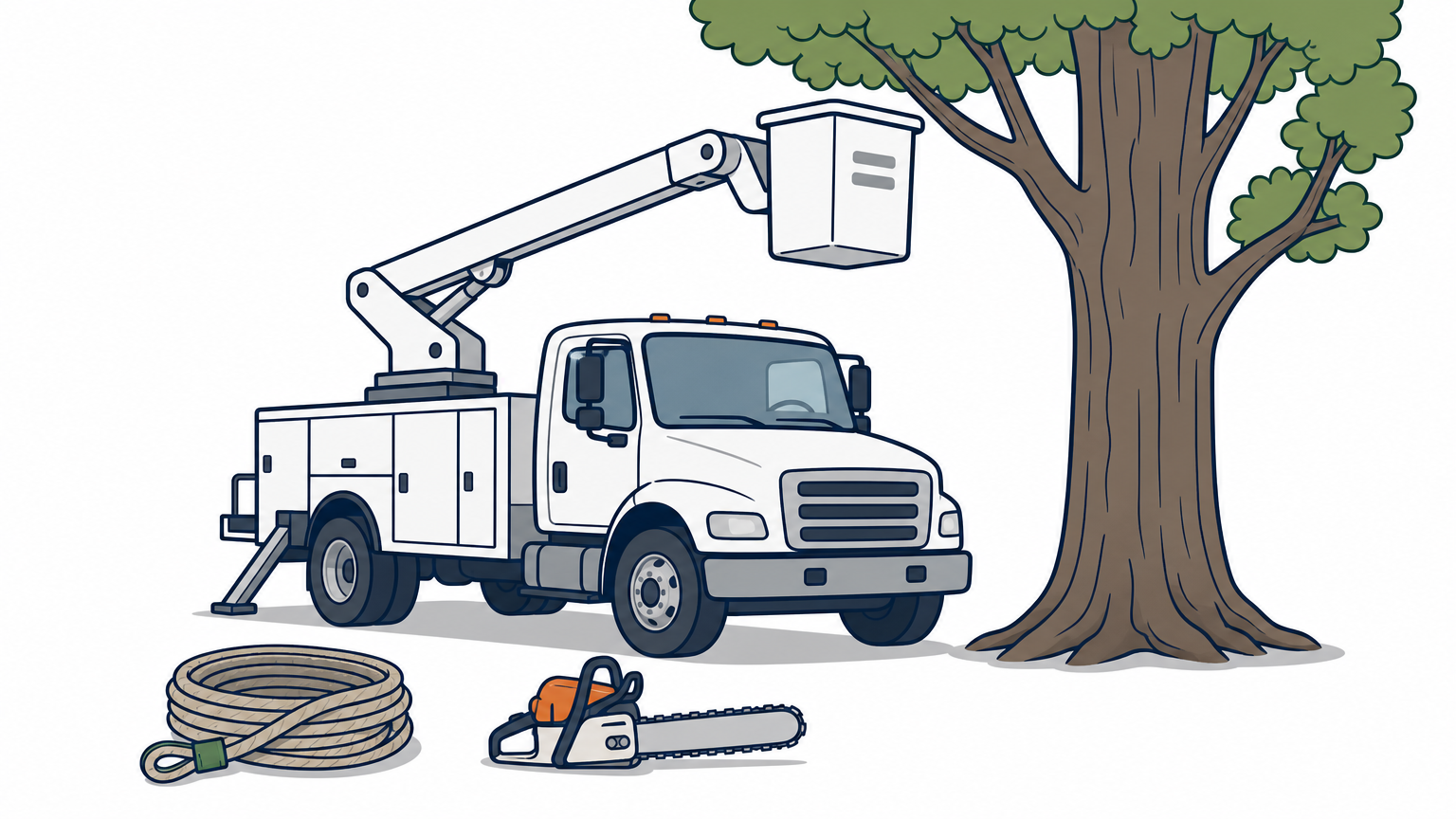
Trunk width matters as much as height. A 45-foot hardwood with a thick trunk holds far more wood to cut, lower, and haul than a slender 45-foot pine. Weight and wood volume drive labor hours, and labor is where most of the money goes.
National price ranges by tree height
National cost surveys cut height bands differently, so the table below overlaps their figures and rounds them. Treat each row as a range for budgeting, not a quote.
| Tree height | Typical national range | What the job usually involves |
|---|---|---|
| 21 to 40 ft | $450 to $1,700 | Climber or small lift, often no crane |
| 40 to 80 ft | $800 to $2,300 | Climber plus rigging, lift on tight lots |
| Over 80 ft | $1,000 to $2,300 and up | Large lift or crane is common |
| Hazardous or complex, any height | $2,000 to $5,000, up to $10,000 | Crane, power lines, decay, or structures below |
A few common questions fit into these rows. A 30-foot tree usually lands between $450 and $1,700 , depending on access. A $1,000 quote typically fits a tree around 40 to 60 feet in an open yard with no crane. A 100-foot tree is almost always a crane or large lift job, so plan on the upper rows of the table.
Large tree removal is priced by method, not just height: the moment a crane enters the job, the price band moves up.
Why one average misleads you
Published averages sit around $750, with a typical spread of $200 to $2,000. The low end is about $150 for a very small, easy tree. The high end is $10,000 for a large tree in a bad spot. Those numbers blend a 10-foot sapling in an open lawn with an 80-foot hazard beside a house.
If you budget $750 for a 60-foot tree next to your home, you can easily come up $1,000 or more short . Use the average as a sanity check for ordinary trees. For a large one, use the height band and then add the premiums covered next.
What pushes a large tree quote up or down
Five things move a large tree price the most: size, access, condition, equipment, and urgency. Access and equipment often matter more than the tree itself, because they decide how many people and machines the job needs.
Size, species, and tree count
Height and trunk diameter set the base price. Species adjusts it. Dense hardwoods such as oak take longer to cut and lower, and palms are very heavy for their height, with removal ranging from about $650 to $1,500 in national data. Trees with connected root systems, such as aspen, can also cost more to remove.
The number of trees changes your per-tree price. A crew already on site with equipment spends less on each additional tree, so bundling several trees into one visit usually lowers the cost per tree. If you are clearing land instead of a few specimens, crews often price by the acre. Published figures range from $500 to $6,000 per acre depending on how dense the trees are.
Access and what sits near the tree
Tight access is the biggest premium you can pay. A tree that is hard to reach, close to structures, or near power lines typically adds 25% to 50% to the total. Crews cannot drop sections to the ground, so they rope each piece down by hand or lift it out.
Take a minute to look at what sits under the tree's fall zone: roof, fence, pool enclosure, driveway, utility lines. Each one rules out a free fall and adds rigging time. Clearing furniture, planters, and fence panels out of the work area before the crew arrives can trim part of this premium.
Condition, urgency, and equipment
Condition cuts both ways. A diseased tree with soft wood can be easier to cut, with removal costs of $400 to $900 for some jobs. But rotten wood cannot hold climbing ropes, so crews may need specialty rigging, a lift, or a crane. Structural problems can account for up to about 15% of the final bill.
Equipment is the other swing factor. A crane typically adds about $250 to $600 per day, and the hardest crane jobs can reach $6,000 to $7,000 in total. A large 4x4 tree lift that reaches 120 to 150 feet may need to be delivered on an 18-wheeler. Emergency work after a storm carries its own premium, with totals up to about $5,000.
| Factor | Typical effect on the price |
|---|---|
| Tight access, structures, or power lines | Adds 25% to 50% |
| Crane | About $250 to $600 per day |
| Decay or structural damage | Up to about 15% of the total |
| Emergency or storm-damage work | Totals up to about $5,000 |
| Stump grinding | About 1% to 3% on top of removal in national data, or $100 to $150 for a standard first stump |
| Debris haul-away or chipping | About $70 to $95 for light loads |
| Permit | $60 to $150, plus an arborist report averaging about $860 where required |
If you remember one thing from this table, remember that access and equipment add more to a large tree quote than the tree's species does.
How to estimate your tree's removal cost before quotes
You can build a realistic budget in about 15 minutes. Measure the tree, match it to a height band, add the premiums that apply, and write down your expected range before any crew visits. That range is your yardstick for judging quotes.
Measure the height and take photos
You do not need a ladder. Use the shadow method on a sunny day:
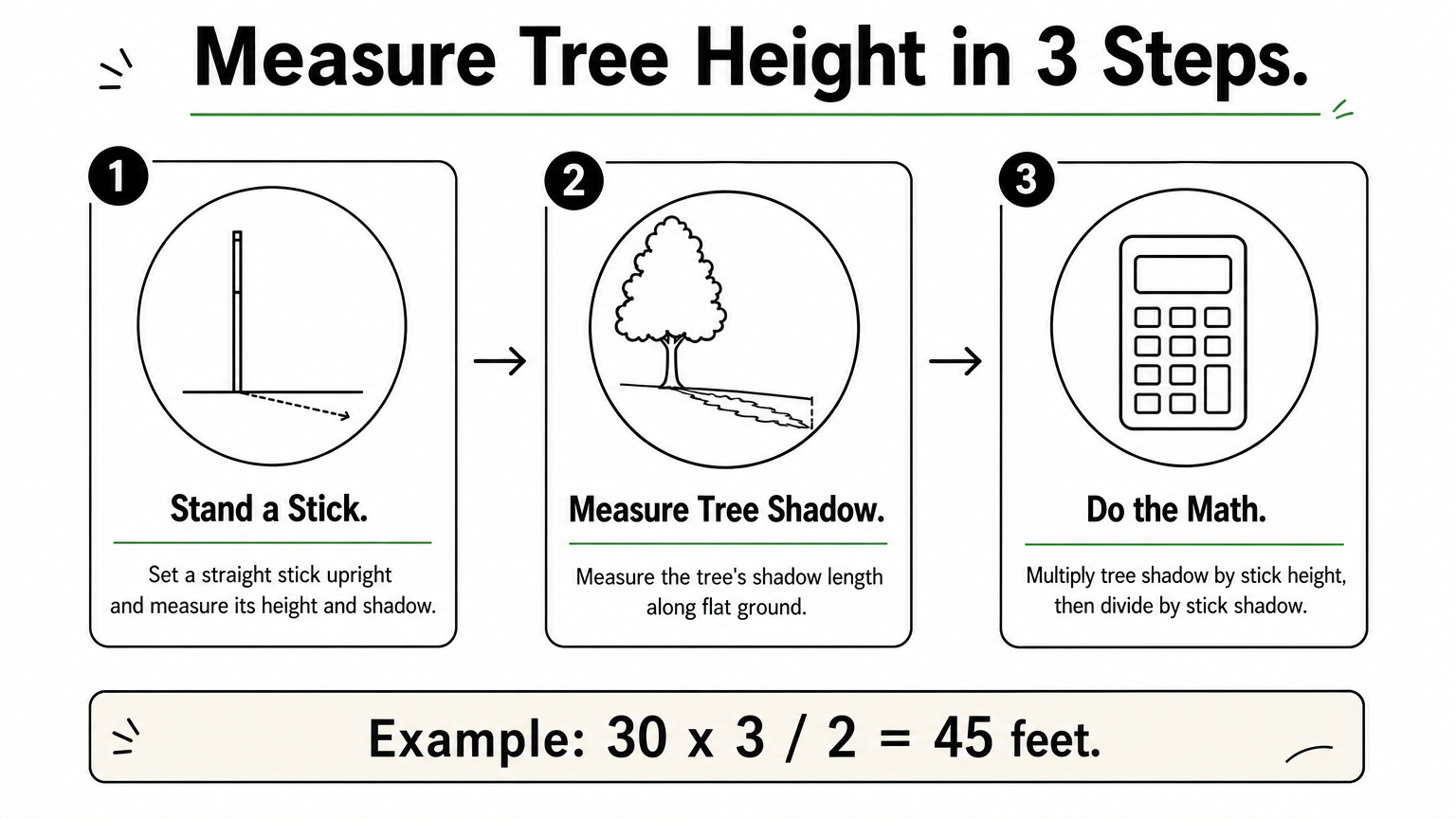
- Stand a straight stick upright and measure its height and its shadow length at the same moment.
- Measure the length of the tree's shadow along flat ground.
- Multiply the tree's shadow length by the stick's height, then divide by the stick's shadow length.
For example, a 3-foot stick casting a 2-foot shadow beside a tree casting a 30-foot shadow gives 30 x 3 / 2 = 45 feet . Then wrap a tape around the trunk at chest height and divide by 3.14 to get the diameter.
Next, take photos from several sides. Make sure they show the roofline, pool enclosure, fences, and any wires. A good set of photos lets a crew give a same-day estimate by text, and it keeps the first number close to the final one.
Worked example: a 50-foot oak beside a pool enclosure
Say you have a 50-foot oak 15 feet from the house, with a screened pool enclosure on one side. That puts it in the 40 to 80 ft band. I assumed a $1,500 base price, in the upper part of that band, because of the wide trunk. The example is built from the national ranges above.
| Line item | Low | High |
|---|---|---|
| Base removal, 50-ft oak (assumed) | $1,500 | $1,500 |
| Access premium, 25% to 50% | $375 | $750 |
| Crane, one day | $250 | $600 |
| Stump grinding, one stump | $100 | $150 |
| Cleanup and chipping | $70 | $95 |
| Permit, if required | $60 | $150 |
| Total | $2,355 | $3,245 |
So your budget is roughly $2,400 to $3,250 . The cleanup figures come from light-debris jobs, so a 50-footer may be priced higher for hauling. Treat the low column as a floor.
A fair quote for a hard 50-foot tree is a base price plus itemized premiums, not one round number with nothing behind it.
What a fair written quote includes
Once you have your range, get at least three written quotes for the same scope. Check each one for these items:
- Scope of work: removal only, or removal plus stump grinding.
- Haul-away and cleanup: whether wood, branches, and debris leave the property.
- Crane or lift: whether one is needed, who supplies it, and whether it is in the price.
- Permits: who files them and who pays.
- Insurance: proof of liability coverage in case of property damage.
- Timeline: how long the job takes and what happens in bad weather.
A quote far below your range usually means something is missing, such as no cleanup, no insurance, or no crane on a job that needs one. A quote far above it is worth a call to ask which premium is driving it.
How Jupiter and Palm Beach County conditions affect the price
South Florida adds three local factors to the national numbers: pool enclosures and tight lots , storm-season demand, and local tree rules. Published state averages for Florida typically sit at or above the national average, so it is reasonable to plan for the upper half of the height bands.
Pool enclosures, tight lots, and rooflines
Many homes in Jupiter, Jupiter Island, and Singer Island have a screened pool enclosure, a tight backyard, or a roof within a few feet of a mature tree. A falling section can destroy an enclosure in seconds, so crews lift or rope the pieces out instead. A crane can lift a large hazardous tree over roofs, power lines, and pool enclosures without damaging the yard, which is why those jobs often include a crane line item.
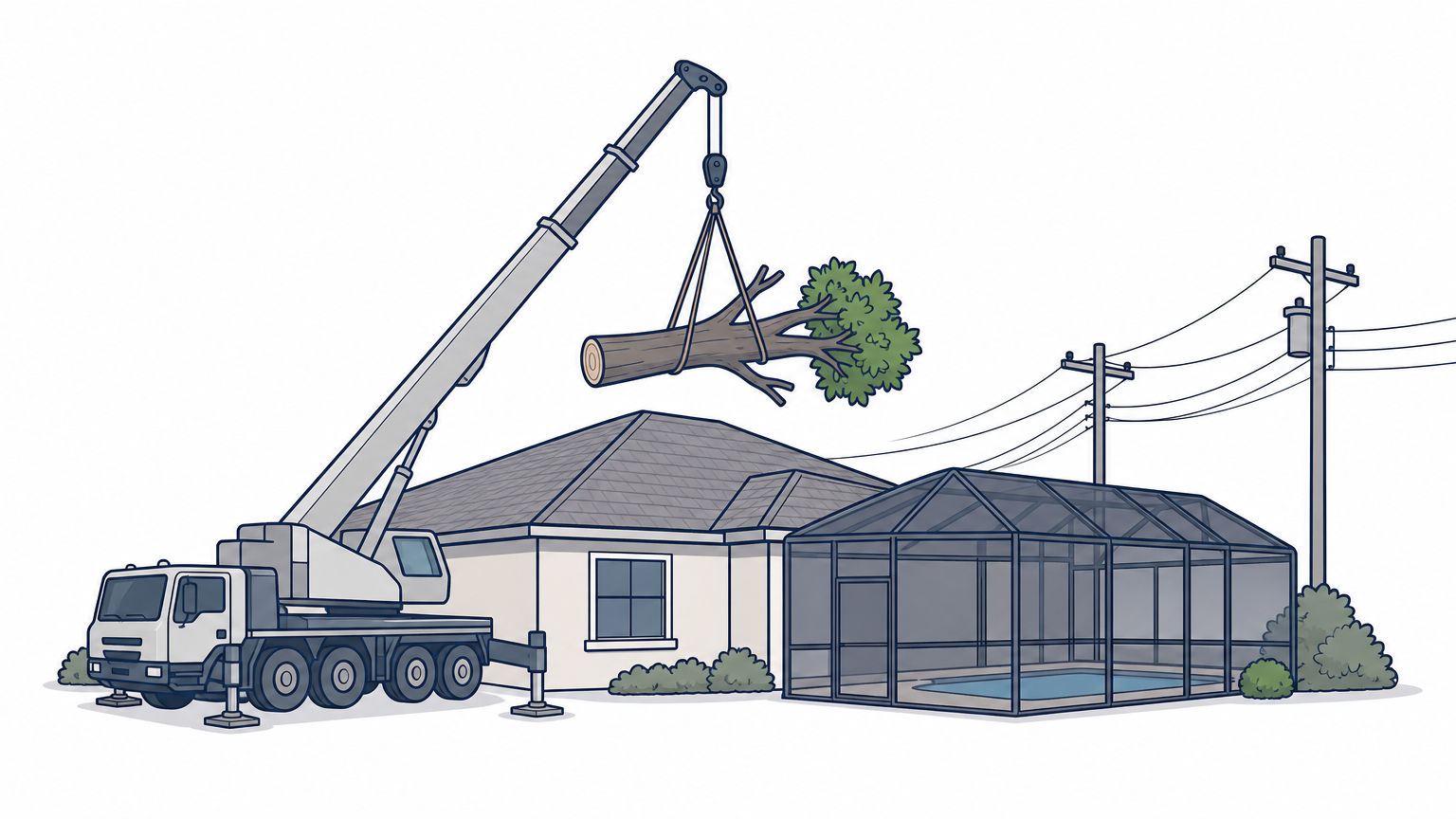
The species also matter locally. Large, heavy hardwoods, wide-spreading canopies, and tall palms are common, and all of them raise the weight a crew must control.
Hurricane season, permits, and insurance
Demand for crews jumps after a named storm, and emergency pricing follows it. Hurricane season runs from June 1 to November 30. Removing a weak, leaning, or decayed large tree before the season starts costs less than paying emergency rates afterward. Cabling and bracing can also protect a healthy tree that is worth saving.
Check local rules before you schedule. Many municipalities regulate the removal of certain trees, and state law protects mangroves along the coast. Your city or town government can tell you if a permit applies, and a crew that works locally usually knows too. If a storm brings a tree down on your home, call your insurer before removal , because the adjuster may need to see the damage first.
In South Florida, the cost problem is rarely the tree itself. It is the pool enclosure, roof, and power line underneath it.
How to lower the cost without risking the job
You can cut a large tree bill by 10% to 25% on some jobs through preparation, timing, and scope. You cannot safely save money by doing the cutting yourself. The savings below keep the risky work with a licensed, insured crew.
Savings that keep the work safe
Start with these moves, which come straight from how crews price:
- Get three quotes for identical scope, so you compare like with like.
- Bundle trees into one visit, because the second and third are cheaper per tree.
- Book outside storm season when you can, and before a storm rather than after.
- Clear the work area of furniture, planters, and fence sections.
- Keep the wood as logs and skip paid haul-away of the wood you can use.
- Leave the stump if you plan to reuse it or can wait, since grinding is a separate line.
If you doubt a tree needs to come down at all, a certified arborist can inspect it first. Sometimes trimming or cabling solves the problem for far less.
Why DIY rarely saves money on a large tree
A large tree can fall in an unexpected direction. Hidden decay can make it fail while you cut, and chainsaw recoil and falling limbs cause serious injuries. The risk to your roof, pool enclosure, or a neighbor's property is real, and a liability claim dwarfs the few hundred dollars you would save.
If you want to help, do the safe parts. Clear the area, handle cleanup after the crew leaves, and cut the logs into firewood once the tree is on the ground.
The only reliable savings on a large tree come from preparation and timing, never from skipping the crew or the insurance.
Getting a fair price on a big tree
The average cost for large tree removal is not one number. It is a band based on height, trunk size, access, condition, and equipment, with most large trees between $800 and $2,300 and crane or hazard jobs reaching $2,000 to $5,000 or more. Measure your tree, match it to a band, add the premiums that apply, and you have a range to hold every quote against.
In Jupiter and Palm Beach County, plan for pool enclosures, tight rooflines, and storm-season demand, and ask each crew to itemize crane, stump, and cleanup costs in writing. Those details separate a fair quote from a surprise.
If you want a local number for your own tree, request a free tree removal estimate from Integrity Landscape. Send photos from several angles, and we will tell you what the job takes and what it costs.