
5 Rock Landscape Design Ideas for Jupiter, FL Yards
The best rock landscape design ideas for a Jupiter yard are river rock beds, a dry creek bed, a boulder rock garden, gravel paths, and rock paired with pavers. Choose river rock beds if you want no grass and little upkeep. Choose a dry creek bed if water pools near the house. Choose a boulder garden if you like a planted look, and rock with pavers if you already have a patio or a sloped yard.
Most people searching for landscape design ideas with rocks hit the same wall. They find pages of photos, but no clear way to decide what fits their lot, how to lay the stones out, or which plants belong beside them. This article gives you five ideas, and each one comes with a layout method, plants that suit South Florida, and the kind of yard where it works best.
Integrity Landscape has installed and maintained yards in Jupiter and across Palm Beach County for more than 10 years. The advice below comes from that kind of hands-on work with sun, sandy soil, and heavy summer rain.
1. River rock beds for a no-grass front yard
River rock beds replace thirsty turf with smooth, rounded stone that never needs mowing. This is the simplest of the landscape rock design ideas here, and it suits owners who want a clean front yard with almost no weekly work.
What to use and how to arrange it
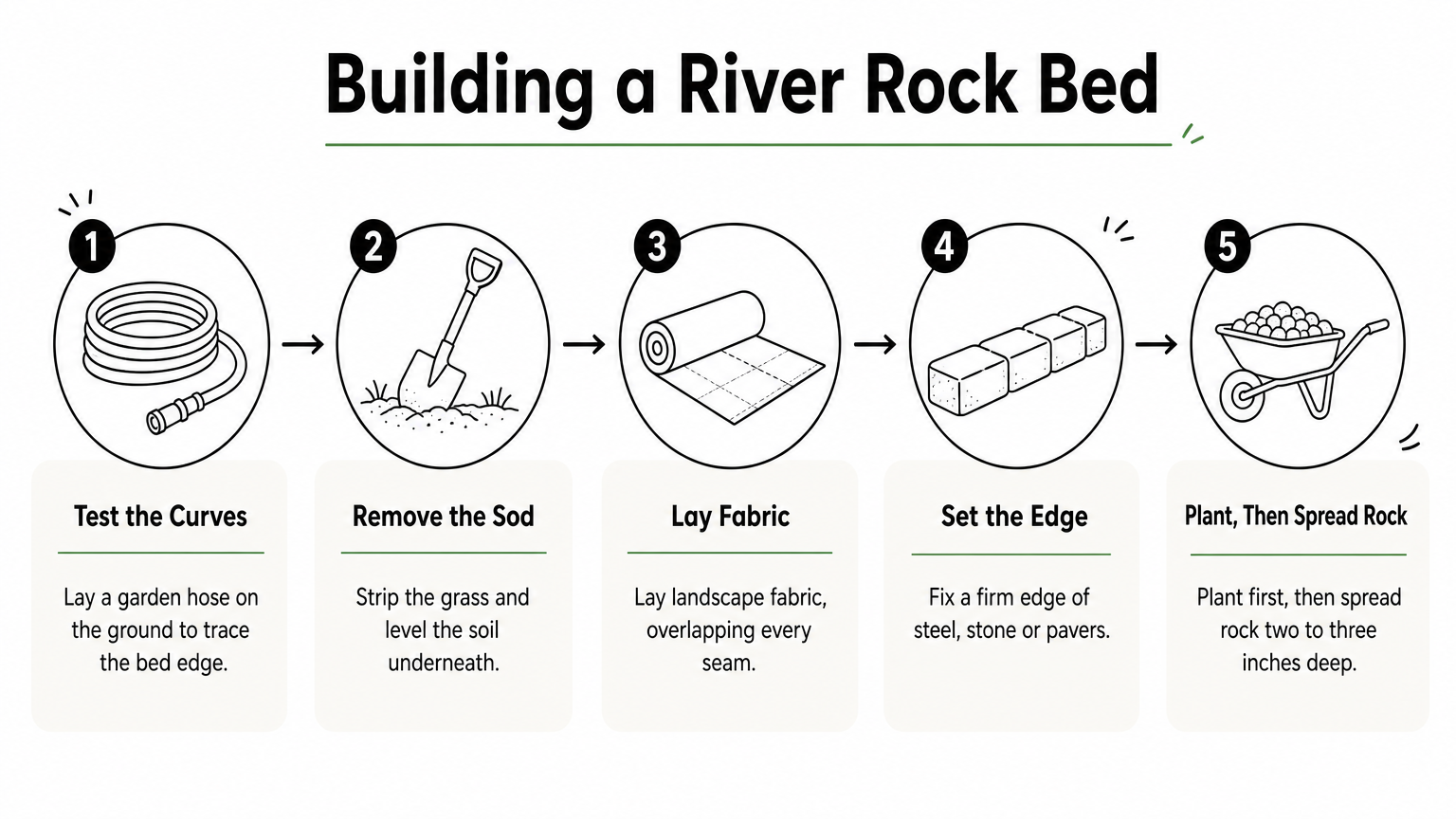
Use 1 to 3 inch stone in tan, white or blue-gray, and draw wide, curving bed lines instead of straight ones. Curves soften the edge against a driveway and walkway. In Florida sun, lighter stone stays cooler than dark rock and pairs well with coastal stucco. Build the bed in this order:
- Lay a garden hose on the ground to test the curves.
- Remove the sod and level the soil.
- Lay landscape fabric, overlapping the seams.
- Set a firm edge of steel, stone or pavers.
- Plant first, then spread rock 2 to 3 inches deep.
A worked example: one cubic yard covers about 108 square feet at 3 inches deep. A 400 square foot bed needs about 3.7 cubic yards, so order 4.
A hose-marked curve and a firm edge do more for a rock bed than any stone choice.
Where it fits best
River rock suits full-sun front yards where grass struggles. It also helps where heavy summer rain washes light mulch out of beds, because stone stays put. Integrity Landscape's Rock & Mulch Installation service includes delivery, prep, and clean installation, which covers the heaviest part of the job.
2. A dry creek bed that handles runoff
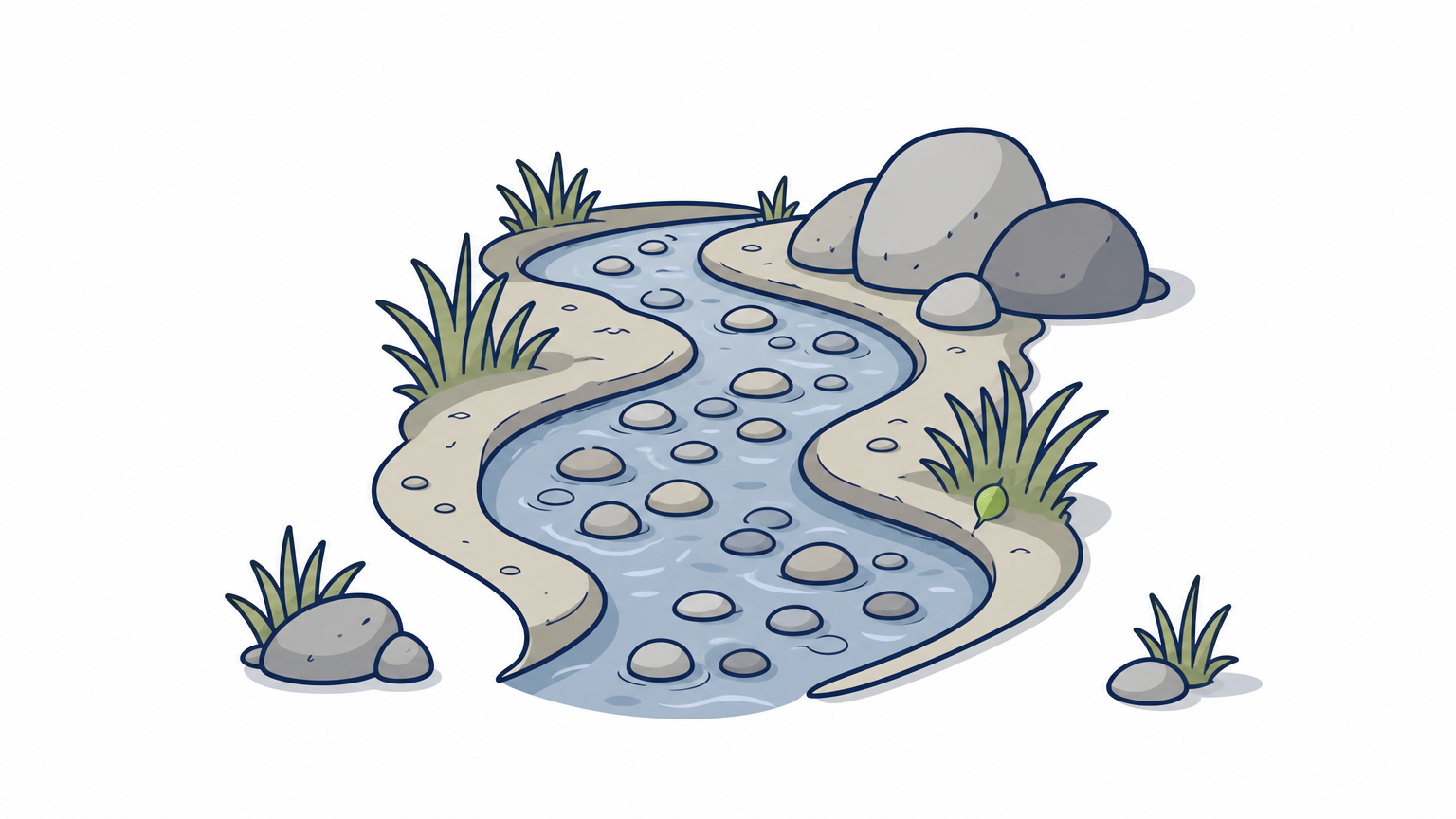
A dry creek bed is a shallow, winding channel of stone that looks like a stream bed and carries water when it rains. It works as a feature and as a drain at the same time.
What to use and how to arrange it
Aim for a channel about 2 to 4 feet wide with gentle, irregular bends . Use small cobbles in the center, mid-size river rock on the slopes, and large boulders on the outer curves where water would naturally strike. Lay it out like this:
- Slope the channel gently away from the foundation so water never pools against the house.
- Line the base with landscape fabric.
- Place boulders in odd-numbered groups, not evenly spaced.
- Plant grasses and shrubs along both banks to hide the straight edges.
Slope the channel away from the house, then make the stones look like water put them there.
Where it fits best
Use it in low spots, below downspouts, and anywhere a lawn turns soggy after a storm. For a serious drainage problem, have a professional grading and drainage team check the grading first. Integrity Landscape's Landscape Design & Installation service builds custom layouts around your property's shape, so the channel follows the way water actually moves across your lot.
3. A boulder rock garden with drought-tolerant plants
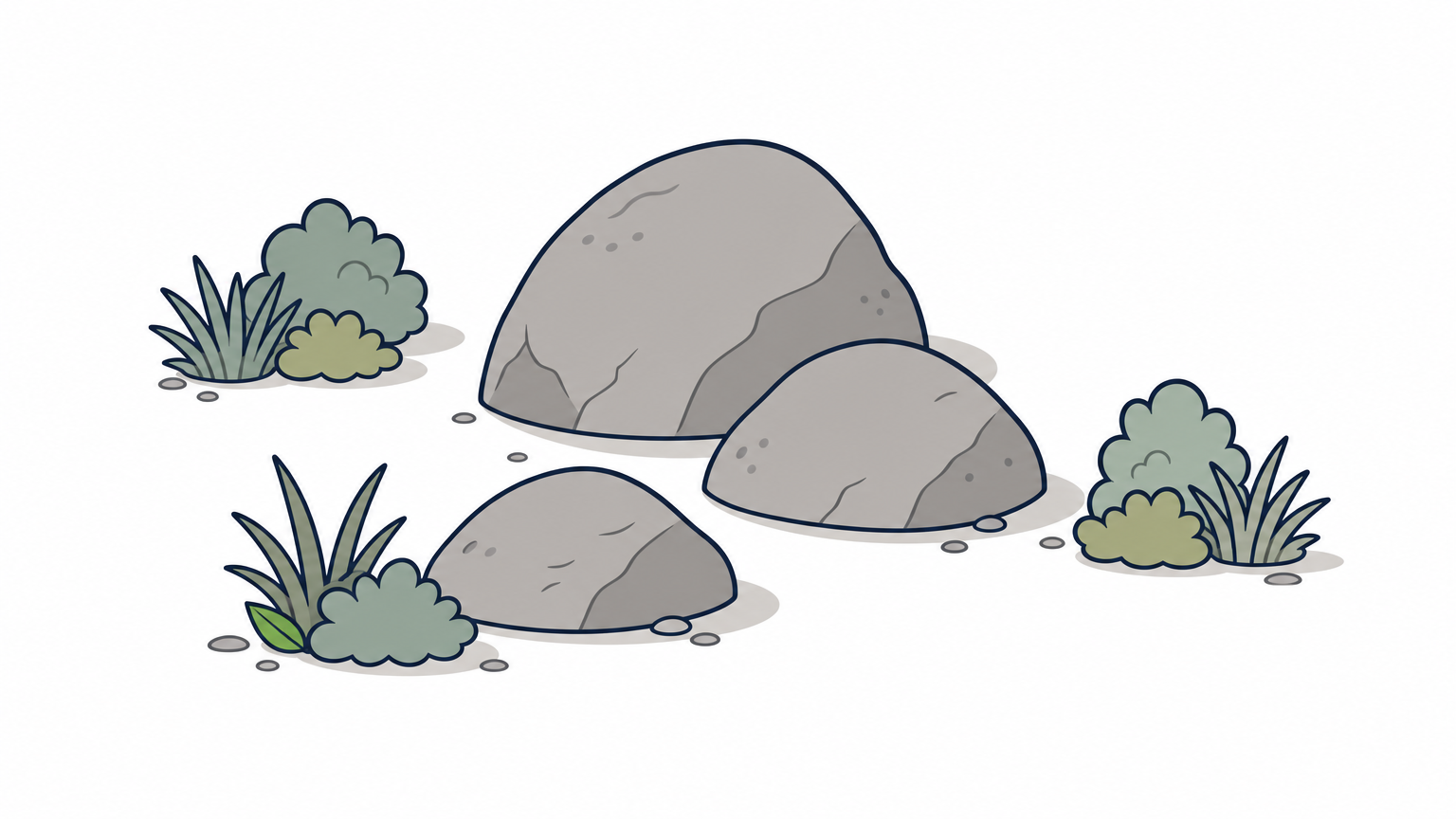
A rock garden pairs a few large boulders with low, tough plants and a stone fill. It gives you a planted look with far less watering than a traditional bed.
What to use and how to arrange it
Use the rule of three here. Group boulders in odd numbers , usually three or five, with one large anchor stone and smaller ones at different angles. Bury about a third of each boulder so it looks like it rose out of the ground rather than being dropped on top. Then plant:
- Coontie and saw palmetto for native structure
- Muhly grass for soft texture and fall color
- Firebush and blanket flower for pollinators and bloom
- Plants in groups of three, not single scattered specimens
Fill the gaps with stone that matches the boulder color.
Odd-numbered boulder groups, buried a third deep, are what separate a rock garden from a rock pile.
Where it fits best
Corner beds, side yards, and small front-yard islands work well. Choose a sunny, well-drained site, since most of these plants dislike wet roots. A single large boulder with a few plants also works as a low-maintenance centerpiece where a shrub might outgrow the space.
4. Gravel paths and stepping stones
A gravel path with stone edging or stepping stones gives a yard a clear route and a finished look. It costs less than paving and fits curved layouts easily.
What to use and how to arrange it
Use pea gravel or crushed stone for the surface and flat stones for stepping. Dig out several inches, lay fabric, and add a compacted crushed stone base before topping with 1 to 2 inches of gravel. Without the base, the gravel sinks into sandy soil. Set a firm edge so the stone stays on the path. For stepping stones, space them about 2 feet center to center so each step feels natural, and set each one level and firm.
A compacted base and a firm edge keep a gravel path from turning into a loose, shifting strip.
Where it fits best
Side yards, garden routes, and walks to a back gate suit this idea well. Loose gravel is a poor choice where you roll trash bins, wheelbarrows or a wheelchair. In those spots, step up to paver pathways, which leads into the final idea.
5. Rock beds paired with pavers and retaining walls
Rock beds look sharpest when they sit beside structured hardscape. A paver patio, walkway, or retaining wall gives the loose stone a clean frame.
What to use and how to arrange it
Keep the stone in the same color family as the pavers, and contrast the texture , such as smooth river rock against flat pavers. Set the rock bed slightly below the paver surface so stone stays contained. On a slope, a retaining wall holds a raised bed where plants and rock mulch can spill over the top edge. Fill the gaps between pavers with fine gravel or low ground cover for a softer joint.
Let the pavers set the lines and the rock fill the spaces between them.
Where it fits best
This works around patios, pool decks, driveways, and sloped yards. It takes more planning than the other ideas because the structure comes first. Integrity Landscape builds patios, driveways, fencing and retaining walls through its Hardscape & Pavers service, and a dedicated project manager oversees each job site.
Choosing your rock design
Start with the problem you need to solve. River rock beds remove the mowing, a dry creek bed manages water, a boulder garden adds planted texture, gravel paths guide movement, and pavers with rock give a structured finish. Many yards combine two or three of these, so pick one anchor idea and let the others support it.
Whatever you choose, build on a firm edge, a weed barrier, and plants suited to Florida sun. If you would like help turning one of these ideas into a layout for your own yard, request a free estimate for custom landscape design from Integrity Landscape. Same-day quotes and next-day service are available in Jupiter and the surrounding areas.