Tree Trimming Service: Costs and Top Providers to Hire
Overgrown branches scraping your roof, a canopy blocking light from your pool deck, or dead limbs hanging over the driveway after a storm. If you're searching for a tree trimming service in Jupiter or elsewhere in Palm Beach County, you're probably wondering two things: who actually does good work, and what it's going to cost you.
Pricing varies more than most homeowners expect. A small palm trim might run $75 to $150, while removing a large oak canopy near power lines or structures can climb past $1,500, depending on tree size, access, and whether crane support is needed. Knowing these ranges upfront helps you spot a fair quote from an inflated one before a crew ever shows up.
This guide breaks down realistic cost estimates for common trimming jobs across South Florida, similar to what you'd pay for tree removal in 2026, then walks through what separates a reliable, licensed provider from a truck-and-chainsaw operation. You'll get a clear picture of pricing factors, questions to ask before you hire, and a rundown of top providers worth calling for a quote, including how a general-contractor-style company like Integrity Landscape approaches tree care differently than a typical crew.
1. Integrity Landscape: Full-service tree care in Jupiter, FL
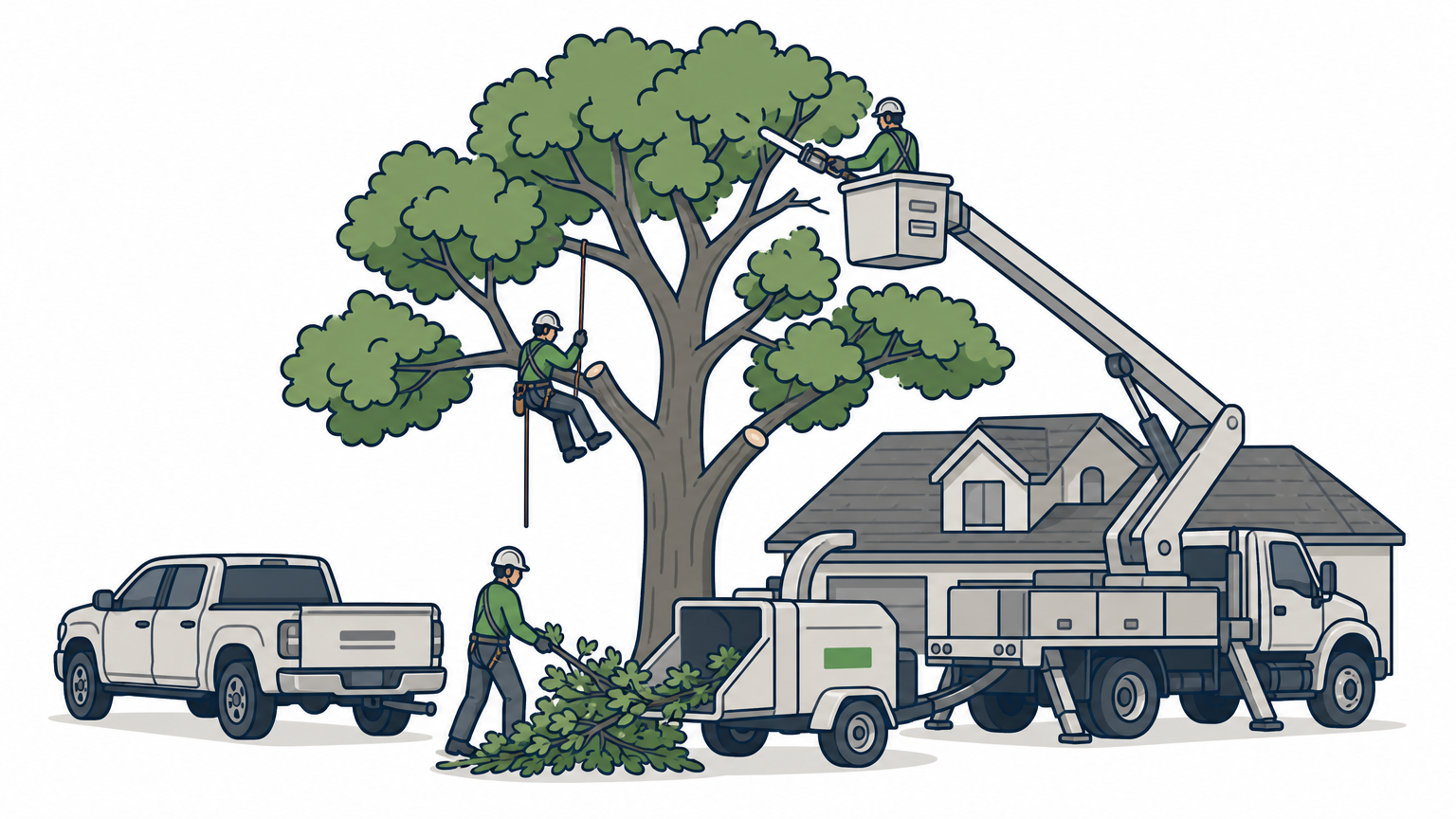
Integrity Landscape runs expert tree trimming in Jupiter, FL as part of a broader outdoor services operation, not as a side hustle bolted onto lawn mowing. The company has served Jupiter, tree care in Palm Beach, Singer Island, and the rest of Palm Beach County for over a decade, and it treats tree service the same way it treats hardscape or landscape design work: with a dedicated project manager, licensed crews, and equipment built for the job, including crane support for oversized canopies that smaller operations simply can't handle.
How it works
You start with a same-day quote request, either by phone or through the website, and a crew typically follows up with next-day service for straightforward trims. For larger jobs, especially anything requiring residential crane service for large tree removal or coordination near power lines, a project manager walks the property first to scope access, drop zones, and cleanup needs before crews arrive.
Who it's best for
This option suits homeowners and commercial property managers who want one company handling full-service tree care, removal, and stump grinding alongside mowing, hardscape, or full landscape renovations. It's also the right call if you've got a large oak or ficus canopy that a two-person crew with a pickup truck won't safely manage, or if you want documented insurance coverage before anyone climbs a ladder on your property.
Typical costs
A fair tree trimming quote should scale with tree size and access difficulty, not just show up as a flat number.
Expect these general ranges for South Florida properties:
| Job type | Typical cost |
|---|---|
| Small palm trim | $75-$150 |
| Mid-size tree (15-30 ft) | $200-$600 |
| Large canopy tree (oak, ficus) | $600-$1,500+ |
| Crane-assisted removal or trim | $1,500-$3,000+ |
What to look for
Zero in on proof of licensing and insurance before you sign anything, since Florida's storm exposure makes liability coverage non-negotiable. Ask whether the crew includes a certified arborist or works under one for larger jobs, and confirm cleanup and yard waste and debris hauling are included in the quote, not billed separately after the fact.
2. Local independent tree trimming companies
Small crews with a truck, a chipper, and a handful of regular clients make up a big share of the tree trimming service market in Palm Beach County. Many are skilled operators who've worked the same neighborhoods for years, but the range in quality and professionalism is wide, so vetting matters more here than with larger companies.
How it works
You typically find these outfits through neighborhood referrals, yard signs, or a quick search, and scheduling happens by phone or text rather than an online booking system. Response times swing hard depending on how busy the crew is that week.
Who it's best for
Budget-conscious homeowners with straightforward jobs, like a single palm trim or clearing a few low branches, tend to do fine here. It's a weaker fit for anything involving power lines, structural risk, or a canopy that needs crane support.
Typical costs
Expect $50 to $400 for most residential jobs, often quoted as flat rates rather than itemized. That flexibility can work in your favor, but it also means pricing varies wildly between crews for identical work.
A cheap quote from an uninsured crew can turn into the most expensive tree trim you've ever paid for.
What to look for
Demand proof of liability insurance before anyone touches a chainsaw on your property. Ask for references from recent local jobs, and get the scope of work in writing, not just a verbal handshake.
3. National service marketplaces like HomeAdvisor and Angi
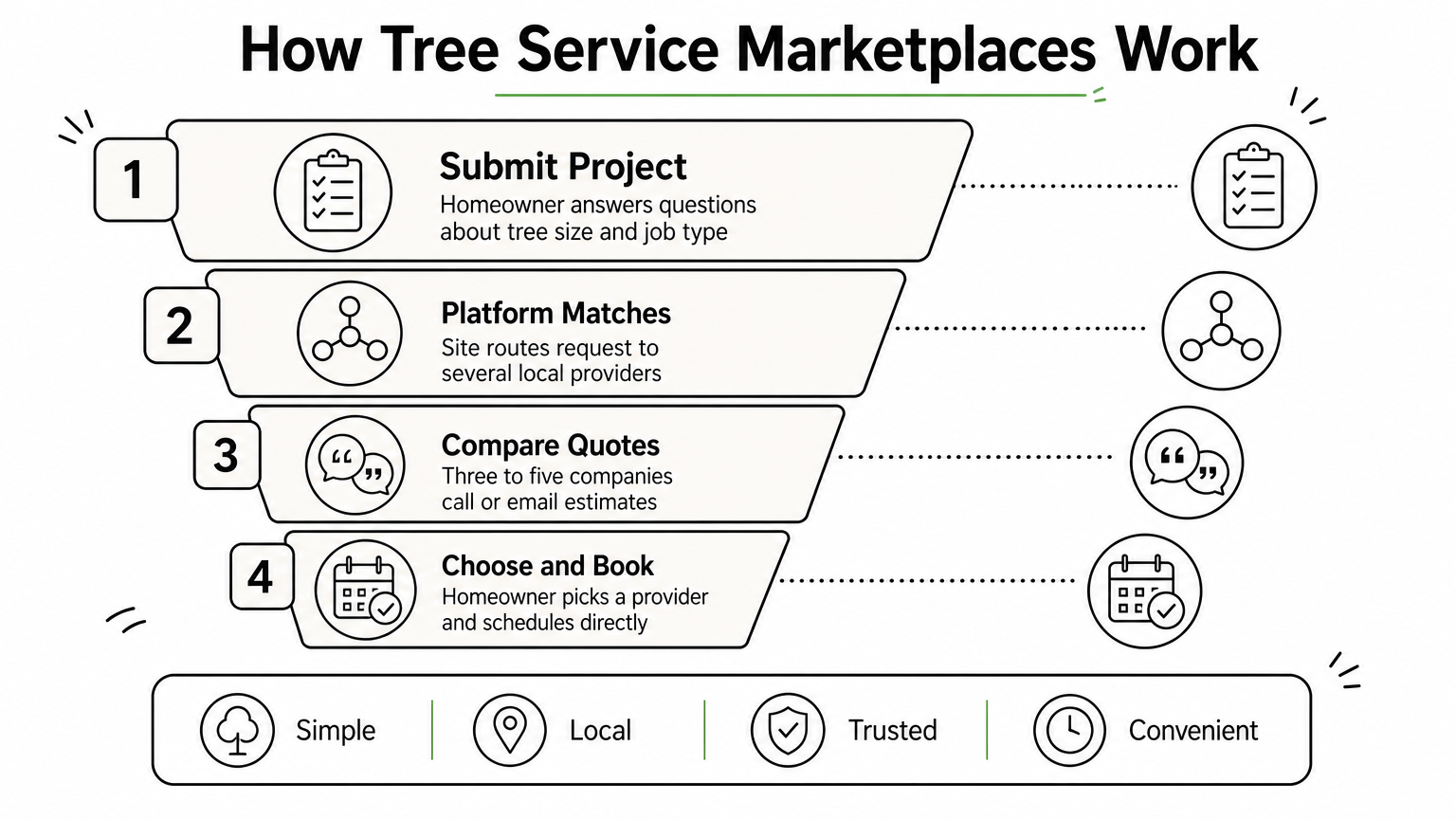
Platforms like these connect you with pre-screened contractors across a wide service area, pulling from a database of local providers rather than employing crews directly. You fill out a project form, describe the job, and the platform routes your request to several tree trimming service providers who then call or email with quotes.
How it works
Searching starts online, where you answer a handful of questions about tree size, job type, and property location. The site matches you with three to five local companies, and from there you're on your own to compare quotes, check reviews, and schedule directly with whoever you pick.
Who it's best for
Homeowners new to an area, or anyone without a go-to landscaper yet, benefit most from this approach. It works less well if you already have a trusted provider or need a fast same-day response, since matching and callback times add a layer of delay.
Typical costs
Pricing mirrors whatever local companies charge, typically $150 to $800 for standard residential trims, since the marketplace itself doesn't set rates.
A marketplace only finds you a contractor; it doesn't vet the quality of their cleanup or their insurance paperwork.
What to look for
Ratings and review counts matter, but verify licensing independently rather than trusting a platform badge alone. Cross-check any contractor's Florida business license and insurance certificate before booking, since marketplace vetting standards vary.
4. Regional and national tree service franchises
Branded franchises with names you might recognize from TV ads or trucks around town operate under a corporate umbrella but run as locally owned locations. They offer a standardized tree trimming service with corporate training behind local crews, which brings consistency but sometimes at the cost of the personal touch smaller companies provide.
How it works
Booking usually happens through a national call center or website, which then routes your request to the nearest franchise location. That location dispatches a crew, often with branded trucks and uniforms, following corporate protocols for safety and estimates.
Who it's best for
Homeowners who want brand recognition and standardized processes over a local reputation tend to gravitate here. It also suits people relocating to Palm Beach County who don't yet know which local companies to trust.
Typical costs
Expect $200 to $1,000 for typical residential trims, sometimes running higher than independent crews since franchise fees and corporate overhead get baked into pricing.
Franchise pricing buys you consistency and paperwork, not necessarily better cleanup or faster response.
| Factor | Franchise experience |
|---|---|
| Booking | Call center or national website |
| Pricing | $200-$1,000+ |
| Consistency | High, corporate standards |
| Local knowledge | Varies by franchise owner |
What to look for
Ask specifically who owns and operates the local franchise, since quality still depends on that individual owner's crew and equipment. Confirm insurance certificates locally too, since national branding doesn't automatically guarantee coverage at the location serving your property.
5. Certified arborists for specialty and hazardous trims
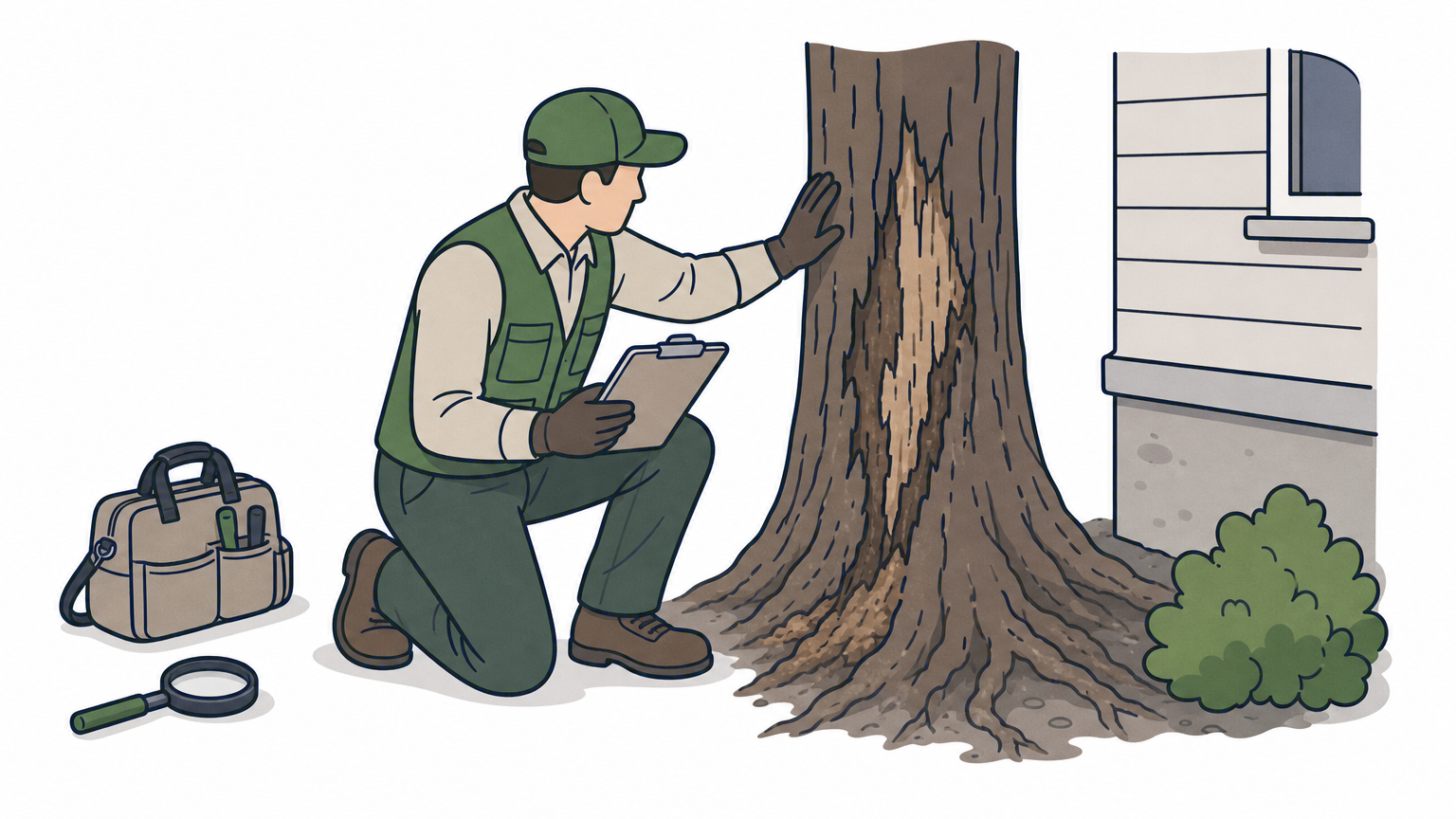
Certified arborists bring credentials that go beyond a chainsaw and a truck. These are professionals who've passed exams through organizations like the International Society of Arboriculture, and they specialize in diagnosing tree health issues and handling hazardous and damaged tree removal situations that a general trimming crew shouldn't attempt alone.
How it works
You hire an arborist directly for an assessment, often before any cutting starts, especially when a tree shows signs of disease, storm damage, or root instability. They may work solo for consultations or bring in a crew for the actual trim once they've mapped out the safest approach.
Who it's best for
This fits homeowners dealing with a diseased or structurally compromised tree , or anyone with a specimen tree worth protecting rather than just cutting back. It's also the right call near power lines, foundations, or pools where a mistake gets expensive fast.
Typical costs
Expect $100 to $300 for a standalone consultation, with actual trimming or removal work running $500 to $2,500 depending on complexity and hazard level.
When a tree's health or your property's safety is at stake, an arborist's diagnosis is worth more than a discount quote.
What to look for
Confirm active ISA certification, not just a business card claiming "arborist" as a title. Ask for a written risk assessment before agreeing to any hazardous removal work.
6. Commercial and HOA-focused tree service providers
Community associations and corporate campuses need a different kind of service than a single-family home, which is where commercial tree trimming and branch removal comes in. These providers manage recurring contracts across multiple properties, coordinating trim schedules with mowing crews, irrigation checks, and seasonal cleanups so nothing falls through the cracks during a busy growing season.
How it works
Contracts typically run monthly or quarterly, with a property manager or board member signing off on a scope of work that covers every common area on the property. Crews show up on a set rotation rather than a one-off call, and most providers assign an account manager who handles scheduling, invoicing, and any complaints from residents.
Who it's best for
HOA boards, property management companies, and commercial facility operators with multiple trees across a shared space fit this model best. It works less well for a single homeowner with one tree, since the pricing structure assumes ongoing, multi-property work.
Typical costs
Expect $500 to $3,000 per visit depending on property size and tree count, often billed under an annual maintenance contract rather than per-job invoicing.
Recurring contracts trade flexibility for predictability, which matters when a board has to justify every line item in a budget.
What to look for
Request a sample contract before signing anything, and confirm whether storm response is included or billed separately. Ask how the provider handles liability if a limb damages a resident's car or a shared amenity during scheduled work.
7. DIY tree trimming and equipment rental
Some homeowners skip hiring anyone and handle tree trimming themselves, renting a pole saw or chainsaw from a local hardware store for a weekend project. It's the cheapest option upfront, but it's also the one where a mistake costs the most, whether that's a damaged roof, a trip to the ER, or a downed power line.
How it works
Generally, you rent equipment from a home improvement store or tool rental outfit, then handle cutting, hauling, and disposal yourself. Most rental counters won't ask about your experience level before handing over a chainsaw, so the safety margin depends entirely on what you already know.
Who it's best for
Only attempt this for small, low-hanging branches well clear of structures, power lines, and neighboring property. Anyone dealing with a tree over 20 feet, a canopy near utility lines, or anything requiring a ladder past the second rung should call a professional instead.
Typical costs
Expect $40 to $100 per day for equipment rental, plus disposal fees if your municipality doesn't offer bulk yard waste pickup. Add safety gear like gloves and eye protection if you don't already own it.
Renting a chainsaw is cheap. An emergency room visit or a lawsuit from a neighbor's damaged fence isn't.
What to look for
Check your local permit requirements before cutting anything near a property line, and confirm your homeowner's insurance covers injuries from equipment you're operating yourself.
Finding the right fit for your property
Matching the job to the right provider matters more than chasing the lowest quote. A single palm trim doesn't need crane support or a certified arborist, but a storm-damaged oak leaning toward your roof does, and knowing the difference protects both your property and your budget . Use the cost ranges above as your baseline, then ask every candidate for licensing proof, written scope, and a cleanup guarantee before signing anything.
Getting quotes from three providers takes an afternoon and saves you from both overpaying and underinsuring the work. Palm Beach County's storm exposure and dense canopy trees mean a qualified tree trimming service isn't optional, it's the difference between a clean yard and a liability claim. If you want a crew that treats tree care with the same rigor as hardscape and landscape design, request a same-day tree trimming quote from Integrity Landscape and see how a project-managed approach compares to whatever you've hired before.