
8 Small Front Yard Landscape Design Ideas That Impress
A small front yard in Jupiter or Palm Beach can feel like a limitation, but it's actually an advantage. Less space means lower costs, faster installs, and more room in your budget for quality materials instead of covering acreage. If you've been searching for small front yard landscape design ideas that actually work in South Florida's heat and sandy soil, you're in the right place.
The best small yards don't try to do everything. They pick two or three strong moves, a bold plant palette, a clean hardscape line, maybe a lit pathway, and let those carry the whole design. That's how you get curb appeal that stops neighbors mid-walk without a maintenance schedule that eats your weekends.
Below are eight design ideas we've used on real Jupiter and Palm Beach County properties, covering everything from low-maintenance plant beds to paver walkways and layered lighting. Some you can tackle yourself over a weekend. Others are worth bringing in a crew with the right equipment and plant knowledge for your climate zone. Either way, you'll walk away with a clear direction for your own front yard, not just a mood board of ideas that never leave Pinterest.
1. Layer planting beds with Florida-friendly plants
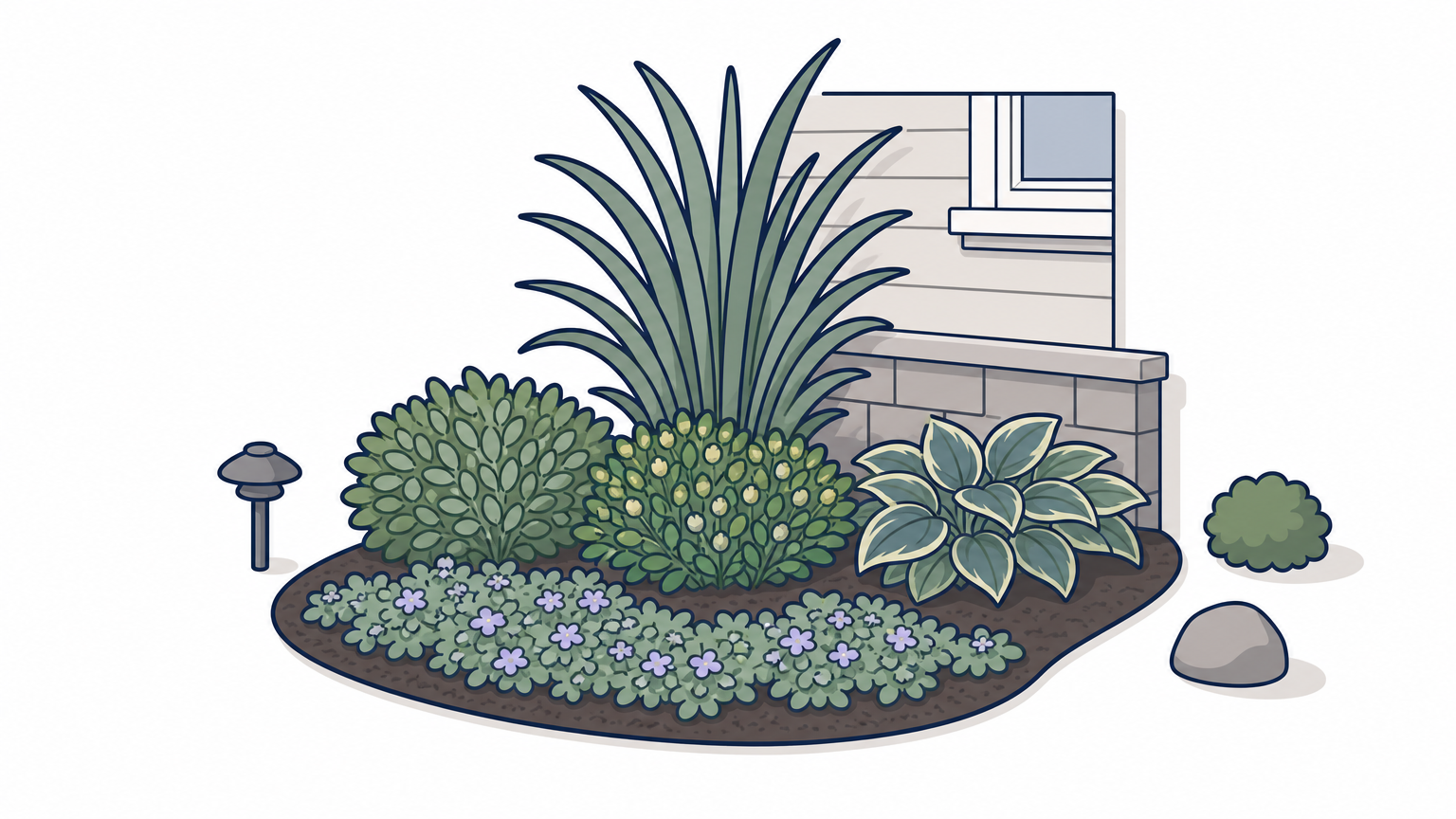
A single row of shrubs against the house reads flat, no matter how healthy the plants look. Layered planting beds stack low groundcover, mid-height shrubs, and a taller accent plant or two in the same bed, so the eye moves front to back instead of stopping dead at the foundation. This is the fastest way to make a small landscape small front yard design feel intentional instead of thrown together, and it's the backbone of most custom landscape design and installation projects we build.
How it works
Start with a bed at least three feet deep along the front of the house or bordering the walkway, then build in three tiers. Groundcover like dwarf jasmine or perennial peanut hugs the front edge, mid-size shrubs such as dwarf ixora or podocarpus fill the middle, and a taller specimen like a clusia hedge or a cluster of cordyline anchors the back. Stick to Florida-friendly plants bred for sandy soil and salt air, since anything imported from a cooler climate will struggle by July.
A layered bed with three plant heights does more for curb appeal than triple the square footage of flat lawn.
Best for small yards
Layering works especially well in tight spaces because it uses vertical depth instead of horizontal square footage. You get the visual richness of a large garden in a bed that might only run 20 or 30 feet along the front of the house. It's also forgiving of odd lot shapes, corner lots, and the narrow side strips common in older Jupiter neighborhoods where lawn space is already limited.
Cost & maintenance tips
Budget matters here, and plant choice drives most of it.
- Groundcover: $8 to $15 per plant, spaced 12 to 18 inches apart
- Mid-size shrubs: $25 to $60 each depending on size and variety
- Accent specimens: $75 to $250+ for larger, established plants
- Mulch: budget for a 2 to 3 inch layer of rock or mulch installed to hold moisture and suppress weeds
Once established, native and Florida-friendly selections need minimal watering beyond normal rainfall, according to the University of Florida IFAS Extension, which cuts your irrigation bill noticeably compared to thirstier ornamentals. Plan on seasonal trims twice a year to keep the tiers distinct rather than one overgrown mass.
2. Add a paver walkway that guides the eye
A straight concrete slab from driveway to door does the job, but it doesn't do anything for you visually. A custom paver pathway with a slight curve or a widened landing at the entry turns a purely functional path into a design feature that pulls visitors toward your front door instead of past it. For anyone comparing landscape design ideas for small front yards , this is one of the highest-impact changes you can make without touching the plant budget at all.
How it works
Swap the straight shot for a gentle curve, or keep it straight but flare the width near the entry to create a small landing pad. Travertine, brick, and concrete pavers all work in South Florida's climate, and mixing two paver sizes in a running bond pattern reads as custom rather than off-the-shelf.
A curved paver path does more to guide the eye than any amount of extra plantings.
Best for small yards
Because a small lot has less distance to cover, you can afford a nicer paver grade without the material cost of a long driveway. Compact walkways also make the whole property feel more finished, since a bare concrete strip is often the first thing people notice on a small lot.
Cost & maintenance tips
Expect $15 to $30 per square foot installed , depending on paver material and pattern complexity. Pavers need occasional resanding of joints and a rinse to prevent algae in Florida's humidity, but they never crack the way a monolithic slab eventually does. Our paver installation and landscape construction team handles layout, base prep, and drainage so the walkway holds up through rainy season.
3. Swap grass for a low-maintenance lawn alternative
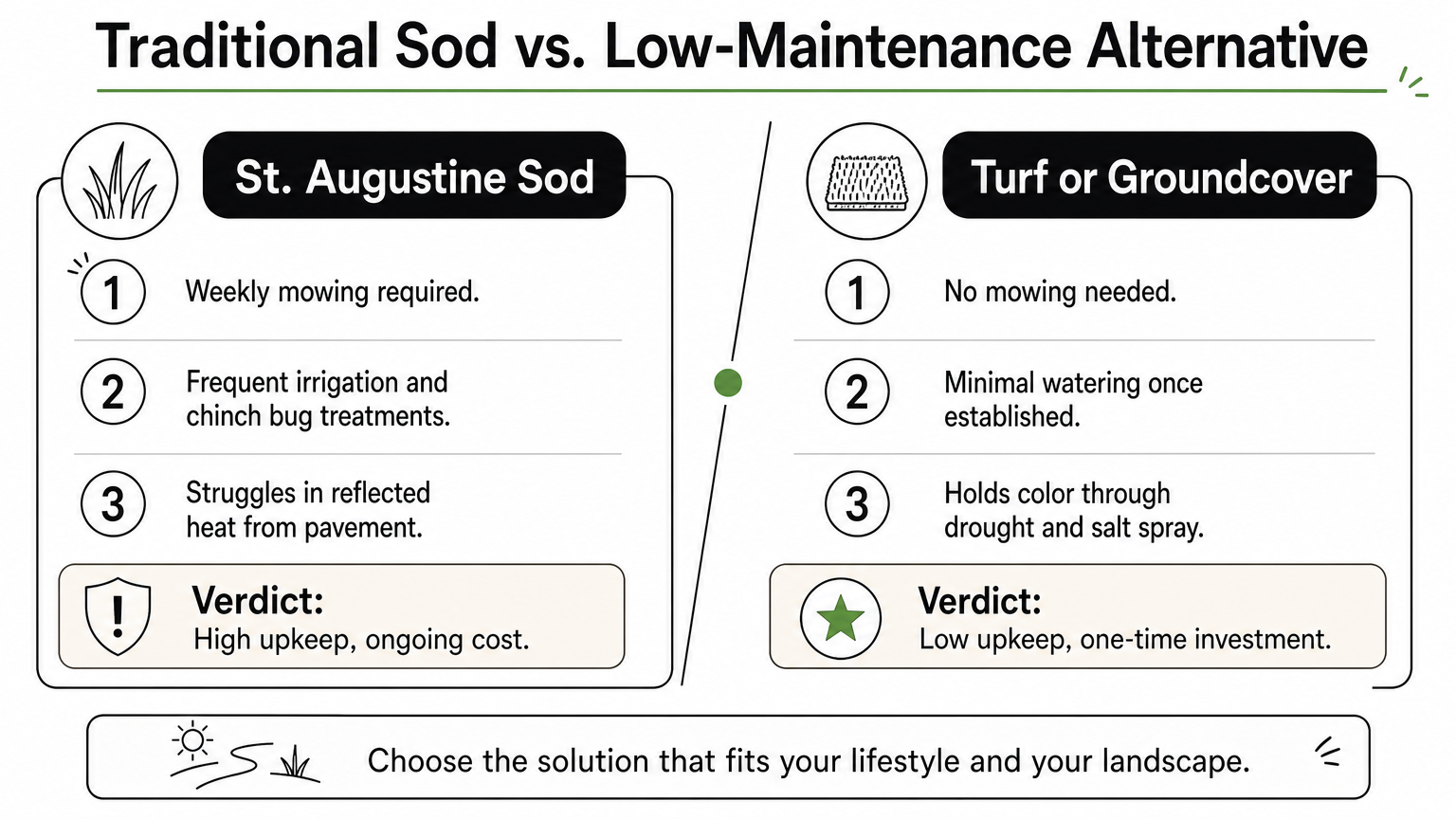
St. Augustine grass looks great in a magazine, but keeping a tiny strip of it green through a Florida summer means weekly mowing, chinch bug treatments, and an irrigation bill that never lets up. Low maintenance artificial grass or a drought-tolerant groundcover swap removes that maintenance loop entirely, which matters more on a small lot where the grass patch is barely big enough to justify a mower in the garage.
How it works
Contractors strip the existing sod, grade the base for drainage, and lay either synthetic turf on a compacted aggregate bed or a groundcover like perennial peanut or dwarf mondo grass that spreads without frequent trimming, the same prep work that goes into a proper new sod installation. Both options skip the weekly mow entirely, and turf in particular holds its color year-round regardless of drought restrictions or salt spray near the coast.
Swapping a small lawn for turf or groundcover trades a weekly chore for a once-a-decade decision.
Best for small yards
Small patches of grass actually struggle more than large lawns, since limited airflow and reflected heat from driveways and sidewalks stress the turf. A compact footprint also means the swap costs less overall, making it one of the more approachable landscape small front yard design upgrades on this list.
Cost & maintenance tips
- Synthetic turf: $10 to $18 per square foot installed
- Groundcover alternatives: $3 to $8 per square foot planted
- Ongoing care: occasional rinsing for turf, light trimming for groundcover
Either route eliminates mowing and cuts irrigation needs significantly compared to traditional sod.
4. Dress up the foundation with plantings and window boxes
Bare walls under windows or along the porch make even a freshly built house look unfinished. Foundation plantings paired with a window box or two soften that hard architectural line and give the front of the house a lived-in, cared-for look without touching the rest of the yard.
How it works
Plant a low, tidy hedge or a run of compact shrubs directly against the foundation, spaced to leave breathing room for growth but tight enough to read as one continuous line. Cedar or PVC window boxes filled with seasonal color, like dwarf lantana or trailing torenia, add height right at eye level where visitors actually look first. Keep the palette simple, two or three plant types repeated, rather than a different specimen under every window.
A single row of window boxes draws more compliments than an entire bed of mismatched shrubs.
Best for small yards
This idea suits small lots because it works vertically, at the house itself, instead of competing for ground space with a walkway or lawn. It's also one of the more budget-friendly small front yard landscape design ideas since you're dressing a narrow strip, not an open field.
Cost & maintenance tips
- Foundation shrubs: $20 to $50 each
- Window boxes: $40 to $150 per box, plus $10 to $20 in seasonal plants
- Upkeep: monthly watering and a seasonal swap of window box flowers
Foundation beds need trimming twice a year to stay crisp against the house line.
5. Define garden beds with clean edging
Mulch that bleeds into the lawn or a bed with a fuzzy, overgrown border makes even good plant choices look sloppy. Clean edging draws a hard line between grass and garden, and that single line does more to make a small yard read as maintained than almost anything else on this list.
How it works
Contractors cut a trench edge with a spade or install a physical border, steel, aluminum, or paver strip, along every bed line. Steel edging holds a crisp curve without the heaving that plastic edging suffers in Florida's freeze-thaw-free but root-heavy soil. Pavers or brick set flush with the lawn also let you run a mower wheel right along the edge, which cuts trimming time to almost nothing.
A crisp edge between lawn and bed makes everything inside that bed look intentional.
Best for small yards
Small yards have less bed space to begin with, so every border line carries more visual weight per square foot. Sharp edging also keeps grass from creeping into planting beds, a bigger problem on compact lots where beds and lawn sit only a few feet apart.
Cost & maintenance tips
- Trench edging: $2 to $4 per linear foot
- Steel edging: $3 to $7 per linear foot installed
- Paver or brick border: $8 to $15 per linear foot
Trenched edges need re-cutting two or three times a year. Physical edging holds its line for years with almost no upkeep.
6. Carve out a small entry patio or seating nook
Most front yards exist only to be walked past, but a small entry patio gives people a reason to slow down before they even reach the door. A paver landing with room for two chairs or a bench turns dead space beside the walkway into somewhere you'd actually sit with coffee, and it signals to visitors that the front of the house matters as much as the back.
How it works
Pick a spot off the main walkway, often a corner near the porch or a widened section of the entry path, and pour or set pavers for a pad roughly 8x8 to 10x10 feet. Frame it with the same layered planting beds from idea one, then add a bench, a pair of chairs, or even a small fire feature if code and setback allow. Tie the paver pattern to the walkway so the whole front reads as one connected design instead of separate projects.
A small seating nook tells visitors the front yard is a destination, not just a path to the door.
Best for small yards
Tight lots rarely have room for a full patio, but a compact nook fits where a walkway already widens naturally, making it one of the more efficient landscape design ideas for small front yards on this list.
Cost & maintenance tips
- Paver patio pad: $15 to $30 per square foot installed
- Seating (bench or chairs): $150 to $600 depending on material
- Upkeep: occasional rinsing and joint resanding, same as the walkway
A nook this size adds almost no extra maintenance beyond what the walkway already requires.
7. Highlight your yard with landscape lighting
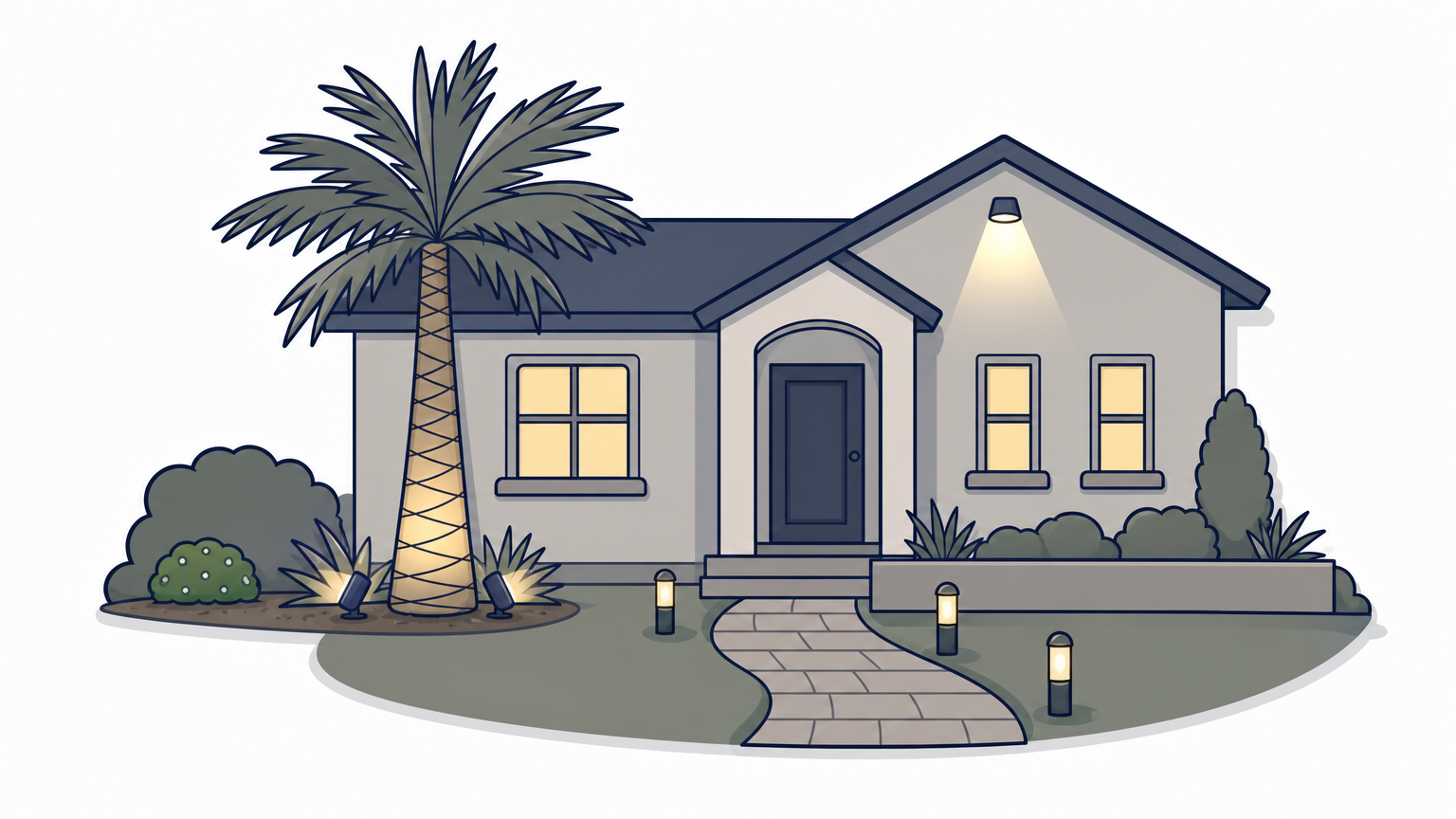
A front yard that looks great at 2pm often disappears completely after sunset. Landscape lighting fixes that, turning your layered beds, paver walkway, and specimen plants into a display that works around the clock instead of only during daylight hours. It's one of the few upgrades on this list that changes how the whole property feels, not just how one corner of it looks.
How it works
Uplights at the base of a statement palm or oak throw dramatic shadows across the canopy, while low path lights along the walkway mark the route without flooding the yard in glare. A wash light aimed at the house facade ties the architecture into the display, and a well-placed spotlight on your address numbers helps guests and delivery drivers find you at night. Low-voltage LED systems keep the wiring safe to install yourself, though professional outdoor lighting installation avoids the flat, evenly-spaced look that gives away an amateur job.
Good landscape lighting turns a front yard you walk past at night into one you actually notice.
Best for small yards
A compact lot needs fewer fixtures to make a real impact, since there's less ground to cover and every light works harder relative to the space. This makes lighting one of the more efficient landscape small front yard design ideas for stretching a modest budget.
Cost & maintenance tips
- Path lights: $30 to $80 per fixture
- Uplights: $40 to $120 per fixture
- Installation: $75 to $150 per fixture including wiring
LED bulbs last years before needing replacement, and a timer or smart controller handles the rest.
8. Anchor the space with a statement tree or shrub
Every front yard needs one thing the eye lands on first, and without it even a well-planned bed of layered plantings can feel busy without a focal point. A statement tree or shrub gives the whole design somewhere to start, whether that's a multi-trunk crepe myrtle, a specimen foxtail palm, or a dense clusia trained into a rounded form. This single move often does more for small front yard landscape design than adding three more beds ever could.
How it works
Pick one spot, usually near the corner of the house or beside the walkway, and give the specimen room to be seen from the street rather than tucking it against other plants. Foxtail palms , multi-trunk crepe myrtles, and specimen-grade clusia all handle Jupiter's heat and sandy soil without fuss, and each brings a different silhouette depending on whether you want height, canopy spread, or a tighter architectural shape.
One well-placed specimen tree does more for curb appeal than a dozen smaller shrubs scattered around the yard.
Best for small yards
A compact lot only has room for one true focal point, so a single specimen carries more visual weight than it would on a larger property. This makes it one of the simplest landscape design ideas for small front yards to execute well.
Cost & maintenance tips
- Small specimen trees: $150 to $400
- Larger, established specimens: $500 to $1,500+
- Maintenance: annual pruning and canopy shaping, occasional fertilizing
Once established, most specimens need little beyond seasonal shaping to keep their form.
Making these ideas work for your home
You don't need all eight of these moves to get a front yard that turns heads. Pick two or three that fit your lot and your budget, a layered bed near the entry, a paver walkway that curves toward the door, maybe lighting to carry the look into the evening, and let those choices do the heavy lifting. Trying to cram every idea into one small space usually backfires, leaving a yard that feels cluttered instead of designed.
Start with what bothers you most every time you pull into the driveway. That's usually the clearest sign of where to spend your first dollar. Whether it's tired sod, a cracked walkway, or a foundation that's needed plants for years, tackling that one problem well beats a dozen half-finished ideas.
If you'd rather skip the trial and error, get a free landscaping estimate from our team at Integrity Landscape and get a plan built for your yard, not a generic template.