
5 Landscape Lighting Design Ideas for Paths, Patios, Trees
The best landscape lighting design ideas light a few things well instead of lighting everything. Choose the idea that matches your yard's main job. Path lights suit walkways and driveways, uplighting suits palms and specimen trees, and moonlighting suits large mature canopies. Step and patio lights suit outdoor dining and entertaining, and wall washing suits house fronts, garden walls and water features. Most yards need two or three of these working together, in warm white light at low brightness.
Most homeowners get stuck because they see a hundred photos and have no way to decide. They flood the yard with bright spots or leave the best features dark. This article gives you five ideas. For each one you get how it works, where it fits and what to watch for in a coastal yard, where salt air, humidity and summer storms wear on fixtures.
At Integrity Landscape, we design and install low voltage lighting for homes in Jupiter and across Palm Beach County. Treat this list as a menu. Pick the ideas that fit your property, then layer them.
1. Path lights along walkways and driveways
Path lighting is the most useful first layer because it adds safety and curb appeal in one step. Low voltage fixtures beside walkways, driveways and steps cast small pools of light on the ground, so you see the surface and not the bulb.
How path lighting works
Each fixture drops light from a short stem and shade onto the ground below. Stagger the fixtures on alternating sides of the walkway instead of lining them up like a runway. Let each pool of light slightly overlap the next so no dark gaps remain.
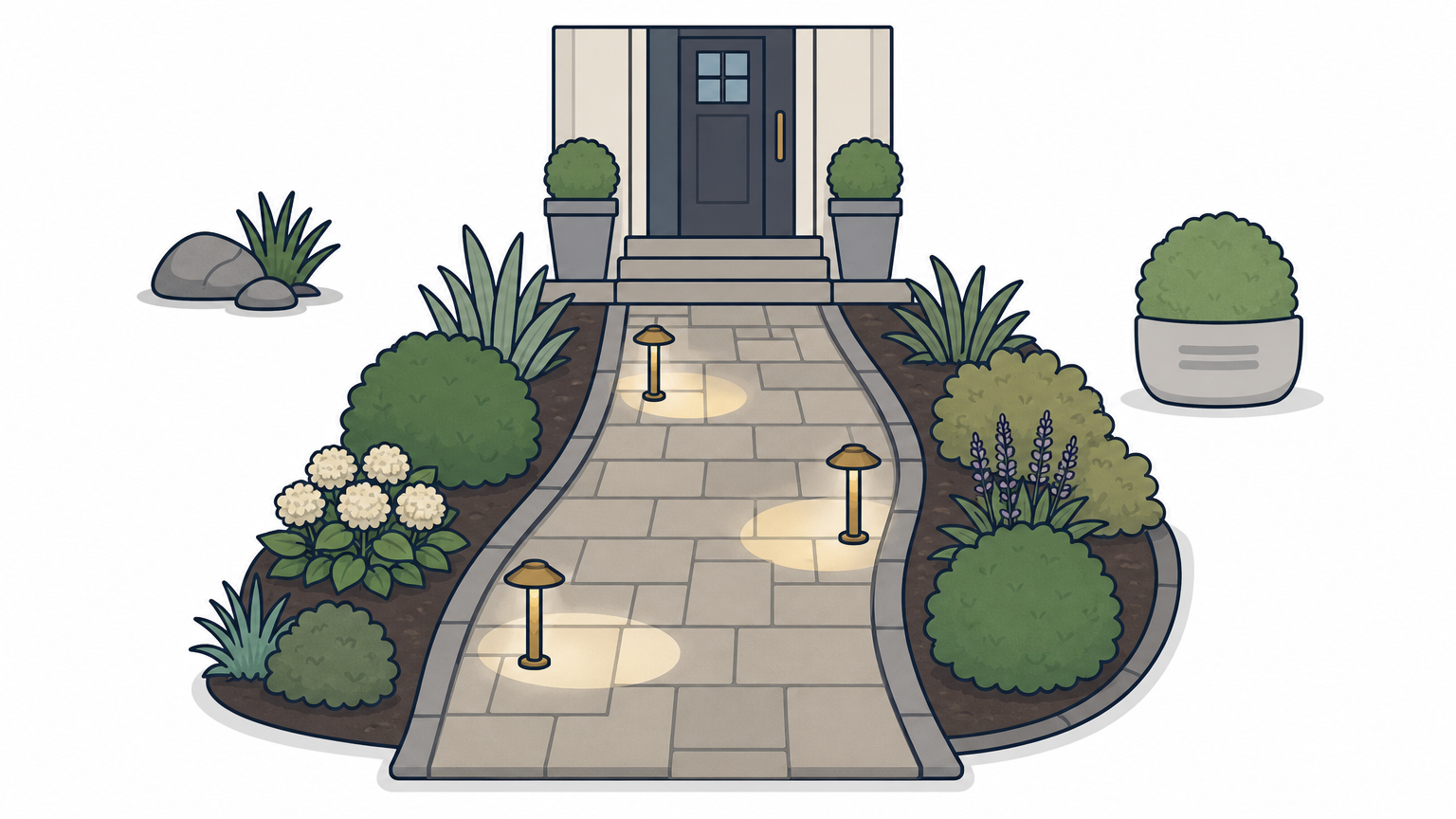
Among landscape light design ideas, this one fits nearly every home. It works at front entries, paver walkways, garden beds and driveway edges. Pale pavers and travertine reflect light, so you can run lower brightness on them.
Light the ground people walk on, not the fixture they see.
Setup tips for Florida yards
Salt air and humidity corrode cheap fixtures quickly, so material matters more than style. Follow these basics:
- Space fixtures about 6 to 8 feet apart, and closer on curves and at steps.
- Choose solid brass, copper or stainless steel over thin painted aluminum or plastic.
- Pick 2700K warm white LEDs, which flatter plants and stone.
- Keep fixtures low enough that plantings hide the stems.
2. Uplighting for palms and specimen trees
Uplighting turns a tree into a night focal point. A fixture at the base aims up the trunk and into the canopy. Palms are ideal because clean trunks and fronds catch light well.
How uplighting works
Place a ground-level fixture a foot or two from the trunk. The light reveals bark texture and throws a glow into the canopy . On a small tree, one fixture is enough. On a larger tree, two fixtures from opposite sides avoid a flat, one-sided look.

Hide the fixtures behind shrubs or groundcover so the eye sees the tree and not the hardware. This idea suits front-yard focal trees and the palms that line a driveway or pool deck.
Uplight the tree, hide the fixture.
Setup tips for Florida yards
Match the beam to the target, then start with the fixture counts below and adjust after dark.
| Target | Beam to choose | Starting fixtures |
|---|---|---|
| Tall, slim palm trunk | Narrow spot | 1 |
| Wide oak or ficus canopy | Wide flood | 2 or 3 |
| Small ornamental tree | Medium | 1 |
Check the aim after storm season, since wind and root growth shift stakes. Our lighting installation service covers low voltage up lighting and path lights.
3. Moonlighting through tree canopies
Moonlighting mounts a fixture high in a mature tree and aims it down, so light filters through the leaves and casts soft, moving shadows on the ground. It looks like moonlight on a clear night and suits properties with big shade trees.
How moonlighting works
The fixture sits well above head height, often 15 feet or more, and uses a wide, gentle beam . Light falls through branches onto the lawn, patio or driveway, so you get ambient light without a visible hot spot. It pairs well with uplighting, since uplights define the tree and moonlighting fills the space below.
Moonlighting lights the yard from above and hides the source.
Setup tips for Florida yards
Wind and tall ladders make this the idea to hand to a pro. These points matter most:
- Mount with straps or clamps, never nails or screws, so the tree is not damaged.
- Use a wide beam and low brightness to keep the effect soft.
- Run wiring along branches and down the trunk, tucked out of sight.
- Re-check mounts each year as the tree grows.
4. Step, wall and patio lighting
Patio lighting works best as low, hidden light built into steps, seat walls and pillars, plus a few soft accents overhead. It makes dining and lounging areas usable at night without glare.
How hardscape lighting works
Small fixtures under stair treads, seat wall caps and pillar faces light the surface and define edges , which makes steps safer. Overhead string or bistro lights add atmosphere. Put them on a dimmer so the mood changes from dinner to late evening.
Plan the lighting while the patio is built. Running wire and conduit before pavers go down is far easier than retrofitting. That is why lighting should be coordinated with patios in pavers, travertine and natural stone. For outdoor landscape lighting design ideas that last, this is the one where timing matters most .
Wire the patio before the pavers go down.
Setup tips for Florida yards
Keep the glow gentle and pointed away from faces:
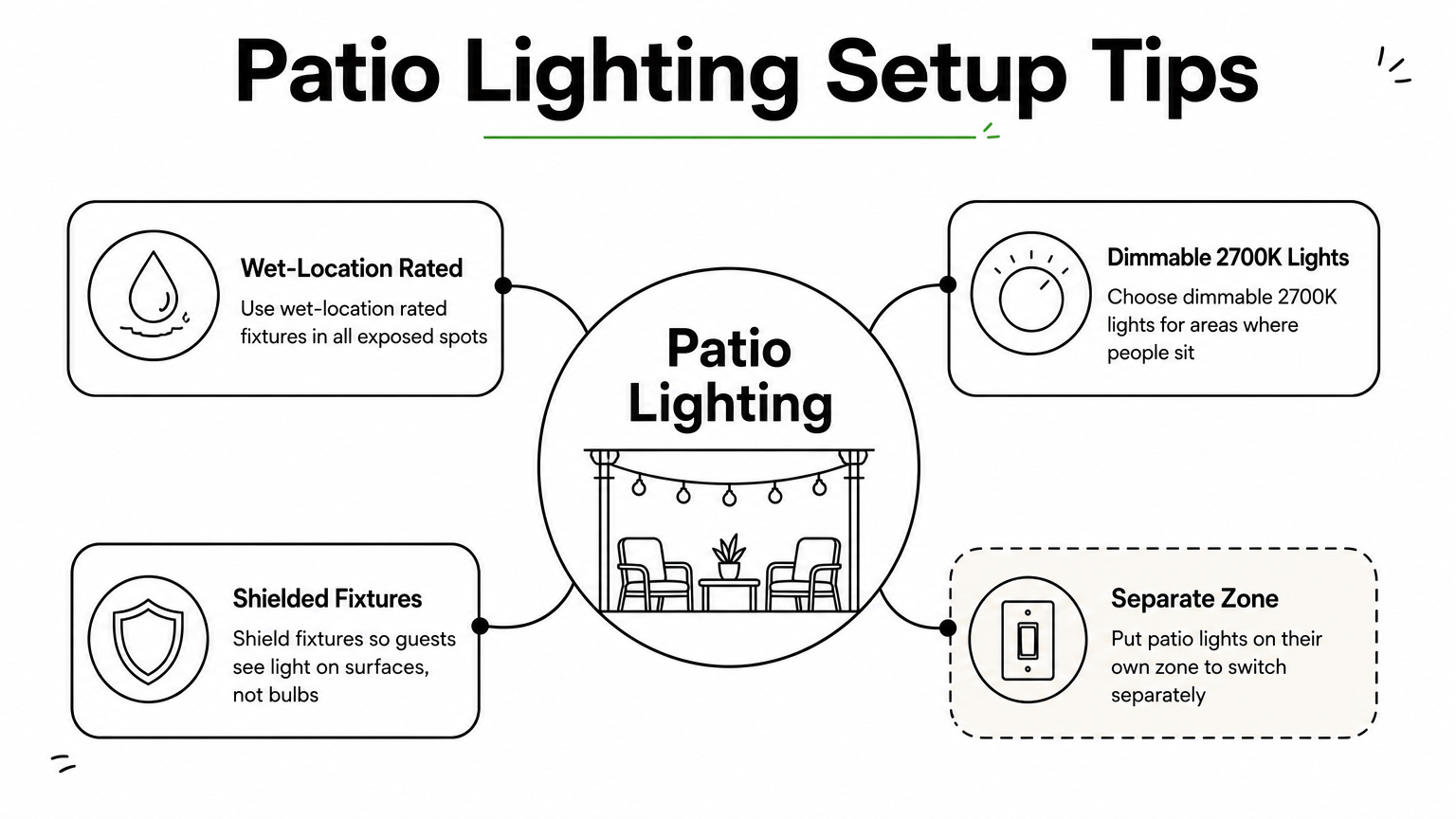
- Use wet-location rated fixtures in all exposed spots.
- Choose dimmable 2700K lights for areas where people sit.
- Shield fixtures so guests see light on surfaces, not bulbs.
- Put patio lights on their own zone so you can switch them separately.
5. Wall washing and accent lighting for features
Wall washing and accent lights highlight house facades, garden walls, water features and sculpture with a soft spread of light. They give the property depth and make the front of the house look intentional at night.
How accent lighting works
Three techniques cover most jobs. Grazing places a fixture close to a wall and aims it up to bring out stucco or stone texture. Washing sets the fixture farther back for an even glow across the surface. Silhouetting lights a wall behind a plant so the plant's outline stands out.
Limit yourself to a few accents. Lighting every feature flattens the view, and the best landscape lights design ideas leave dark areas on purpose to create contrast.
Light the features you want noticed, and leave the rest dark.
Setup tips for Florida yards
Control and glare decide whether accents look refined or harsh:
- Use a timer or photocell so lights switch on at dusk and off late at night.
- Shield fixtures to cut glare toward neighbors and the street.
- On beachfront or near-beach lots, check local sea turtle lighting rules with your county or municipality before choosing fixtures.
- Keep color temperature the same across the yard so the layers match.
Start with one layer, then build
Good landscape lighting is a set of layers. Path lights make the yard safe, uplighting and moonlighting give it height, patio lights make it usable, and wall washing adds depth. Pick the one or two ideas that solve your biggest night-time problem first, then add the rest over time.
If you want a plan for your own property, talk to Integrity Landscape about lighting your yard. We give same-day quotes, and a low voltage system can be designed to match your plantings, pavers and trees.